“Bloodford Creek” by Jay O’Shea
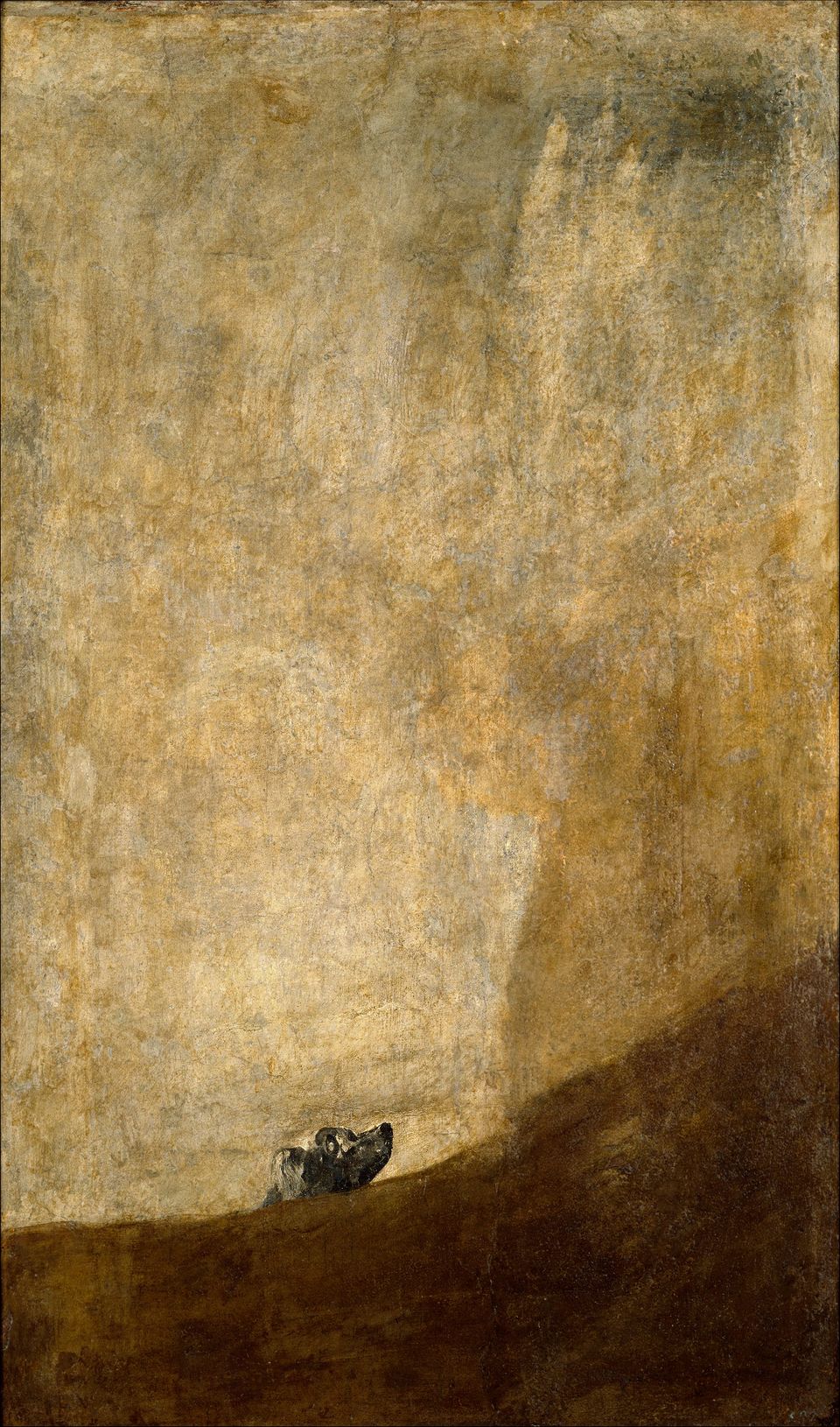
The way I count it, the night my brother had that run in with the dog was around when the chicks started dying. A scream of tires woke me, and I looked out the window in time to see the old Chevy a phantom under the porch light. Billy tumbled out of the passenger seat, missing the porch and hitting his head on the column. He slumped there as the truck door slammed from inside. Another screech, another sharp swivel, and mud struck Billy, the porch, and probably our front door as well. I grabbed the Narcan from my nightstand and pounded down the stairs, not caring if I woke Momma and Daddy. When I reached Billy, he had pulled himself upright, looking at the naloxone in my hand.
“It’s not like that,” he said.
The air was steamy and heavy, even in the thick darkness, and the ripe smell coming off Billy turned my stomach. But it meant he was telling the truth: this time, it was whiskey that kept him out all night.
“What it’s like then?” I asked.
“Dog,” he said. “Weird, big dog.”
I took hold of his wrist, turning it over. Rags had been tied hastily around his forearm. I got his arm over my shoulder and hoisted him up; he leaned into me as we stumbled toward the house.
A shingle creaked in the breeze as we passed underneath it. Bloodford Creek Farm, it said, like anyone was ever going to mistake this place for one of those cute holdings where city folks get to know their farmer as they pick up blueberries and hand-packed eggs.
“You oughta head to Fayetteville in the morning,” I said. “Get those rabies shots.” “Don’t tell Momma,” he said.
“Never do,” I said.
—
The next morning, Billy groaned when I knocked on his door. He cracked it open, then slunk past me to the bathroom, his skin bluish under his freckles.
I blocked his way back.
“Charlene kick you out again?”
“Maybe.” He rested his head against his fingertips like his neck didn’t work anymore. “You stay here, you help. You can’t sleep in, nursing a hangover.”
He moved from cradling his head to grasping his bandaged arm.
“It’s not a hangover,” he said. “I had bad dreams. A war or something.”
He let me lead him back into the bathroom. Billy’s skinny, but, despite his sharp cheekbones, his face has this round, childish shape. He grew a beard like that was going to cover it, but the reddish-brown patches made him look even more like he was playing grown up.
I unwrapped the rags. His skin looked like the inside of a potato, white and rippled. A rusted wash of dried blood hid the wound. I got to work cleaning it but more blood kept rising to replace what I had cleared away.
I felt bad for him for about half a second, then annoyance swept in.
“What’d you do?” I sighed.
“Not me,” he said. “Wallis.”
I gestured at him to continue.
“Out of nowhere, this dog is there.” He put his hand out, level with his hip. “Slinking around. Like he’s up to no good.”
“Sounds like you were the ones up to no good.”
“Wallis threw a rock at ‘em,” he said.
“‘Course he did.”
Here I was working my ass off between the farm and night school, trying to get out of this mess and Billy was partying with Wallis and the boys, who didn’t even care enough to make sure he didn’t have rabies.
Billy pulled back, face twisted in pain. I guess I was scrubbing too hard.
“You might want to think about getting your shit together,” I said.
“How is this my fault?”
“How is not?” I asked.
“You would know, Linda,” he said. “All that night school and you’re still dressing up in a Hazmat suit every morning to tend the chickens.”
“It’s a safety suit. And once we get this flock to slaughter, Daddy will be out of debt, and I can go to college. He said so.”
I tightened the bandage around Billy’s arm. He winced again and pulled away from me. He stood, unsteady on his feet, but ready to ease past me. I slipped my hand into my pocket. The Narcan was still there, cold to my touch.
–
The silence hit me first. I expected a chorus of chirping, the cascade of chattering that was my morning’s song. But there was just a heavy silence. The smell followed, metallic, so heavy in the air I felt it on my tongue.
My feet made a weird sucking sound when I moved. A crackling followed. I tilted my head, struggling to see around the respirator. Underneath my feet was a chick’s carcass. I tried to move but there was another one everywhere I stood. Feathers were everywhere. And bones. Bits of flesh that didn’t connect to any body part.
The chickens who survived were huddled in a corner, tighter than usual. Their mouths moved but nothing came out.
A fox got in. That was all I could think, even though I knew it’d take more than a fox to do this kind of damage. Even though there’s no way a fox could get into one of these massive sheds.
My stomach sank, falling fast, and then, just as quickly, it reversed. Bile welled in my throat. I broke into a run, stumbling in the bulky suit until I reached the kitchen door. Daddy was yelling at me before I could get out what happened.
—
A few days later, Momma ran a tally on the flocks.
“How bad is it?” I asked.
“Bad enough.” She was at the kitchen table with her laptop open, her skin pasty under that home-dyed dirty blond hair that made her look older instead of younger. “Man from the company was already talking about a new barn.” Daddy paced, eyes watery.
“A few hundred out of eight thousand?” I asked Momma.
“We were only getting a third of them to slaughter as it was,” she said.
“We’re looking at another loan,” Daddy said.
My palms went sweaty.
“A loan against what?” I asked, although I know the answer.
Daddy’s face tightened as he glanced around the kitchen, at the walls of the house. “What about college?” I asked quietly.
“Gonna need that company scholarship,” Daddy said.
I didn’t want to be the kind of vet that cropped the ears of piglets and upped the antibiotics when the cows got mastitis. I wanted to be the vet people took their dogs and cats to for checkups and allergy shots.
“I don’t want to work for the company,” I said.
“I suppose the rest of us do.” Daddy’s mouth pulled tight, and my dreams crumbled like the tobacco plants at the edge of the field that no one watered anymore.
“Five years and you’ll have that nice little clinic in Charleston,” Momma said. “The only way out is through,” Daddy said.
—
It wasn’t always like this. Daddy had his construction jobs and Mama worked at the insurance company in town. We got by.
Then came Daddy’s plan to get ahead, make some money on the side. The man from the company offered loans at a good rate to get us started. That got the tobacco sheds converted to chicken barns. The man from the company said we were on our way. But there was always a new ventilation system to be installed, a new medication, an outbreak of bird flu, a flock culled. Another man from the company. Another loan.
Before that tangle of debt, back when a weekend meant time off not time in the sheds, Daddy would take us up to the hills on fishing trips. At night, we made a campfire in a meadow where we had a view of the running water, where poplar and oak trees reached up strong and healthy. Daddy would tell us ghost stories. They always started the same way. There was a reason, he would say, that Old Lady McAllister’s house was still vacant after all these years. After her daughter died, she locked herself in, conversing with a specter until she turned into one herself.
Goosebumps would come up on my skin and my eyes would tear. Billy and I, friends then, as much as we were siblings, would clutch each other in fear, the good kind that comes when the thing you’re scared of isn’t real. But even then, I knew a ghost wasn’t the reason that old house was never bought.
“How about the wolf of Bloodford Creek?” I asked one time.
“How’d you hear about that?” Daddy laughed.
“Kid at Sunday school.”
“It’s something the old folks used to talk about,” he began. “Every few years, someone spots a wolf in these hills… next thing they know, it’s come down, killing the livestock. Terrorizing the town.”
“That’s what wolves do,” Billy said. I nodded at him in agreement. This story wasn’t as good as Old Lady McAllister’s house, with boarded up windows and a maple tree growing into the attic, something we could dare each other to hop the fence and get close to.
“Round the same time,” Daddy continued. “Someone in town starts actin’ funny. They disappear for a stretch. When they come back, they’re in a state. Bloodied. Can’t remember anything.”
“That’s not scary,” I said.
“Wait a minute,” Daddy said.
Billy and I looked at each other, confused.
“Did you hear something?”
We glanced around, puzzled.
“How about…?” Leaves rustled behind Daddy.
“What if the wolf is right here? Waiting to pounce!”
He jumped up and we shrieked in terror and delight.
We slept in the open meadow that night, with just our sleeping bags. Although it was humid and the sky felt heavy and close, we could still see enough stars that Billy and I lost count.
—
The shed door was open again. I stepped in to the ripe smell of ammonia. Thousands of chickens stretched before me, crammed together. Dead chicks lay strewn all over the place, some deformed, with that weird crookedness coming in as they grew. More were dismembered, heads torn off and bellies ripped open, slowly dying. I could have sworn there were fewer of them overall but who the hell knew when they numbered in the thousands.
People say something is chickenshit to mean it’s small and doesn’t matter. Those people have never spent time in a chicken shed. You get enough chickens, and their shit is anything but insignificant. Which is why I was horrified when I found Billy passed out in the corner. He leaned against the edge of the shed, curled over like he was trying to tie his shoes and forgot how.
I tried to run but the damn plastic booties over my shoes slowed me down. I fumbled to get the Narcan out of my pocket, under the safety suit. When I got close enough to touch him, I saw him breathing. There was a streak of dried blood and mucus that ran from his lips to his chin. I grabbed his face and squirted the spray into his nostrils.
He groaned as I pulled him up to his knees. He shook his head, then his face clouded, his amber eyes hard.
“What the fuck?” He said. “I was in the good place. Finally got to the good place and you pulled me out.”
“You were OD-ing, you little shit.” The respirator muffled my words. I pushed it up, not caring as the air burned my throat.
I was about to turn away when something caught my eye. His arm was unwrapped. In the middle of his forearm were two puncture wounds where incisors went in. A twist of red, brown, and blue lay underneath the translucent white of his forearm, spreading out from the wound.
You see plenty of dog bites in this town. This one has didn’t have that neat circular arc you get with a warning bite. It also didn’t have the tearing that happened when the dog really meant it. This dog bit quick and deep and pulled back just as swiftly.
For a moment, despite my better judgement, I felt a surge of sympathy.
“Big dog,” I said.
“Told you that,” he said. “Weird one.”
“Pit?” Even as I asked it, I know there was nothing weird about a pit bull around here. “Nah,” he said. “Taller.”
“Hound?”
“Skinnier,” he said.
My cheeks flushed and a sickly sweat broke out on my face, even as I pushed back at my own thoughts.
“A wolf?” I asked.
He laughed, the sound brittle as it echoed through the shed. He raised his hands, wiggling his fingers in a childish imitation of a ghost.
“The Wolf of Bloodford Creek,” he laughed.
Rage came swelling back like a polluted river overflowing its banks.
“You ever think about why we have that story, Billy?” I asked. “This town is fucked up. And people in this town fuck up. They fuck up so bad they go missing.”
His laughter was long gone. I knew what he was thinking. I had overstepped. “Mike crashed his truck,” I said, quietly.
“They found the truck,” he said. “Never found Mike.”
“All I’m saying,” I tried again. “Is this town does things to people. It sucks them in, they get trapped. They get into trouble they can’t undo. I just don’t want that to happen to you, OK?” Instead of accepting my apology, he sneered.
“Yeah,” he said. “It’s always the town, right? Never you. Just keep doing everything right. See how far that gets you.”
I pulled back, stung. But he wasn’t done.
“You think you’re going to college? You’re going to end up like Mary Norris, running a cash register and living in a trailer.”
My sympathy shattered. In its place came a tight spike of anger.
“One of these days,” I said. “I won’t be here. And this shit’ll kill you.”
I turned away, hurling the Narcan deep into the shed. The chickens shrieked, then squabbled, about to fight over it until they realized it was worthless. Then it was gone, submerged in a sea of white feathers. I couldn’t find it if I wanted to. And I didn’t want to.
—
The line at Dollar General was long. Mary Norris called in sick and there was no one to replace her. Sally Dunbar was talking to Bobby McRae, and I couldn’t help but listen. “It happened yesterday morning,” she said. “Must have been real early. No one heard the screams. Just opened the barn and there it was. Pigs torn apart, right in their crates.” A sob caught in her throat, her skin a sickly green under her makeup. Bobby put a hand to her forearm.
Katie Thompson walked up and before I knew it, there was a whole cluster of people in front of us.
“You’re not the only one,” Katie said. “John McAlister’s calves: their guts were torn out, right in their hutches.”
Suddenly, they were all talking at once.
“I saw it,” a voice said over the din, rough and deep voice but with a singsong quality that gave it an edge of mockery. “Down by the lake. Weeks ago.”
I turned and saw Wallis’s face, skin sunburnt, sandy hair disheveled, and a smile that looked more like a leer.
“And right here in this parking lot.”
“You saw what, Wallis?” I asked.
“The wolf,” he said, like it was obvious.
“The Wolf of Bloodford Creek?” I scoffed. A few people in line chuckled. “Call it what you want,” he said. “But I’ve seen it. Between the Taco Bell and Walmart. Sneaking behind the dumpster.”
People muttered and looked around, like they were about to see a wolf in Dollar General. “What were you doing behind the dumpster, Wallis?” I asked.
Sally Dunbar tutted and shook her head. Bobby McRae crossed his arms and gave Wallis a long look. Wallis didn’t answer. He stumped away.
Gradually, everyone else followed. Sally turned to me.
“Linda,” Sally said. “This would be a good time to get on NextDoor. You never know, your farm could be next.”
I accepted the invitation. It would be rude to refuse.
—
I told myself it was just curiosity when I sat down with my battered laptop in the community college lounge and typed Wolf of Bloodford Creek in the search bar. There were dozens of results, mostly news reports that discounted the legend. Halfway down the page was wolfofbloodfordcreek.com. I clicked on the link and was met with a garish display of clashing colors and a scattering of fonts. The last entry was from 2011. I almost closed the tab, but something caught my eye.
Local Teen Reported Missing. A clipping from back when we had a town newspaper. Rare Gray Wolf Sighting: Prepare to Take Action, Farmers Say.
It was one entry like that after the next. Then came someone’s blog post about their cousin, coming home hungover and disoriented. But no one ever saw her at the liquor store or heard about her buying pills. Her benders lasted longer each time. Until, one day, she didn’t come home at all.
A while later, farms reported losing enough livestock that people went bankrupt. And the clinic in town, back when we had one, reported an uptick in dog bites.
With enough people who fell into the old quarry after a night of drinking, who ran away from abusive boyfriends, or stumbled onto the railroad tracks after too much oxy or fenty, it made sense that this thing was a story we told ourselves to explain all the things that went wrong in Bloodford Creek. And you’d sound crazy if you took it literally.
Except when you put it all together.
I sat, staring at the peeling, faded posters on the lounge walls. This wolf. Any wolf. How long before he on to other prey? Someone other than chicks who would weren’t going to last anyway? Someone other than Sally Dunbar’s piglets who only had six months until slaughter? Why even ask?
I thought of that line at Dollar General. Sally Dunbar, who’d done nothing but struggle since the foreclosure. Bobby McRae, face drawn tight ever since the accident. They had suffered enough. And I had spent a lifetime covering for Billy’s mistakes. This might be the one mistake that was too big to cover.
—
A few days later, as I was driving home and the sun pitched low in the sky, I saw something in Nancy McCaffrey’s field. I slowed the pickup to get a glimpse, my thoughts thick and heavy. Sheep, dozens of them, lay on their sides, blood around their necks, bellies sliced open, entrails dangling.
My phone started pinging, NextDoor firing off, one message after the next. Leaving the truck by the side of the road, I followed the messages to the east side of the field, where a group, silhouetted by the dying light, muttered with the angry excitement of the mob they were turning into. The lights on their phones and their headlamps became torches of angry villagers from an old monster movie. All they needed were pitchforks.
I smelled liquor and felt on my neck. I turned and found Wallis facing me, an ugly grin on his face.
“Come along for the show.” He laughed and I saw the gap of a missing tooth. I thought about the fight that caused it and about the gun in his hand and my breath tightened. I shook my head, thoughts tangled up so bad I couldn’t speak. He turned away. “Let’s go catch that wolf,” he said to the crowd.
The guys set off, clumped in groups of two and three, heading in different directions, headlamps dancing through the woods, weirdly innocent, like fireflies.
I texted Billy: Where are you? Call me. Rn!!!!!
I didn’t know what else to do so, after everyone left, I combed through the woods, whispering Billy’s name. It was unlikely that I’d find him this way, but it wasn’t like I was going to yell for him. Not now.
It was eerily silent. The guys weren’t talking or laughing anymore. Even Wallis knew not to warn his quarry.
Then I heard it. That tight, crisp sound, with no echo, that could be one thing and one thing only.
A few more of those brisk, sharp sounds and then the guys were shouting and laughing. For a moment anyway.
Because a long scream followed. A human scream.
I broke into a run, branches cracking beneath me as sweat pooled under my jacket. The scream turned into a low moan. I followed the sounds, the rumble of the crowd no longer exuberant. People shouted at each other, panicked. My terrified brain couldn’t make sense of the words.
I reached a clearing. Huddled at the base of a tree was a skinny frame; hands clasped a leg, a curved back moved with rapid breath. As I got closer, I saw his neck, where red hair ended in a jagged line, freckled skin exposed, like it was waiting for the next blow.
I shoved my way through the crowd, placing my hand on his back, ready to draw him toward me. His face lifted, his cheeks round, doughy even. Green eyes looked at me full of fear. A teenage face. I stumbled back, relief tangled up with panic.
Meanwhile Bobby Dunbar was shouting at Wallis, his face red and twisted. “You shot Mike Roberts’ boy.”
“Didn’t shoot him,” Wallis said. “Didn’t get close to shooting him. Look at his leg. It’s just a bruise.”
Wallis was right, for once. But that didn’t quiet the crowd.
“You shot at him, you stupid ass,” Mary Norris said. “You could have killed him.”
While Jeanie Campbell pulled the kid up to standing, Wallis yelled out his next instructions. He’d gotten the idea that wolf was hiding in the fields. He trotted over to his truck and pulled out a gas can.
“Who’s in?” He yelled.
A few of his drunk friends roared back. Sally Dunbar marched up to them. “You can’t be burning people’s fields,” she said.
“Just burning the fallow ones,” Wallis said.
“You think fire knows what field to stay in?” Bobby McRae stood behind Sally. Between the two of them, it seemed like they might be enough to stop him.
Then Wallis turned and sprinted away, the rest of the guys whooping and yelling, as they headed to their trucks for more gas cans.
I finally thought to track Billy’s location on my phone. I was driving away when the thought hit me: our land was surrounded on three sides by tobacco fields. Old, dry fields that no one had watered in years.
—
I found Billy by our neighbor’s hen shed, collapsed on his side. There was blood around his mouth and a heavy bruise was forming on his right cheek. I didn’t look in the shed; I didn’t need to.
“What happened?” I asked.
“Dunno,” he said.
He stared out across the field, quiet for a long moment.
“I feel like I’m losing my mind,” he finally said. It must have felt like tearing his heart out to admit it. And I couldn’t bring myself to tell him what I knew. He wouldn’t make fun of me now; even Billy couldn’t pass this off as a joke. But I still couldn’t bring myself to say it out loud and, anyway, what good would it do if I did?
Billy stumbled as I eased him into the truck. He fell into a deep sleep like he had nothing to worry about. I had the feeling I could tell him about Wallis and his friends running around with gas cans, about that kid nearly getting shot, and it would slip right off him. For a moment, I watched him, eyelids fluttering and mouth soft.
Then he slumped forward in his seat, pitching toward his shoes.
It took a long time for the understanding to land. When it did, it was joined by some combination of terror and fury. How could he? How could he do this, now of all times? It felt like a long, slow moment as that rage welled up, then finally subsided enough that I could think about what to do next. I patted my pocket for the Narcan. It wasn’t there. It was always there. My keys went in my right; Narcan in the left. Why would I mix it up? It wasn’t in my right pocket.
The recollection arrived slowly. The naloxone was gone. It was in the shed, underneath the flock, the bodies of thousands of chickens closed in around it. A few days ago, I didn’t care if Billy lived or died. But now I understood: he may have fucked up everything he touched but he was a victim of this town, like Sally Dunbar and Bobby McRae and the rest. Like me.
His breath was coming in gasps, ragged. He went still. This is it, I thought, but then he inhaled, shuddering. He pitched forward toward the wheel well.
Billy’s slumped form twitched. I couldn’t tell if it was a spasm of life coming back into him or exiting out.
Then it happened. He sat back up and his back arched, into a painful, awkward, impossible position. He twisted and pitched, whimpering like a wounded dog.
I caught the scent of smoke. A quiet, almost peaceful crackling followed. It came from up the road. From our land. I should be taking Billy and heading home, protecting the farm. But, I now realized, that’s not what I was going to do.
Billy’s chest and shoulders swelled. He twisted and pitched, his spine tilting him forward. Licks of flames appeared at the horizon, moving fast. A gentle breeze came up off the back fields.
I got in the truck. Billy’s body relaxed, then jerked again. He took up the whole cab with his seizures, arms swinging out, hitting the steering wheel, and veering us onto the shoulder. Gravel crackled beneath us and the truck trembled as I swerved back onto the road.
The air was thick with smoke. A heavy animal smell filled the cab. What have I done, I thought, locking myself in with this blood-thirsty killing machine?
A horn blared as another pickup sped toward us. I veered at the last minute, not sure if I’d swung us toward a ditch. Flames were on all sides, and I was shaking, like in the depths of a fever. My palms were sweaty on the steering wheel.
The smoke cleared. We were out of the haze where the sky was clean, a deep blue above us. I risked a glance at Billy. At the monster who used to be Billy.
He wasn’t the grotesque creature of my fears. He sat on the seat: gray, tall, and thin, face pointed, and ears perked up. Golden brown eyes alert and warm.
I looked in my rearview mirror one last time, watching the flames surge up, orange and angry. I slammed the gas, tires screeching and dirt spitting out behind us as I took us out onto the highway.
—
It was near dark when we reached the forest. I opened the windows and the animal’s head perked up.
I stopped and opened the car door. He lifted his head further, then gave a long, slow stretch. He sniffed the air and leapt out of the car, in a single graceful arc. He turned around to look at me. He tilted his head so our eyes locked.
“Go.”
He dipped his head.
“Go,” I said again. “You’re free.”
He didn’t need to hear it a third time. He turned, breaking into a fluid gallop. He looked over his shoulder one last time before he dove toward the woods.
—
The call came from Momma as I watched him bound away. The chicken sheds were gone and the house with it. Fire insurance didn’t cover arson. The only way of paying off the loan was to sell the land. Momma was going to look for a trailer.
A tight, heavy feeling came over me. It took a moment to place it: envy. Billy was gone to place where thoughts of the land, of money that comes in only to slip away didn’t matter. He could walk freely through the forest, sniffing the morning air and following a stream just because he caught a scent. Where he felt the rich soil under his feet and slept curled up in the moss when he got tired.
The tears came slowly but steadily as I stood there, alone in the morning quiet. #
It’s been two years now. Two years since I’ve seen Billy. Two years since the farm burned.
We’re in the company lab. They have us debeaking the chicks. I grasp the baby bird around her head, her eyes bulging at the pressure. I press her beak to the hot blade. She can’t scream because I have her bill held shut but her legs kick out at the pain. The smell of searing flesh fills the air.
The door to the class lab swings open. There’s a commotion, someone’s gesturing, someone else is yelling, and suddenly there’s a crowd by the door.
I hear the words – chicken shed – and see the ashen skin of the student in the doorway. I push my way through the crowd, walking in a dream. I know what I’m going to see but something pulls me forward anyway.
The metallic smell of blood blends with a tang of ammonia that stings my eyes. Scattered in front of me are dozens of chickens, guts spilling open and snapped disembodied heads scattering the floor. I step back, leaving the door swinging in the hot breeze and groaning on its hinges. I stumble back to the classroom and get back to debeaking.
Daddy was right. The only way out is through.
Author, martial artist, and part time phenomenologist Jay O’Shea lives and works in Los Angeles. A professor of critical dance studies, she has published non-fiction books on dance and martial arts, has given a TEDx talk on the merits of physical play, and is completing a project on physicality and emotion in activism. Her short fiction has appeared in 96th of October, Dark Fire Fiction, Bartleby Snopes, and Toasted Cheese and her Op-Eds have appeared in Zocalo Public Square and Newsweek. When not clacking a keyboard or training in the fight gym, she enjoys spending time with her family, including their peculiarly delicate Rottweiler and their peculiarly fierce Maltipoo. Website: www.janetoshea.com; Linked In: https://www.linkedin.com/in/jay-o-shea-32867982/; Instagram: https://www.instagram.com/jayboshea/.