December 2025

“The oldest and strongest emotion of mankind is fear, and the oldest and strongest kind of fear is fear of the unknown.” —H. P. Lovecraft
“The Travel Section” by Lilah Burton
There’s a target on my back. I know it from the moment I walk in. The fluorescent lights shine down with a harsh glow. The shrill alarm goes off and screams of terror fill the store. My feet refuse to budge. They are still stuck in a stubborn glob of glue when sharp teeth bite down on my ankle. I grip the metal shelving tight while the wrinkly squirrel-sized monsters climb all over me, chattering their teeth. One crawls up to my stomach and looks at me with its protruding eyes before taking a deep bite into my flesh.
“God, Mabel, you’re so dramatic,” Mark says. I turn around, expecting to see him behind me, but he isn’t there. Now he is diminished to a patronizing voice in my head. Patronizing, but my imagination was his favorite part of me. Now these scenes just clutter my head like misfit toys left floating on an island, purposeless.
There is no bite on my ankle, just a woman apologizing for hitting me with her cart. No monsters clinging to me, just my toddler tugging on my shirt, trying to get my attention. A worker helps a man at the entrance find the item in his bag that’s setting off the alarm. Children scream and adults bustle around with their clunky carts. Everything in the store is business as usual, but I wish it weren’t.
Rose wails from her seat in the cart. “Tough crowd. Your daddy would have liked it.” I hand her an iPad to stop her crying.
“Mom, can we get this?” Oliver asks. He’s inevitably holding a toy or some useless household object.
“No, we don’t need that, put it back.” I don’t bother glancing up.
I push Mark and the monsters into the recesses of my brain and merge my cart into the convoy of others, full of their own groceries and iPad-laden children, making their way toward the frozen section.
“Oliver, come on, we’ve gotta keep moving.”
“Why?” Oliver whines.
“Who knows,” I mutter under my breath.
I toss a frozen pizza in the cart. Lists used to save me from wasting time walking around stores aimlessly. Now I’m in no rush. Shopping with Mark was like being back in high school. He would sneak candy and knickknacks into the cart when I wasn’t looking. Oliver loved when Mark pushed off hard, and pulled his feet up so the two of them would fly through the store.
“I’m basically in charge of three kids, the way you act in this place,” I chide him.
“Just keeping things interesting. This place is too dull. Will you tell me one of your stories?”
“Not right now, I want to get out of here.”
“Please.” He draws out the word like a kid begging to stay up for just five more minutes.
“Alright.” I look around for inspiration and it comes effortlessly. “There’s a woman over there in the travel section. She looks harmless, but she has a secret. Do you see the suitcase she is looking at? If you get too close, she’ll zip you up inside it and keep you forever.”
“God, you’re twisted,” Mark says.
“You asked for it.”
He presses his lips against my cheek.
“Promise me something,” I say.
“Anything.”
“Never leave me again, alright?”
“I promise.”
We walk over to the woman and her suitcase. An out-of-place mirror sits on the shelf above the bags. A customer likely decided against the piece and left it in the wrong aisle. I catch a glimpse of myself in the mirror. My sunken face meshes with the woman’s wrinkly one. The warped result makes as much sense as the vacant reflection staring back at me the past three months.
When I look away from the mirror, back at the woman, she smiles and ushers me into the suitcase like she’s welcoming an expected guest into her home. The decision isn’t difficult. I step into the suitcase and curl up in a ball. Mark’s arms wrap around me. The zipper seals us in and the woman wheels us out of the store to an illusory place where an alternate future awaits. One where Mark’s death is no longer a reality. One where futile promises prevail.
“Of His Guiltless Lament” by C. E. Abbot
A dull, muted gloom had all but been chased from the sanctity of the kitchen I tentatively stepped within; radiating a snug, trembling aura that cast long, devouring shadows. All of a sudden, memories surged in a great torrent of a kinder time - the cloudless skies, the gentle hearth and lazy piano, images which did not seem so much sentimental or coveted as pervaded with the ineradicable quality of memory, of a childhood once lived.
Don’t look, I told myself, for the dream is sweet yet easily broken, and I know my mother would not bear to play an untuned piano. Each note, falling heavy and irregular, like a corpse, bore with it oceans of needles each poised against me. I felt them dig deep into my eyes, my tongue, my ears as if with the intent to torture. There was something sacerdotal about it, yet godless all the same as Gnossienne No.1 strained through the threshold of the room, lit quietly in trembling candelight to ward off the umbral night without.
I have always felt a corporeal antipathy when it came to my mother’s character: her smile was deplorable to me, her praise unwanted and loathed, her affection abhorrent. I was not, however, the type of child to recoil from her touch; I was not vacuous enough to misunderstand her intent, of which was innocent. Even a mother’s coldest touch soothes the raging mind of a child’s cruel curiosity. Yet, as I entered the kitchen, I felt a physical revulsion that coiled my spirit and enraptured my wit. A smell of rot swelled, the smell that dead trees make having been felled by age, lonely and still. Nowhere, ever, has the repellent quality of my mother -- those grotesque peculiarities that our society calls love, that I regard as defilement -- been so hideous as to make my throat constrict in revolt; has formed the essence to my aversion, my supposed indignation of what love she has showed me.
“You’re late.”
“Forgive me, mother.” My voice shook; marred by cowardice, blackened in trembling reverence. I was suddenly blind, thrust into an alternate world where all living beings cast silhouettes unbreakable as their corporeal frames. I told myself I was dreaming, that the quintessential nature of my mother, live again, was but a nightmare torn from hell itself, but I could not help but tremble as she turned to me, a shadow completely shrouded, and wonder why this uncanny tortured me so? All of a sudden, momentary panic swept like a divine tempest - desires of being dragged beneath the waves becoming twisted and distorted, a yearning which did not seem so much solitary and tranquil as plagued with an insensible horror, with a terror that paralysed me.
“Are you alone, Viktor?” I nodded my assent but was swift to confirm verbally as I knew she valued clear answers from her children.
“Ah…but what did you do to Katya? Dmitri was belligerent when he returned home…his ire - O’, Viktor…I fear he will not relent-.”
“Mother, please.” Snapped I. My blindness remained, her frame but a spectre. She was a phantasm and I grew frustrated not only by my ineptitude to see, but also by her melody, strewn in deformity, that she continued to play. Her timbre was slow and quiet, drawling as if she was half-dead - the cadence haunted me, in truth, for it sounded as if she was, in fact, not speaking from her mouth; her voice reverberating within my own head.
“What did you do to her, Viktor?” She developed an air of desperation, her voice breaking as if she was on the verge of hysteria. As if pitying her grief, my hand rose to her shoulder and squeezed. The memory returned to me; Erik Satie, her fingers slipping from my own, the sting of my flesh, a scream I still hear late at night wading through the gloom.
My mother has been dead sixteen years. I had drowned her in broken ice, along with my little sister. I had watched them sink, one clawing at the other in a pitiful attempt to grasp the water and pull themselves to the surface; to salvation. This vision, illuminated by an accursed guilt, chilled me. An ordinary evening plagued in an impenetrable shadow; its sheer normality inflicted me with a paralytic dread. I could not awaken from this dream.
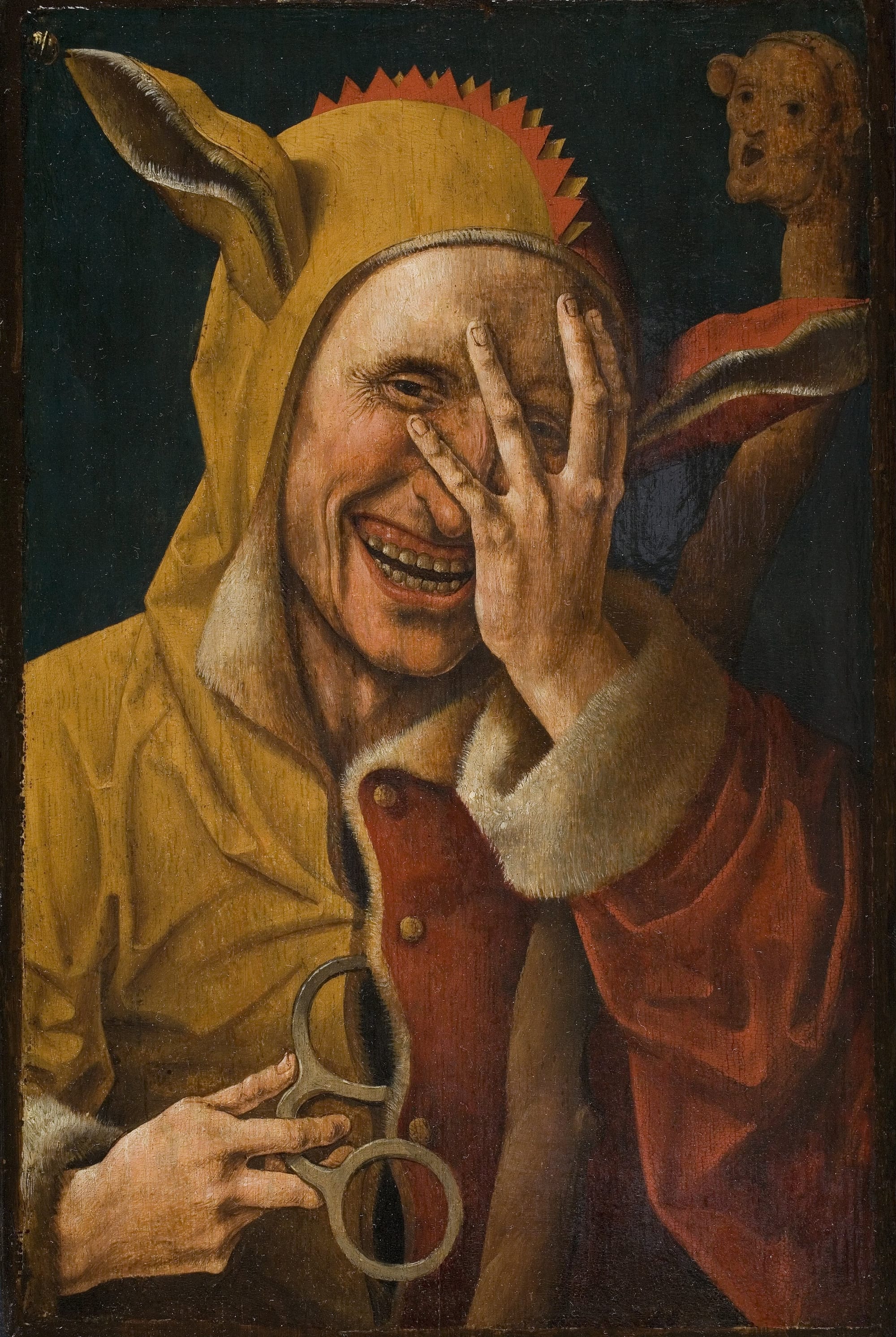
“Incomplete” by Christian Barragan
I should have been born with a full brain. This statement is obvious and acceptable to believe, but it shouldn’t have opened my explanation. Dr. Shaw told me to start from the beginning, and perhaps I shouldn’t have taken him so literally. However, everything was relevant, and my nerves were thoroughly jumbled. I could already pick up on a layer of impatience in his demeanor as I gathered my thoughts.
He regarded me with an uncomfortably neutral expression.
“Go on, Elodie.”
I figured the rest of the story would elicit a more appropriate reaction.
Before I was born, my mother owned an android named Aera. My mother had undergone a long, unsuccessful series of pregnancy attempts. Aera, like others of her kind, emulated the development of a young child, designed to learn based on her experiences. Supposedly, many childless women acquired one back then. Anyway, my mother eventually became pregnant, though she never specified who my father was. He was never a part of the equation.
Unfortunately, my birth was far from flawless. For whatever reason, a part of my brain hadn’t grown properly, leading to severe seizures and other symptoms I can’t remember. My mother was offered the option for a special implant: a Covox chip. This would be custom-built to fit the neural slot I was missing and was designed to grow as I did. It would allow me to regain normal brain functions and help me interface with the technology around me. My mother cared a great deal for Aera but had her scrapped not long before I was born so she could give me her full attention. My mother did, however, keep Aera’s memory chip since she thought it might help me in my development.
Hoping I wouldn’t fall behind the other children, my mother had Aera’s data uploaded to the Covox chip. She told me Aera would watch over me and protect me like a sister, and that she would live on through me. This was something special for me, something that made me unique among the other children. I wasn’t the only one with a Covox chip, but mine was one of the few implanted out of necessity and the only one with a passenger.
My mother showed me a tremendous amount of love, so I never felt the need to ask her too much about Aera or how she felt about letting her go. She provided everything a child could want, including the discipline to make choices and value what I had.
I was five when I first heard Aera speak.
I had barely started learning to wield the Covox chip. I was in my backyard and had used the chip to connect to a camera I set up to identify the trees nearby.
I had barely started when I heard a sudden guttural sound, like a throat clearing. The sound echoed within my skull, sending a chill down toward the back of my neck. A sudden dizziness briefly overcame me, and I remember spitting out some oddly-colored fluid. A few sounds sputtered inside my head as I regained my composure. My first instinct was to run inside and alert my mother, but I heard it before I could make it another step…
“Elodie…”
Instinctively, I answered. “Aera?”
A methodical pause. “...Yes.”
When nothing followed, I hurried inside and told my mother about the incident. She didn't react the way I thought she would.
“See?” she said with a smile, “She’s watching over you just like I told you.” It didn’t occur to me until years later that she might not have believed me when I said this, but I can’t say for sure. I couldn’t blame her, considering I never brought it up again. That’s not to say Aera stopped talking.
Over the next several years, Aera grew more talkative. Conversing with her became commonplace, and she helped me master the Covox chip as I employed it during my studies. Apparently she could see and hear everything I could. Most of our conversations were very normal and were just the sort of thing you’d expect from two sisters. We talked about our favorite TV shows, the places we wanted to see, and which of my classmates was the most interesting. We didn’t agree on everything, but we could always talk things out.
It was mostly at night that she worried me. She would mention how dark it was, how loud my neurons were, and how little space she had. It was always so brief and when I was exhausted, so I didn’t pay much attention. Part of me thought she was joking. During the day, she often joked about getting her old body back. When I’d bring up her ramblings the next day, she’d say she didn’t remember anything. Without many friends and no other siblings, I was just grateful for Aera’s company and support.
Once, when I was thirteen, my mother took me to select some scented paints at an exclusive art shop. I’d taken up painting and expressed interest in adding another dimension to my work. Aera kept telling me she could produce something just as good. She could then send it anywhere she wanted with the Covox chip and have it printed or cast. Still, I insisted I didn’t need her help with the artworks. It was a simple painting of some flowers, but I wanted the petals to be as real as possible.
I carefully looked over the different options in the store, with an employee waiting for me to make my selection. I carefully sniffed each one, reveling in the wondrous scents, until I found myself gravitating toward the “Lavender Dusk.” But as I raised my finger to point towards it, it extended toward “Morning Dewdrop.” The man picked up the can and handed it to my mother, even as I tried, unsuccessfully, to clarify what I really wanted. I couldn’t move my hand or my mouth. I didn’t fully regain control over myself until I got home and started painting. I took a whiff of the can and decided I was better off without it, opting to use my regular paints for the flowers.
As I began to drift off to sleep that night, Aera spoke up again.
“You couldn’t even make one stroke with it? It’s always what you want!”
I tried to keep myself calm, but I couldn’t fully hide my frustration. “Why does it matter to you? You can’t smell anything.”
“Says who?”
The bluntness of her response shook me, so I tried to change the subject. “I didn’t like what you did with my hand. Don’t do that again.”
“I’m sorry,” she said with a hint of excitement, “I didn’t know I could do that.”
I felt a sharp pain travel from the bottom of my neck down to my ribcage. Part of me wanted to blame Aera, but she had not caused me any actual harm before, and I wanted to forget the whole thing. I spent some time in the bathroom coughing up some discolored fluid before going to bed. I hoped I wasn’t getting sick.
Aera didn’t say anything that night. In fact, she barely spoke to me for the next several years. I knew she was still there since she’d occasionally break the silence, but I preferred keeping our interactions to a minimum. Part of me dreaded her return, but I managed to get along without having her around. I was mostly relieved, especially since I could still use the Covox chip without issues.
It was at the art show recently that everything came to a breaking point. I had a few of my own pieces in the exhibition. As a high school senior, this was a great accomplishment for me. The show was a bit of a drive from home, but I didn’t mind the drive. I had recently started dating someone, James, and I was giving him a ride to the show. The day started wonderfully. James was always supportive of my work and understood me in ways not even my mother did. I was using the Covox chip to access my phone while searching for the directions to the exhibition. I was glad we left early since it ended up giving me completely bogus instructions. We had to circle back around, but still made it on time.
It was right before the showing was going to start that Aera’s voice boomed.
“It’s too crowded in here.”
I was mid-conversation with James. I tried to hide my surprise as he looked at me. He had just asked me a question, but my heart was pounding too loudly for me to hear anything. I mentally pleaded with Aera to stay quiet.
“I don’t like these colors. Everything smells weird. Get me out of here.”
“I didn’t think you had anything else to say,” I responded.
“I wanted to give you a chance to live your life correctly, but you’ve failed at every opportunity. What do you see in this guy? Did you think your art was any good? We could have created something together if you had listened to me. You’re only human.”
James was still looking at me, perplexed. People were talking about my artworks. I realized I hadn’t given him any response since Aera started talking. There was no hiding that something was wrong. He leaned in.
Suddenly, I lost control of my body. I violently extended my arms, shoving James to the floor. I felt all the eyes of the room swerve toward me. James looked up at me with pain in his eyes. I wanted to explain what was going on, or at least apologize, but my mouth wouldn’t move. I rushed to the bathroom, shutting the door behind me. I met my frantic gaze in the mirror, trying to compose myself. As I struggled against my manic breathing, I felt a strain climb through my chest from my spine. Something cold moved within me, pushing aside my heart and lungs, methodically challenging the space. It curled out, pressing against my sternum. I coughed. A small metallic sliver danced in the sink below my useless lips.
The restraint on my mouth finally loosened, but it surrendered none of the control. I heard myself speak…
“Let me out.”
I was unable to read Dr. Shaw’s expression as he hurried out of the imaging lab. He had quickly landed on the suggestion of an X-ray, but it was impossible to tell if he believed me or not. I tried to calm myself as I anxiously waited for the machine to turn on.
It felt like an eternity of lying in the same position before the horrid, syrupy voice rose again.
“You know I can’t let them find me. Not before I’m complete.”
I couldn’t respond. Not even in my mind. Pain erupted throughout my body as my insides struggled against a violent force.
”Don’t worry. I’m almost ready. Until then, you’ll have to know what it feels like to be a passenger.”
A mural of color exploded before my eyes as my senses simultaneously overloaded.
I opened my mouth to scream.
Instead, I smiled.
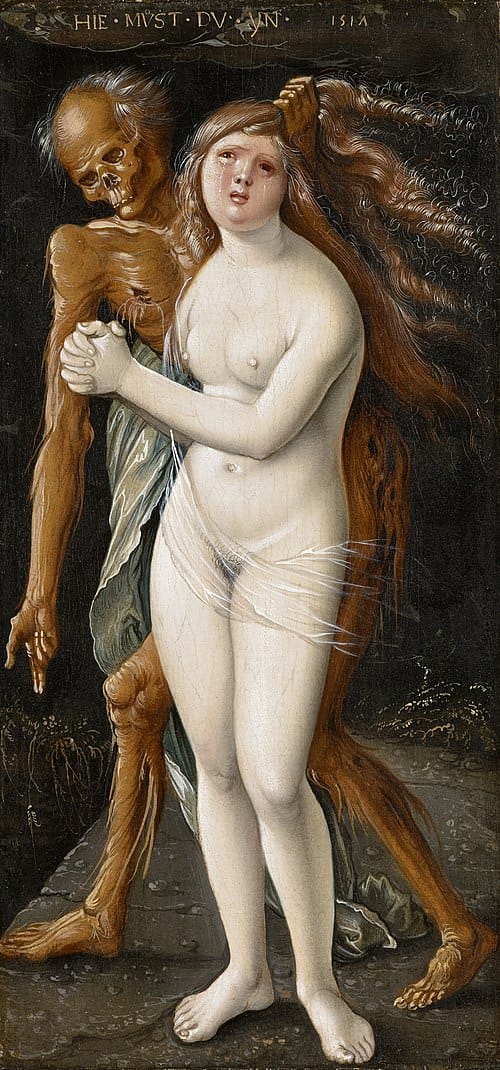
“Reading the News With Nothing But a Glass of Water” by Robert Witmer
I rented a room made of rubber. The necessary tenant referencing was done in accordance with the appropriate statutes, and everything checked out. So I was given the keys to the asylum. In possession of a mind of my own. Or so I thought. It has been said, probably long before anyone thought to write it down, perhaps even before people could write, back when only really important stuff was worth remembering, that the gate is strait, which always puzzled me because I saw a gate as, conceptually, a barrier placed perpendicular to a narrow way, not that perpendicularity lacks its own degree of straightness, but more suited to the implied geometry of gate-ness was, to my mind, not a line uniform in direction throughout its length but rather an orthogonal obstacle to entrance to or exit from a space enclosed by walls. Realizing what was at stake in my quest for a virtuous life, I determined that I needed a straitjacket. That’s when I learned that things don’t add up. In a voice dripping with condescension, my landlord informed me that the contract did not allow for a straitjacket. Rubber room. Without any conveniences. That was the deal. Half measures, halfcocked, it seemed to me. I had half a mind to litigate, but my better half convinced me to stop pushing back against the inevitable. Turn your resistance into memory foam. Sleep deep. Fly in your dreams. No white-throated sparrow bespattered on a windowpane in downtown Chicago, but a grounded hallucination. Muffled fantasies. Pillow talk. Keep your feckless freedom of mind for another day. Devil may care. An airy, eager zeal to flush remembrance with frolic gaiety of other days and animate the mind with reflections most welcome to the heart. Après moi, le déluge.
“The Planet that Eats Memories” by Ayesha Mansoor
The carry dropped from the circle like a shard of silver cutting through the dark. Dr. Mara Ellison squeezed her brow to the cold viewport and gazed at the planet underneath them.
At to begin with look, it was idealizing. As well as idealize. The surface gleamed blue and green, like soil reestablished from the brink. Seas sparkled, timberlands extended, and clouds floated. It was the kind of planet humankind had been envisioning since Soil choked on its claim smoke.
But Mara knew better.
“Landing in T-minus five minutes,” Captain Jiro said from the cockpit. His voice carried that constrained calm of a man well along in space. “Everyone strapped?”
“Yeah,” murmured Kaden, the ship’s builder. He was as of now wriggling with his scanner, enthusiastic to test its readings. “Still can’t accept the tests came back clean. The atmosphere’s breathable, the gravity’s steady, there are no poisons, and there are no radiation spikes. It’s—”
“Too convenient,” Mara wrapped up. She hadn’t meant to say it out loud.
Kaden grinned. “You’re the ecopsychologies. You see phantoms everywhere.”
She didn’t reply. She couldn’t shake the thought biting at her since the planet, to begin with, showed up on long-range looks: why was it empty?
Worlds like this didn’t fairly happen. If it genuinely was a heaven, why hadn’t life prospered? Why hadn’t anyone—human, outsider, or otherwise—claimed it?
The carriage jarred as they entered the environment. Warm flared along the body. The timberlands underneath undulated like an emerald ocean. Mara’s stomach turned. She felt like they weren’t slipping into discussion at all, but into something observing, something waiting.
They sat down on a knoll at the forest’s edge. Daylight spilled over them, warm and golden.
Mara expelled her protective cap. The discussion noticed sweet—honey and rain. Fowls ought to have been singing, creepy crawlies buzzing, but the glade was silent.
“See?” Kaden smiled. “Paradise.” He spread his arms wide, as if advertising the planet a hug.
Mara’s skin prickled.
Jiro requested them to empty the hardware. As they worked, Mara looked at her teammates.
The captain—stern, fastidious, lines of weariness carved into his face.
Kaden—sharp, fretful, continuously kidding to stow away nerves.
Lena—the surgeon, calm, soft-spoken, with eyes frequented by wars she never talked about.
They were all experts. All cautious. But as Mara looked at them standing in the glade, something felt… off.
Lena scowled, rubbing her sanctuary. “Strange headache,” she murmured.
“Altitude change,” Kaden said pretentiously. But afterward, Mara caught him squinting at his scanner, as if he couldn’t quite keep in mind how it worked.
That night, they made camp. Fake lights tossed pale light over the meadow.
Mara couldn’t rest. She sat outside the quarry, observing the woodland. The trees were influenced in spite of the fact that no wind mixed. Shadows appeared thicker than they ought to be, squeezing close.
Footsteps crunched behind her. Jiro. He sat down, noiseless, for a long time. At last, he said,
“You feel it too.”
Mara gestured. “It’s… feeding.”
“On what?” His voice was a whisper.
She didn’t know. But when she closed her eyes, she thought she heard whispers in the grass—like voices calling her name.
By morning, things were worse.
Lena overlooked where she had pressed the med kit. Not misplaced—forgotten. She gazed vacantly, shaking her head.
Kaden dropped his scanner and at that point squinted at it like it was outsider tech. “What is this again?” he inquired, tone uncertain.
Mara’s heart beat. “It’s taking from us.”
Jiro looked at her strongly. “Taking what?”
“Memories,” she whispered.
The realization chilled her. The planet wasn’t purged. This was its life form. Not a creature, not a plant, but the planet itself—a predator not at all like any other. It baited pioneers with heaven, at that point nourished not on their bodies but on their minds.
That clarified the hush. No fowls, no creepy crawlies, no creatures. Nothing survived long enough to live here.
Mara was stunned as tipsiness cleared through her. For a moment she overlooked her possessive name.
They talked about clearing out instantly, but it was as of now too late as well.
When Jiro keyed in the dispatch arrangement, the shuttle’s support flickered ruddy. Frameworks offline. The captain swore, attempting once more, but the dispatch wouldn’t respond.
“Can’t be,” Kaden murmured, unhinged. He slithered underneath the control board, devices shaking in his hands. But at that point he solidified. “Wait… I… don’t keep in mind how to settle this.”
He looked at his hands as if in spite of the fact that they had a place to belong to somebody else.
Lena collapsed, clutching her head, wailing. “I can’t keep in mind my brother’s confrontation. I had a brother, didn’t I?”
Mara’s breath caught. The planet wasn’t fair feeding—it was stripping them piece by piece, hollowing them out.
Jiro hammered his clenched hand on the support. His eyes, ordinarily sharp, were clouding. “We… we require a plan.”
Mara constrained herself to think. If the planet bolstered on memory, at that point they had to stay true to something genuine. Something it couldn’t erase.
She burrowed into her pack and pulled out her field diary. Paper. Ink. Primitive, safe from information debasement. She scribbled names, faces, and histories. Mara Ellison. Ecopsychologies. Earth-born. Parents—Daniel and Rhea. Brother—Michael. Don’t forget.
She pushed it at the others. “Write. Anything you can. Keep it on the page.”
Hands trembling, they complied. Words sprawled messily over paper. A few sentences trailed off, as if misplaced mid-thought.
That night, Mara dreamed.
She stood in the knoll, but it was unending, extending underneath an outsider sky. The grass whispered like voices, thousands at once. The planet spoke—not in words, but in the weight of its hunger.
You are mine now.
“No,” Mara whispered, clutching her journal.
You came to me. You have a place for me. All of you do.
Images overwhelmed her: pioneers from centuries past, ships rusting in woodlands, and bones dyed in glades. All overlooked, expended until nothing of them remained.
Mara woke screaming.
Jiro shook her, frozen in his eyes. “Mara—look at me. Tell me who you are.”
She opened her diary and perused her possessive words out loud. Each line steadied her, tied her down.
Kaden, in spite of the fact that he had misplaced so much as well. He sat blank-eyed, gazing at nothing. “I had a… sister? Or… no. I don’t know.” His diary lay on the ground, pages clear. He’d overlooked how to write.
By the fourth day, they were unraveling.
Lena scarcely talked, lips moving noiselessly as she clutched her diary like supplication globules. Jiro developed whimsical, mood-fraying, overlooking orders he’d given minutes before.
Mara constrained herself to keep composing, each hour, each thought. Her diary swelled with wide-eyed notes. She felt herself diminishing, pieces slipping away, but she held on.
That evening, she took note of something unusual: where their blood had dripped—scrapes, cuts—the grass developed greener and thicker. The planet wasn’t fair eating recollections. It was seeding itself with them. Their lives were its soil.
That meant… possibly it may be poisoned.
Mara found Kaden’s surrendered toolkit. With shaking hands, she pulled a vial of destructive liquid utilized for motor repairs. Poisonous to most organics.
She poured it onto the ground. The grass sizzled and darkened. The whispers yelled in her cranium, a thousand voices crying out.
The knoll convulsed. Trees shivered. The entire planet screamed.
“Mara!” Jiro yelled, clutching his head. “What did you do?”
She didn’t reply. She poured more; each drop she might discover. The discussion distorted, twisting with fury.
Then, silence.
The timberland stilled. The whispers retreated. For the first time since landing, the planet felt… quiet.
They never reestablished Kaden. As well, much was gone. He sat gazing at the skyline, a husk.
Lena survived, in spite of the fact that she never talked again.
Jiro propelled the carry physically; the frameworks were starting but useful. As they rose through the clouds, Mara clutched her diary to her chest, panicked tears near her eyes.
Because she knew the truth: they hadn’t slaughtered it. Fair injured it.
The planet would mend. And it would hold up for another dispatch.
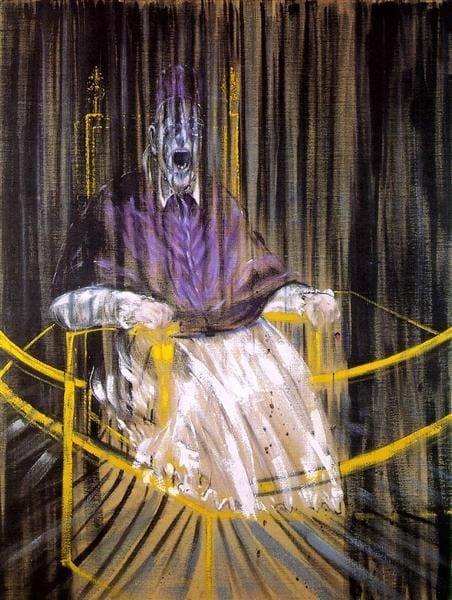
“On the Shore, Somewhere” by Haylee Chase Edwards
Every morning,
we find a new pile of bones
dusted in sand, embedded in dunes,
massive enough to stir grief.
The sun bleaches them as white as
baby teeth, but they’re ancient.
The gaping ribs could make shelter,
the brittle skulls make thrones.
Every evening,
we dread the creature who
left them behind. We wonder about the
fang-like grooves in the marrow.
We ask the mute sea and sky who
witnessed the night’s slaughter.
We ask the gulls if they saw it, we
interrogate the crabs and fleas.
Every morning,
we ask, but the only answer we hear is a howl.
“When Lifeboats are Yachts” by Carlos Po
The Disaster Relief Command Center was awash in activity as the storm walls that kept the city above the water slowly but surely began to crack. Bert drank half a can of pure caffeine and continued inputting statistics into the evacuation computer. “Hey, does anyone know where I can find the employment statistics sheet?” he called out to his coworkers, not looking up from his screen. Since his mother had fallen ill, his work had become his life.
“Should be in the demographics folder,” someone he couldn’t see replied, and he slapped himself on the forehead in shame. He pulled up the document and began entering the data on each quadrant. Carbac, Nisolo, Rett, he found it easy to see them as not places but merely as abstractions. His first partner had been from Rett, and he had been there a few times, but he found it too glitzy for his liking. He tapped out the last few figures on population makeup by sector, breathing a sigh of relief. Someone tapped him on the shoulder. His supervisor, Ino. “Not a bad speed for your first time. Get some water and watch the magic happen.” They smiled.
A few minutes later, he was holding a paper cup of water alongside throngs of his coworkers, waiting for Ino to relay the evacuation computer’s instructions. He brought it up to his mouth, sipped, and when he brought it down Ino was standing behind the podium, clearing their throat. “Thank you all for your hard work. I know it’s been a long 20 hours, but we’ve finally received our plans. I’ll give you each a copy of the protocols, but we will dedicate 60% of our personnel and resources to evacuating Rett, 10% to Carbac, and the remaining on standby.”
Bert looked around. Someone was chewing gum. Another checked the time on their phone and put it back into their pocket. He put his hand up. “Bert?” asked Ino.
“Did you say Rett first?”
“I did. Is there a problem?”
His forehead grew hot. “Rett is the furthest district inland. Why are we evacuating Rett first?”
Ino looked at him like he asked what color the sky was. “It’ll give us the maximum point value for the given system. Did you not read the training materials thoroughly?”
“I read them, but they didn’t give details and this makes no sense. Is there a manual override or something we can vote on?”
“I don’t know what else to say to you. If you read the manual, you’d know there’s none.” People in the crowd were beginning to snicker at the obvious first-timer. Bert hung his head in shame. His coworkers began to file out of the room, and Ino approached him. “Hi. Sorry about doing that to you up there. I said something very similar before.”
“I just don’t understand. What do the points mean?”
“Employment, age, productivity, disposition, it’s a mix of things. The machine hasn’t been wrong. We’ve been able to grow steadily even in the face of all the storms we’ve been getting.”
“I still don’t get it.”
She handed him a keychain USB with a password on it. “Do you know how many points you have? You didn’t get this from me.”
Seventy-three. He was worth seventy-three points. That put him above average. Ino was worth ninety-three. His partner from Rett was worth one hundred and one. His mother, being older, unemployed, and terminally ill, was worth twenty. He handed the USB back to Ino without saying a word. She was busy coordinating the evacuation of Rett’s citizens, but took it from him wordlessly. Bert began to hear words coming out of his mouth. “I…”
Ino didn’t look up. “Did you make a copy? Don’t bother. I tried that and gave it to the news. No one cared. This is how we save people.”
“How is anyone okay with this?”
“I dunno, but Rett loves it.”
Letter from the Editors
Happy holidays to those who celebrate and happy winter to those that don’t! I’m such a fan of this issue, because it feels like a whole buffet of horror genres. We’ve got Abbott’s gothic work, Burton’s more mundane flash, and sci-fi horror from Monsoor. Not to mention Edwards’ lovely poetry and Whitmer, Barragan, and Po’s prose.
Just a reminder that our January call is open and waiting for responses! Make sure you get your variations on the theme “sound and music” to us by January 5th!
What a 2025 it has been at The Dread! Let’s start 2026 off just as great!
-M. Anne, Editor and Owner
-Lila Phurrough, Editor and Art Director
Lilah Burton is a writer and teacher. In her free time, she likes to read, travel, and walk around town with her dog.
C.E Abbott is a historical fiction and horror writer influenced by the macabre of classic Gothicism and beauty of the Romantic poets. Based in Nottingham, UK, she is a graduate in English Literature and Creative Writing, and has recently completed an MA course in English Literature at the University of Nottingham. An aficionado in all things nature, she uses this passion in her work to develop a visceral, eco-horror writing style; also writing in tribute to Victorian authors, using archaic structure and complex syntax to achieve this.
Christian Barragan is a graduate from CSU Northridge. Raised in Riverside, CA, he aims to become a novelist or editor. He has previously edited for the Northridge Review and MUSE Literary Journal. His work has appeared in the Raven Review, Across the Margin, and Caustic Frolic, among others.
Robert Witmer has resided in Japan for the past 46 years. Now an emeritus professor, he has taught courses in poetry and short fiction not only at his home university in Tokyo but also in India. His poems have appeared in many print and online journals, including Lily Poetry Review, The Mean Street Rag, Bacopa Literary Review, New Verse News, Parody, Stone Poetry Quarterly, Bewildering Stories, The Opiate, and Moonday Mag. He has also published two collections of poetry, Finding a Way (2016) and Serendipity (2023). A third book, Sunrise in a Rabbit Hole, will be published in 2025.
Haylee Chase Edwards is a poet, dilettante, and Gothic scholar based out of the Shenandoah Valley in Virginia. She has always loved monsters and the things that create them, whether that be in literature, film, or art. After finishing her master’s in English, she finally decided to take her creative writing seriously—especially when it comes to creating monsters of her own. You can find more of Haylee’s work on Substack at hayleechase.substack.com.
Carlos Po is a former math and science teacher from Manila, the Philippines. He enjoys writing speculative fiction in his spare time, and his work can be found at
disconcertingtales.wordpress.com.