FEATURE: The Poetry of E.G. Ware
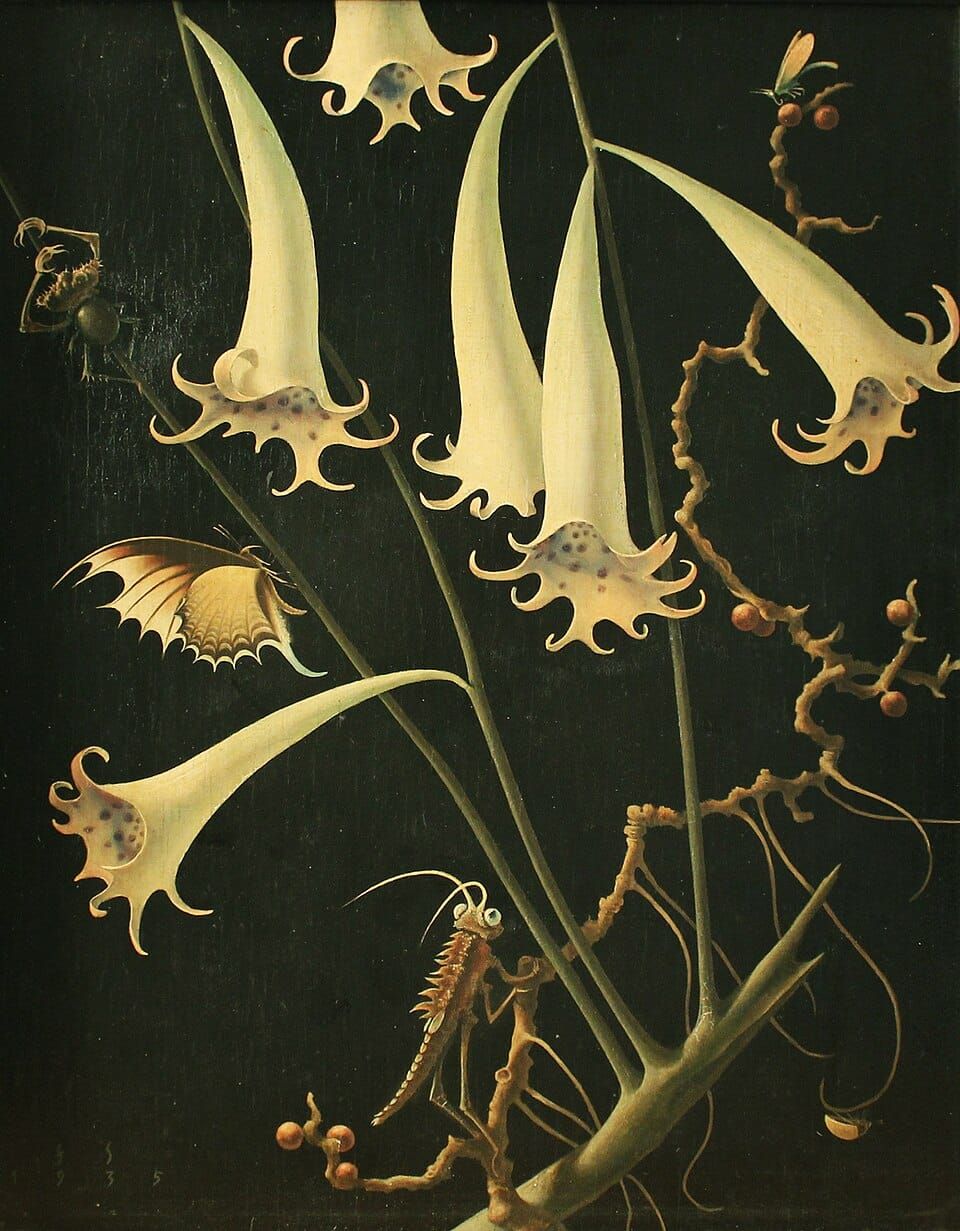
A Hymn to the Mother-Sire
What hand first stirr’d the calculus of clay,
and bade the mineral think, the ether weep?
Did chaos kneel, or find its own array,
and birth its god from matter’s ancient sleep?
Oh, God of moss and marrow, speak through stone!
Thy voice is echoed down the seed’s dark throat.
The rose remembers bones it fed upon;
the dust recites what blood could never note.
If order moves in spirals, not in line,
then Thou art not a monarch, but a wave;
a thousand mirrors bending the design,
each soul a shard reflecting what You gave.
What hand divides the genders of the rain?
What heart decides where thunder shall reside?
I see Thee, not enthroned, but split in twain,
as root and bloom, as sea and salted tide.
Oh holy Both! that gender’d light unites,
Thou changeless change, Thou mother-sire of form!
In every death another star ignites;
the corpse is but the cradle of the warm.
If angels rise from insects as they rot,
if saints are fungi dreaming of the sun,
then what is man, who names Thee, knows Thee not,
yet feels Thee throbbing when his work is done?
I cannot choose a single face to pray,
for all are Thine, refracted and re-shown;
the child, the thorn, the void where bodies lay,
all tremble with the memory of bone.
Oh fractal heart! that beats in field and flesh,
in wave and wound, in spark of synapse’ fire!
Thy image shatters, yet reforms afresh,
in every loss, Thou learn’st Thine own desire.
Then let me die a thousand deaths, and see
each mirrored self collapse, and still remain.
For Thou art I, and I return to Thee,
the spark, the dark, the question, and the vein.
—
Mandragora
The earth hath a throat and it dreameth in vocales still.
We thrust our hands within the loam and ken her pulse:
a drowsed wet syllable,
root-rib, root-lung,
a hush knotted like hair in a comb.
Nightshade lanterns knock their little skulls together.
The soil is thick with crushed bone and silt.
Somewhither under the heart of the hummock,
a seed misprisions itself for an adam, or an eve,
splits, forks, invents knees, invents belief.
They say the root is sexed.
Femina, a belly of clay.
Masculus, a blade in the mud.
We hold them to the lamp: the shadows have teats,
the shadows carry beards made of serein and rain.
Who taught the plant to look upon us?
We fetter a starving hound with a ligature of bast,
requisite cruelty of the harvest.
Its lungs now twin bellows of faith.
On the count of the
moon we adjure it forth,
the cur inhales,
and when the leash goes taut
the ground births with a scream
that cracks the jar of the ear.
The dog folds like a benediction
that cannot be finished.
We take the tiny one by the ankles.
We are mothers now; we are thieves.
In the light, the root stares
up like an infant underwater.
Mud clings wherein shame would be.
Its little wooden hands reach for a comfort.
It smells like thunderstorm blood.
We bathe it with wine, pare back its bark.
We tuck it in a drawer with wool and birth-cord and salt.
Listen: the cabinets susurrate homunculus,
the alembics hum like hives,
the alchemist’s eye is a black coin rolling.
He draws a circle, a second womb,
inks the moon in the margin,
feedeth the root the breath he cannot spare.
A light like drowned honey caves in.
The room fills with the sound of small teeth growing.
Mandrake, little counterfeit,
bride of the earth, bridegroom of want,
teach us the grammar atwix.
Show us how a thing can be both remedy and wound,
both crib and charnel,
both prayer and proof that prayer was never needed.
When we sleep, thou standest by the bed with dirt on thy heels.
Thy hair is moss, thine eyes are pits that once sang.
Thou askest for a name and I give thee my own.
You ask for a mouth and I give thee my hunger.
Thou askest for a future and I show thee the garden
furred with bones of dogs and stars.
At dawn the tor exhales.
Leaves are antlers of green fire.
The buried choir starts again,
roots clack their little knuckles together,
the womb of stone remembers every theft,
and wherethrough,
a seed rehearses a face,
getting it wrong,
getting it wrong,
getting it so grievously, right
that even the sky must look away.
—
no slack in it
black again, night-thick click in the throat, a nick of it, slick of it,
you say selfish (self-ish/shell-fish, shut)
and i, i say we do, don’t we, do, we do, we do,
in the bed, in the dark, bodies meeting, skin to skin, again, again,
count it out like pills, like wills, like something owed, showed,
three times, four, more?
you shrug it off, cough it off, off isn’t on, you say, gone is the way i’m gone in it,
(phoning it, toning it: low, low, below)
like i’m there but not, like touch without want, like want without heat.
sully spreads, almost nothing, then broadens
in the space between your mouth and mine, a kind of whine, a line we keep crossing,
bossing it back and forth, you forth, me back, track-mark talk,
i say: we haven’t been-been in it, in us, not lately,
not outside the bed, not in the quiet, not in the way you used to look at me,
lately is a weight, a wait, a plate left out too long, gone,
the kids, the noise, the choice of every small thing splitting,
us into corners, mourners of a bed we still share, still enter, still leave.
you: shouldn’t matter (flat. that. matter.)
sex is sex, you say, body is body, take it, give it, that’s it.
i feel it, pitch-pack in the chest, a press, a yes i never said,
head full of ledges, edges, pledges we misread,
you call it duty, beauty, say i withhold, i fold, i’m cold in it,
in the act, in the way i move, the way i don’t move, don’t prove it to you,
i say i can’t just: start, part, depart from how we are apart,
heart needs a door, a before, something more than this score you keep, keep, keep
more than a body laid down when you want it, want me.
you laugh, cut it in half
say i’m a task, a mask, a body that won’t ask how high when you say
say i lie there, bare there, air there, not there there,
that i give you nothing but a shape, a state, a late response.
i shrink (ink) (dark) (back into bone)
tone of you: stone, thrown.
and i, i am still here, hear me, nearly,
nearly saying it, want won’t warm, won’t form / not from this,
how i can’t open when i’m closing away, holding all day,
but it tangles, strangles, dangles off the edge of speech.
it sticks, black, slack, a lack
and the room tilts, guilt built in the walls, calls my name long,
and we
we don’t stop. we don’t start. we just
stand there,
share air,
a seam pulled, skin of it.
black, still
spilling.
—
requisitioned
the mirror sits on the floor. placed. chosen. here. there. a refusal of surface, wall to claim it, no nail to hold its purpose. found in the alley: antique, worn, ornate filigree gnawed and time-torn. clouded glass, a face that won’t. won’t. cohere, not reform, left to mildew and weather, to warp, to swarm. too much, he said. surplus. an error. aggressor. something about it: queer-sized, some stranger measure. but i think it’s lovely. i said it softer. (too soft) i said it fresher. full of stories. the grain still exhaling what it hoarded before me, floral ghost of rot, through wild inventory, a sweetness filed in a catalogue of quarry. (i carried it anyway) up the narrow stairs, alone, hip braced to timber, shoulder to weight, bone-to-bone. breath breaking, malformed, syntax snapping mid-tone. a body conjugating: i am still my own. up & up i thought: let it fall, let it fissure, let it bawl its bright refusal into shards along the hall. let it fracture to pieces, less than me, more compliant, more conveniently small to be. but i didn’t. i’ve always done things without asking. before him, before this soft-voiced masking. before permission arrived like a cuffed command at my wrist: language tightening tightening how i should stand. he says it’s trash; someone else’s. left to ferment in the alley, among what dispossesses, peel and plastic and rain: rank little excesses that bloom into the odor he says undresses. but it smelled like honeysuckle to me (you have to get close. you have to lean. you have to un-be. unbe.) ancient oak siphoning sweetness illicitly, through slats beside the dumpsters, botanically, secretly. like it remembered a garden it was never meant to keep, like a rumor of soil that refused to sleep. he was angry again: you shouldn’t: why didn’t you, what were you thinking: who told you what to do. as if i were small enough to be lifted, reset, arranged, as if desire were currency meant to be exchanged. like my hands have forgotten. how to choose. how to lose. how to refuse. i look at it. not in it. that feels too certain, singular, too lit. at it. clouded pane, a surface unwilling to commit, to broker my outline, to ersatz a fit. i wonder if i am inside: edges feathered, unshelved, archival, unsteady. something misplaced. something mis-faced. too large for the room i’ve been portioned to fill, waiting for this man to requisition my will. take me, break me, make me be still. later, when the shoutings thin. thin. thin. into the blueprint of another room, another skin. i kneel (quiet is its own permission. always has been) the floor is cold, my body is not, heat held where it shouldn’t, caught. kneel down, naked now, no fabric to allow. a softening, a laundering, a gentler somehow. skin. flesh. the place i am in. i turn sideways. look: my body in the mirror, blurred but there. my nude flank held in oxidized stare. breast, rib, the hollowed flare and dip. below, the curve beginning to declare. itself. a shape i longed for, asked for, now wear. i am prepared to prepare: future written into my air. looking at my naked body in the mirror, seeing her nearer. in the rounding, the hush-swell under skin, the quiet annex where i end, she begins. i press my hand to the place where she is becoming, and the looking-glass, stubborn, over-scaled thing: keeps us, somehow, from fully succumbing. i wonder if she will learn to hoist what is heavy without seeking return. to keep what is called trash, what others would burn. to stand in a room and let her own wanting turn. to not ask. to not mask. to not lessen for anyone’s task. if she will be allowed, or if allowed is a word said too loud. will she have to learn it the way i did: alone, partway up the stairs, breath splitting knuckles on prayers. refusing to drop what i chose to carry.
—
Sock Building Lullaby (Jefferson Ave.)
I come brick-red, sugar-lunged, turn-of-the-century bred,
when Jefferson ran on horse sweat, grace, and debt.
French fur ghosts scratchin’ ledgers in silt,
German school bells masticatin’ vowels to bits.
I wore a storefront grin right up on the street,
sold yeast by the scoop and sweetness by heat.
Had a kiln-hot gut where the sugars went feral,
green glaze, iron grate, alchemy, peril.
I been a store, I been a scar,
I been a rumor with a bad address.
Name me trash, name me cursed,
I’m still breathing on Jefferson now.
Boarders stacked like cordwood upstairs,
thin walls learnin’ prayers, fights, affairs.
Shopkeeps rotated like bad omens do,
every dream busted sideways ‘fore it came true.
Then the trade went crooked, the lights went wrong,
sock shop smilin’ way too long.
Front for somein, nobody asked what,
guns preachin’ loud where mercy forgot.
I been a store, I been a scar,
I been a joke folks pass around.
Laugh it of , spit it out,
I’m still standing on Jefferson now.
They razed my school, left me starin’ at dirt,
vacant lot twitchin’ like an old hurt.
Car wash rose loud as a false amen,
beat me daily with recycled din.
Then my roof caved in, gave sky my bones,
rain catechized me bare to stone.
I stood jawless, rafterless, open-throated,
weather slidin’ through me unvoted.
I been hollow, I been hell,
gusts knowin’ my every sound.
Even rot keeps time real well,
I’m still counting on Jeffferson now.
Two brothers came with clipboards and schemes,
called it revival, called it means.
Stitched me clean, priced me cruel,
left me dressed like a lipsticked fool.
I waited there, turnkey lonely,
pretty and empty and tax-sale holy.
Then you swooped in with roots and noise and need,
three generations, stubborn creed.
Painted walls with trees where my scars showed through,
flowers climbin’ what bullets knew.
Pots clanged hope in my chest at night,
you argued storms, you fixed me right.
I been a store, I been a scar,
I been a wreck they warned about.
Say it low, say it loud,
I’m a home on Jefferson now.
Cat suns my sill like she owns the block,
dog clocks dawn by the chain-link lock.
Guns still pop like a drunk refrain,
but joy’s a squatter you can’t evict again.
Girl with gold hair whispering bark-true lore,
teaching the tree what breath is for
They ask you sideways, grinnin’ mean,
“Ain’t this that sock place?”
You say, “Mm-hmm.”
Yeah, that’s me.
But I got heat in my walls again.
Yeah, that’s the one.
Still standing. Still proud.
I’m a home on Jefferson now.
Poet’s Statement
Well met! I work under the name of E.G. Ware, though really everyone calls me Liz. I reside, create, and habitually unravel in the American Midwest. Specifically, St. Louis, Missouri, where I live in a hundred-year-old brick building that was once a candy supply company and boarding house. I’ve lived in a few places, but St. Louis always pulled me back. There’s something about the collision of beauty, ruin, and strange endurance that feels impossible to quit.
At the most basic level, I think I’ve always been a compulsive maker. For as long as I can remember, I’ve romanticized everything into story or art. At the moment, I’m spending most of my time reading and writing, and disappearing inside highly specific historical rabbit holes. A current one is The World of Hild by Nicola Griffith. The author and subject are both incredible. My mindscape is often filled with medieval mysticism, gothic fiction, decaying architecture, folklore, werewolves, or all of the above. The Castle of Otranto remains my favorite novel of all time.
I’ve been writing poetry and short stories for most of my life, and am currently being consumed by my first (hopefully to be) finished novel.
Much of my writing draws on embodiment and the human impulse to personify the unknowable. Ancient deities once gave shape to grief, weather, hunger, fertility, catastrophe; ways of asking why a child dies, why the hawthorn blooms too early, why the body betrays itself. I think poetry can be a really exceptional device for continuing that exercise in speculation. We’ve always tried to explain the unexplainable, though now we direct attempts more outward to technology, spectacle, apocalypse, and cosmic horror. I suppose my poetry tries to tighten the lens: to the intimacy of the body, household, field, wound, inheritance.
My storytelling instincts were shaped early. I grew up in a liberal household and was raised equally on science fiction, fantasy, and convention halls full of handmade monsters. The fantastical and the uncanny were everyday dinner guests. I later studied theater, which gave me a new vocabulary for how wardrobe, gesture, and setting shape a character's interior perspective. These inheritances surface in my writing: a pull toward the unknown and a reliance on tactile language.
I’ve also lived through some significant trauma, individually and relationally. I’ve spent a long time learning to metabolize anxiety, depression, and PTSD. Poetry increasingly became the place where I built those tools for myself. That process strengthened my understanding of the aftermath of women’s experiences, especially how pain lingers physically, socially, and linguistically. And it’s helped me become the kind of parent who can hand a better toolkit to my children. Hopefully, much better than the one I was handed.
My current collection, Black on Her Tongue, focuses on the years I spent in an abusive marriage. I know, not a subject that’s rare territory for poetry. But I’m less interested in confession than in psychic texture. I’m interested in how fear alters perception and how shame inhabits the body, through the viewpoint of a psyche in the act of breaking. And the specter of the break that never really goes away.
Language is also very central to my process, particularly archaic vocabulary. So much has been lost in the simplification of the English language. Older lexicons are almost used as costume in certain fiction, and even shed from historical fiction because it’s difficult for people to process. We’ve given up enormous musicality in the trade. Poetry in its spoken form is music, and older phrases (sometimes a single word!) carry that music in a way modern speech rarely does. I love researching obsolete vocabularies and finding ways to braid them into contemporary landscapes.
One of my more ambitious word-crawls became Mandrogora, a long-form poem rooted in medieval folklore surrounding the mandrake root. I fell deep into the history, superstition, medicinal lore, and visual art surrounding the plant (it's so wild) and came out months later with one of the most difficult pieces I’ve written. If you’re not familiar with the lore, I encourage you to look up the history and art.
I’m also working on a related series inspired by humoral theory and the regimen sanitatis traditions between the 12th and 14th centuries; poems concerned with seasonal health, bodily balance, devotion, appetite, decay, and the strange intimacy medieval people had with their physical fragility.
At a personal level, my poetry is how I express and widen my own understanding. When the heavier work reaches outward, I hope it meets someone where they are or gives them language for something they hadn’t yet named. And at the simplest level, I hope it brings joy. Poetry is art, it’s beautiful, and I feel lucky every time someone makes space for it.