FEATURE: “The Silence Between” by Ria Cabral
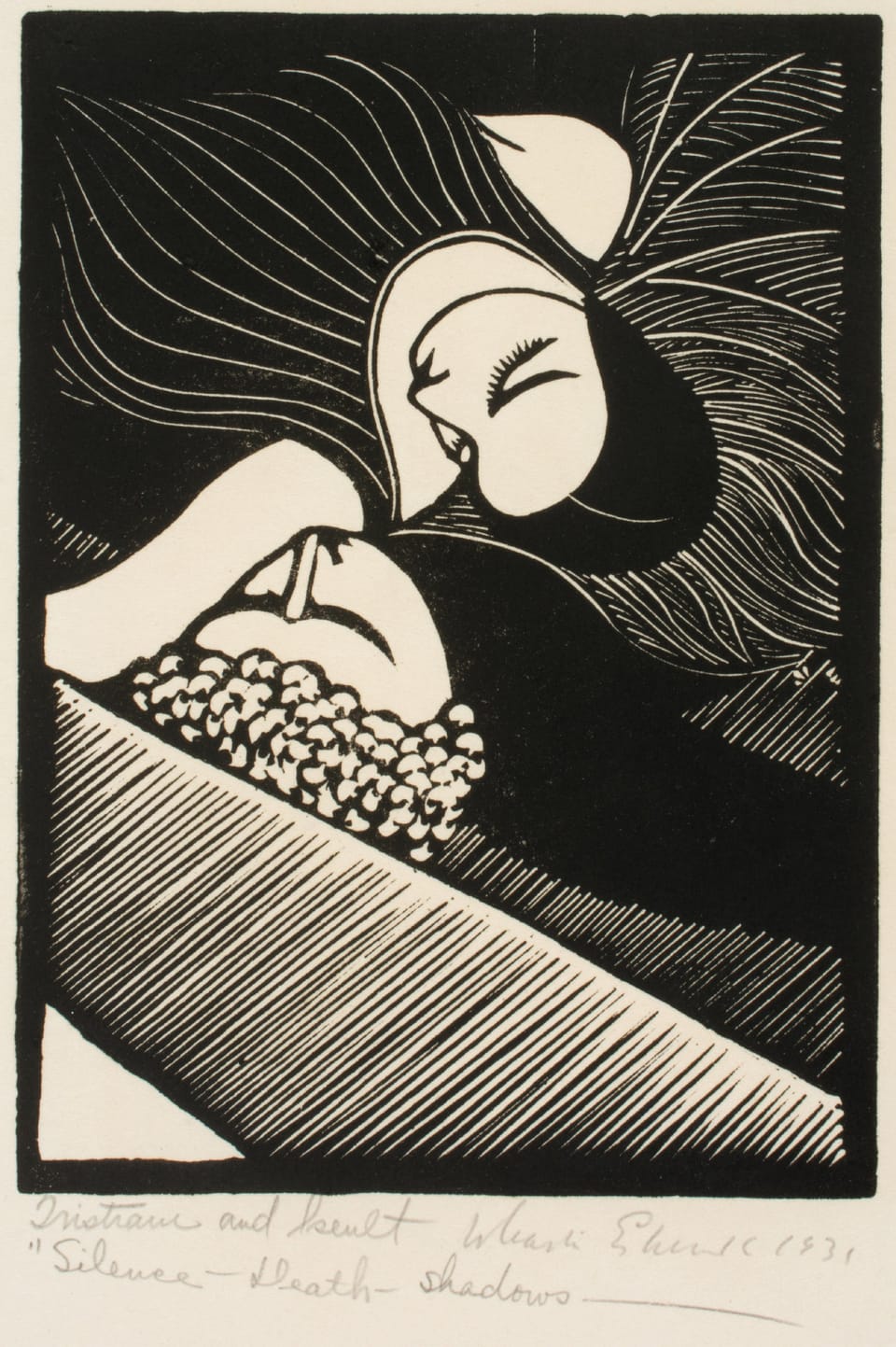
It started with the faucet.
Not the one in the kitchen, the one in the bathroom—the one Anna had never noticed before, though it had been there for as long as she could remember. The first time it happened, she had just returned from work, tired, and leaning over the sink to wash her hands. She turned the tap off and walked away, only to hear it—a soft, metallic tap… tap… tap…—echoing through the apartment.
At first, she thought she had left it running. But the water wasn’t there. She pressed her hands on the porcelain, twisted the handle, and still, nothing. The sound continued, steady, indifferent, like the slow ticking of a clock.
She shook her head and laughed softly, nervously. “Just me, being paranoid.”
The next morning, the faucet waited. This time, it was joined by another sound: the refrigerator humming a fraction too long after she had closed the door, a vibration that seemed almost… intentional. She opened it, pressed her fingers against the coils, and the hum stopped. Yet, the silence that followed was heavier, as if the walls themselves were holding their breath.
It didn’t take long for other things to follow.
The elevator in her building would sometimes stop for no reason on the 13th floor, though she lived on the 7th. She had never pressed that button, never even been to the 13th floor—but each time the doors opened, the hall beyond was dark, longer than it should be, like a hallway that had stretched overnight. She would step in, and the lights would flicker. Sometimes, just for a second, she thought she saw someone standing at the end of it—a silhouette, barely there, waiting. But when she blinked, it was gone.
Anna’s friends began to notice changes too. Not in her habits—though she stopped answering calls, stopped leaving the apartment for days—but in her voice. On video calls, she would pause mid-sentence, staring at something behind the screen, something she clearly could see but didn’t acknowledge. And sometimes, her reflection in the computer webcam would hesitate, lagging just slightly behind her movements, as if it were considering what to do next.
At first, she tried to rationalize it. Stress, lack of sleep, the city’s oppressive heat. She told herself she was imagining things. But imagination, she quickly realized, had begun to betray her.
One night, she woke to the sound of whispering. She lived alone. The whispering came from the walls themselves, faint at first, like the static between radio stations. She pressed her ear to the plaster. The voices weren’t saying anything coherent, but the tone—the cadence—was unmistakable. It was impatient, mocking, alive. She ran her hand along the wall. It was cool, smooth, solid… but she could swear she felt the faint vibration of breathing beneath her fingertips.
By morning, the whispers had stopped, but their absence was worse. Silence was no longer comfortable—it had become a presence, oppressive and judgmental. She began recording everything: the hum of the fridge, the tap of the bathroom faucet, even the sound of her own footsteps.
And the recordings betrayed her.
Play them back, and sometimes the noises would shift. The tap would stop mid-recording, and when it restarted, it had changed pitch. The fridge would hum in a different rhythm, slower, deeper, like it was breathing with purpose. Footsteps she hadn’t taken echoed in the audio, pacing just behind her. On more than one occasion, Anna swore she heard her own voice calling her name from the speaker.
It was then that the apartment began to rearrange itself.
Not in ways she could immediately identify. Chairs didn’t move. Doors didn’t vanish. But the space—the space itself—stretched and warped. Hallways were slightly longer. Corners seemed to lean toward her when she wasn’t looking. She placed her keys on the counter one night, went to bed, and found them on the bathroom sink the next morning. Twice, she had left her shoes by the door, only to find them lined up in the middle of the living room, facing her.
The city outside became another layer of uncertainty. The streets were the same as always, yet she began to notice oddities: people who froze mid-step, faces that turned her way for a fraction too long, windows reflecting things that weren’t there when she looked directly. Once, she walked past a construction site and saw her own apartment building reflected in the glass. Only the building wasn’t right—the windows were darker, more numerous, and one balcony, hers, had a person standing on it who wasn’t her.
Sleep offered no relief. Each night, she awoke to the sound of something heavy moving across the floor. Sometimes it was soft, almost tentative, like someone—or something—was trying not to wake her. Other times it was deliberate, rhythmic, like footsteps marching in a slow, cruel cadence. When she opened her eyes, the room was empty. But the shadows seemed to linger longer, hang lower, touch things that shouldn’t have shadows at all.
By the second week, Anna stopped leaving her apartment entirely. She stopped answering the phone, stopped looking out the windows, stopped checking the hallway for movement. Even the tap, the fridge, the walls—they had begun to feel like extensions of her own mind, and the question that woke her most often was the one she could not answer:
Do I live here, or does the apartment live in me?
The breaking point came quietly.
It was a Tuesday. Or maybe Wednesday. She hadn’t bothered checking the date. She had become adept at moving through the apartment like a ghost, careful not to disturb the objects around her. And yet, somehow, the refrigerator betrayed her.
It began humming before she even approached it, a low, deliberate drone. The tap followed, dripping in perfect rhythm with the hum. Anna pressed her ear to the fridge door. The hum deepened into a voice. Not words, exactly, but patterns of sound that made her stomach churn. It was familiar—the cadence of her mother’s voice when she was young, the sound of her father laughing in the kitchen—but distorted, elongated, sinister.
And then the voice spoke clearly:
“You shouldn’t be here.”
Anna fell back, stumbling, and the apartment seemed to exhale around her. The lights flickered violently, throwing the living room into chaotic shadows. For a moment, the walls appeared to pulse, contracting and expanding like lungs. She ran to the door—her door—and it wouldn’t open. The handle turned, but the door didn’t move. Behind it, something rapped against the wood, slow, measured, growing louder.
The whispers returned, this time intelligible. “We’ve been waiting. We’ve been inside you all along.”
And then she understood: the apartment hadn’t been haunted. She had been.
Days—or what she assumed were days—passed. Time had become a liquid, pooling and spilling without warning. Anna had stopped checking clocks. She had stopped tracking meals. Even the sensation of hunger and fatigue had become distant memories, irrelevant under the constant pressure of the apartment’s gaze.
It started subtly, as it always did. The walls began to breathe again, but this time outward, like exhaling into the city itself. Anna noticed it first through the windows. She looked out at the streets and saw them subtly shifted, elongated. Streetlights stretched taller than physics should allow. The cracks in the pavement writhed slowly, like skin. Cars passed, but their tires did not touch the asphalt. Their engines hummed in a key that resonated inside her head. People walked past, but their shadows lagged behind them, moving independently, sometimes stopping mid-step to look straight at her.
She tried to close the blinds. They refused to obey. The slats bent, curling away from her hands. The apartment had learned her limits.
In the kitchen, the faucet began dripping again. She didn’t flinch. She couldn’t. Every sound now felt like it was part of her own nervous system. She could feel the vibrations in her bones. She could feel the shadows crawling under her skin. Her reflection in the darkened window sometimes blinked before she did. Sometimes, it didn’t blink at all.
Then the faucet moved. Slowly. Just a centimeter at first, but enough. Anna realized with a horrifying clarity that the reflection had reached through.
It was no longer a reflection.
Her own body twisted violently, jerking backward as if invisible hands had seized her limbs. She fell to the floor. The faucet’s drip accelerated, now a steady stream. The bathroom lights flickered, and the shadows behind her moved independently, stretching, bending, wrapping around the corners of the room.
She ran to the front door. It would not open. The hallway beyond twisted unnaturally, stretching farther than it should. She could hear footsteps in the hall—but not her own. They circled, slow and deliberate, pacing the length of the corridor before stopping just out of sight. The shadows pressed against the cracks around the door, dark, thick, almost viscous.
And then she heard a whisper she could feel more than hear:
“You were always ours. You just didn’t know it.”
Anna sank to the floor. Her mind raced, trying to piece together any escape. The world outside, the life she had before—it was gone. The apartment had consumed it. The city, reflected in her windows, seemed to pulse in sympathy, bending, swallowing, aligning with the rhythm of the dripping faucet, the humming fridge, the pulsing floor.
Her reflection appeared again in the living room window. Not mimicking her this time. It stepped forward, fully out of the glass. Anna froze. It was her, but wrong. The eyes were deeper, darker, with shadows moving beneath the surface of the skin. The mouth smiled without her consent.
“Welcome,” it said. “We’ve been waiting for you to see.”
Anna tried to run. She ran, and the floor beneath her bent slightly, trapping her feet. The walls leaned in. The shadows clung to her, writhing, whispering, laughing. Every object in the apartment—the faucet, the fridge, the rug, the furniture, the peeling wallpaper—was watching, waiting, alive. Her reality collapsed completely. She was no longer a person in a building. She was a node in something vast, patient, and hungry.
The faucet dripped one last time. Tap.
The fridge hummed in perfect resonance.
The shadows laughed.
And somewhere, deep within the folds of perception, Anna understood that she had never existed alone. She had never been separate. She had always been part of the mundane—but now, she was fully claimed.
The lights blinked off. The apartment exhaled.
Silence.
But if one were to listen closely—very closely—the drip… the hum… the whispering… the faint, patient pulse of life in the mundane… they might hear a new voice among them.
Tap…
 Reedsyprompts