November 2025
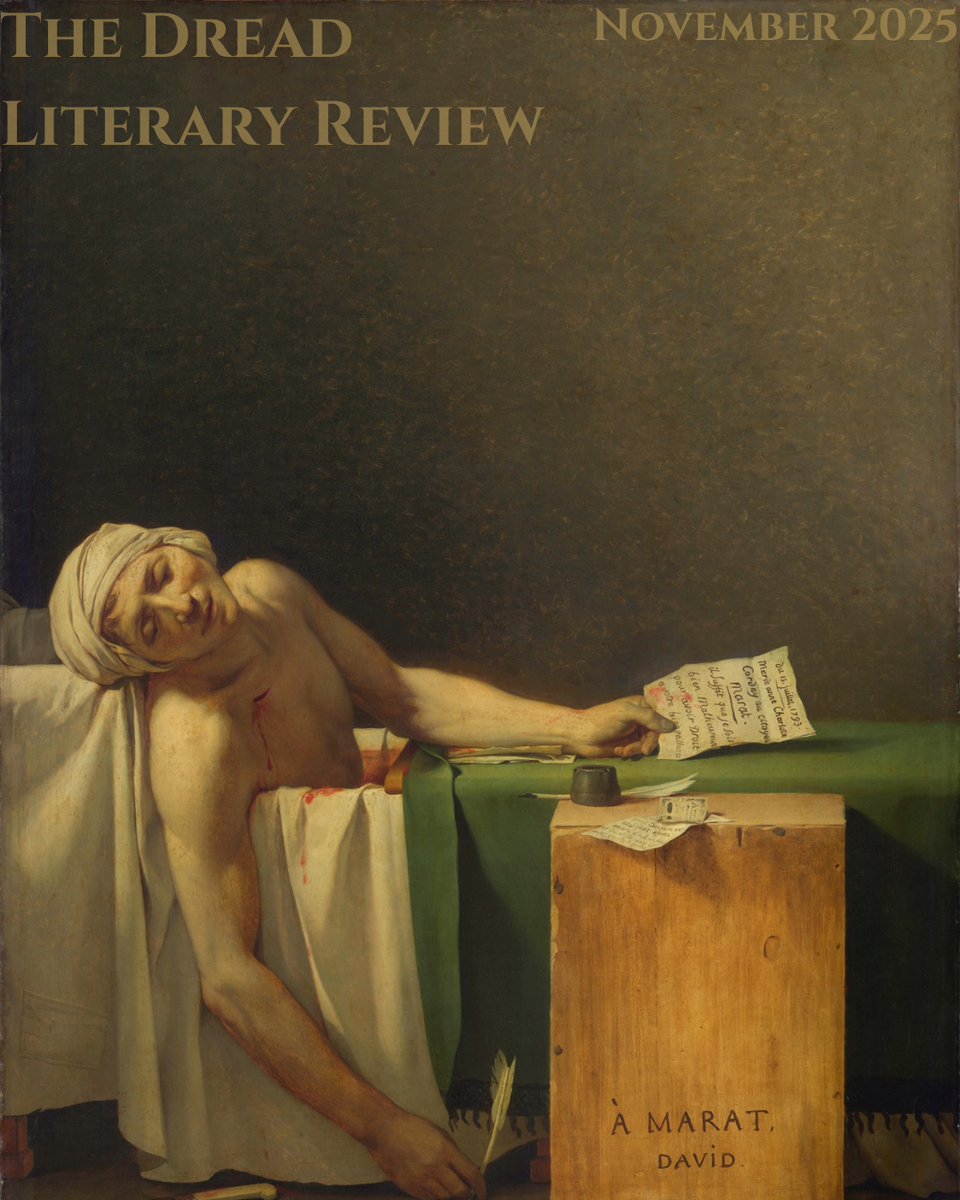
“Alone. Yes, that's the key word, the most awful word in the English tongue. Murder doesn't hold a candle to it and hell is only a poor synonym.” -Stephen King
“Love Language” by Spencer D. W.
It was normal for him at this point. He sat in the kitchen alone. His wife was upstairs, pleasuring herself after what can only be described as blatant disinterest in anything to do with him. He pleaded with her to open up and tell him what she liked, but no matter the approach, every discussion turned to deafening silence. He sat at the island in the kitchen, sipping a glass of water under the single light above it as he listened to his wife's muffled moans and whimpers, accented by the wind brushing errant branches against the house. This truly desolate feeling left him caught between the worlds of sadness and a gestating anger in his chest. He wanted to make this work; they had been married for five years. Phillip wasn't sure what switch had been flicked that caused the sudden repulsion. He wasn’t balding, Hadn’t gained any additional weight and was present when she spoke, and yet it felt as if she was a far different person than who he had married. One day it was beautiful, meaningful. The next, she would look disappointed at his mere presence. Like his arms and legs were twisted on wrong.
Phillip slid the glass across the island and dumped its contents into the sink along with the glass. He shuffled off to the couch, the place he had grown more and more accustomed to sleeping. The indentation across the length was a perfect replica of his body, and just as depressed. So, he would lay there in a house in which he felt like a tumor, unwanted, waiting to be excised. Listening to the low whispers of pleasure from Ana that felt targeted–deliberate to hurt him further than she had already. The slow push of a knife she knew she held. The next morning was a carbon copy of the last, and the one before that. A routine pioneered by Phillip to get his mind on the work ahead of him and not to wallow in the bog his marriage had become.
He made coffee and a small breakfast burrito. He made Ana one as well and wrapped it neatly for her next to her purse. He would sit and sip his coffee, long after he had finished eating, absolutely filled with dread to go upstairs, like something dreadful waited. He feared his wife, or rather the rejection she emanated. This was the routine, to be looked at like a stranger, or rather hope that one morning everything would have gone back to normal. As punctuality creeped farther out of reach, he would finally force himself up the stairs to their room, where he would gather his clothes for the day. He could hear her in the bathroom, just off the master bedroom, showering.
As he pulled his pants on, he noticed her phone sitting on her nightstand, screen still lit up. He didn't want to look. It felt wrong. As he was pushed farther away, resentment had begun to burrow in his mind. A persistent buzzing that refused to leave or lessen, like a fly trying to escape a home. Irritating, persistent. As he buttoned up the last button on his crisp white shirt, he reached over and grabbed the phone. It burnt in his hand. Everything told him it was wrong. To just put it down and walk away, just keep trying, but his trying was getting them nowhere. He just had to see if he could find something that would help the situation, a justification he clung to for this intrusion of trust. In reality, he just wanted to know there was no one else, another fire he couldn’t control destroying his marriage. What did he expect to find? Her cheating, hiding a secret husband and family, ten dozen bodies piled under the floorboards? Honestly the latter would be much better.
As he scrolled over messages and pictures, he found nothing that jumped out at him, until he found a folder with a heart emoji labeling it. His heart sank. This was it. He was going to see the face, and possibly much more than he wanted of the man who was so much better than him. He imagined him as a perfect specimen, and himself as no more than a mangled thing in comparison. A grotesque subject, hardly human in comparison to something so refined.
His thumb hovered over the album for what felt like an eternity. Listening to his wife showering away, whistling without a care. All the while he grappled with the void that was expanding between them. Then his finger finally fell onto the album, clicking the touchscreen and opening it to him.
What the fuck was he looking at?
It was disgust, followed by confusion. Nothing he was looking at seemed real, and he prayed to anyone that was listening it wasn’t, and that this couldn't be right. Maybe he had finally lost his mind. He scrolled over and over, closing and opening his eyes to see the same horrid forms plastered all over the screen like real-life stand-ins for that famous Swiss artist. It made the still-digesting burrito in his stomach churn and quake, wanting an immediate escape.
As the whistling from the bathroom stopped, he exited the folder and placed the phone back. As the phone fell against the wood of the nightstand, the shower turned off. She emerged from the shower, a towel wrapped around her and her hair up in a bun, still dry. She always waited till evening to wash her hair. Looking at her, he couldn't help but smile. As if all that he saw was wiped clean. As if none of those horrors could ever be associated with her. Someone so beautiful could not be associated with things so vile.
"Good morning, love," he said in a shaking, nervous tone. Anxious to talk to his wife, as if she would reel at his very voice. She smiled, and whether it was her intention or not, Phillip’s perception made the smile appear as piteous.
"About to head off to work?" She asked as she sat next to him. She couldn't be bothered to talk to him, skipping right to his departure. The horrors were crawling back in with each slight pause where no words formed between them, and he could fill those spaces with the anger he felt. They were a few feet away, sitting on a nightstand, lingering just inside her phone. Like he had just witnessed a tragedy, he couldn’t believe it was real, or that it sat so very close, on his wife's phone.
"I was thinking, one of these nights. We should go out. Do something special. What do you think?"
She seemed to brighten up, just enough to fool Phillip. She simply nodded and said, "Well, we will have to come up with a plan then. We used to go to the coast often. Maybe we could take a trip?"
Just like that, there was no sight of the horror he had seen on her phone mere moments ago, and only love filled his mind as he saw her demeanor change to one he had recognized from when they first started dating, when they first got married. It didn’t matter to him if it was real or fabricated. He was lost in her glamour. He swiftly responded, not wanting the moment to slither away.
"Absolutely!" Like a child anticipating Christmas, his voice carried the same excitement.
He wanted nothing more than to please her. He would try everything in his power to accomplish that.
–––
He sat in his cubicle. The drive to work was absent from his mind. They were nagging him, those things that slithered off the screen of his wife's phone. He kept scrolling website after website, ignoring work completely at this point. Trying to find something to confirm he was overreacting, panicking, over nothing. He understood kinks and fetishes, but to lose interest entirely in her husband for something as horrifying as what he saw? It wasn't normal, it couldn't be normal. Phillip wondered where she could even find these kinds of images, and he didn't dare try to search for them on his work computer.
He switched to his phone and started scrolling in the same obsessive panic. He didn’t know exactly what to search for, so he tried a few keywords and phrases. “Body augmentation” didn’t bring up much besides the usual piercings and such. “Extra appendages” got closer to the images that haunted him. Not the blood-soaked kind you would see in a horror flick, deliberate, placed by a thinking mind onto the frame. It all felt abhorrent. He stumbled onto something more useful within three hours (that felt like twelve) of searching for things that he was sure he was going to have to explain to an FBI agent one day. A forum of people discussing exactly this. Specifically, someone expressing their worry about their partner's obsession. It went into detail of how they talked it over and despite this, he worried that she was pulling away from him. He still loved his wife but did not understand this obsession. He expressed concern for her and his well-being, as her need for this experience grew to the point she was missing work, calling in sick and even harassing doctors about procedures to fulfill a fantasy–that’s how the post described it. Phillip scrolled and scrolled through lines and lines of responses, most sympathizing with the poster’s plight, others demonizing it. He felt if it was this common enough of an occurrence, why had he not heard about it? Though he supposed that it's understandable why something of this nature would never leave the walls of someone's home, not even to a therapist, out of fear of being locked away in a nice white room.
If you are looking for a way to help satisfy your wife's needs, I know a doctor who can help!
A written comment popped out to Phillip's eyes like a flash of light in a dark tunnel.
Most responses to this comment were people's abhorrence for such a thing, some thinking it must be a con, a fallacy of some online cretin to pull in the lonely, dejected people of the site. Phillip’s interest piqued. The specifics of what this could mean didn't matter to him. It didn't worry him, if it meant understanding this, maybe making her see him again, really see him and all the love he has for her. Despite how insane this all was, the same thought overrode all the logical worries in his mind. He just wanted his wife to want him. It didn’t matter how.
You would do anything to make her happy, wouldn’t you?
That was the thought that carried him through any logical protest to this line of thought. It pushed him forward to messaging the individual, hoping to find some insight into this situation, and subtly hoping maybe he would just explain it as a farce, that there was no doctor. He kept thinking, how could any doctor do those things he saw? It was immoral, inhuman even. Did people go to these lengths for sexual gratification? Though perhaps for someone you love, it wasn’t so outlandish. As he sat there waiting for a response, he sympathized with others going through such extremes for love.
No more than a few grueling minutes after he had typed his message asking for more information about this doctor, the person on the other end responded. Not only did the returning message not explain it away as a hoax, but it also gave Phillip a number and a name. Dr. Craig Carlson. The number was a local area code. Phillip leaned back in his chair, taking breaths as he looked away from his phone and back to it. It seemed like fate had taken hold and was allowing him to do what was necessary for his marriage. Those same logical parts of his brain sounded like the loud kid in the back of the class, trying to get his mind straight, repeatedly snuffed out by a cacophony of the very same noise, saying:
You would do anything to make Ana happy, wouldn't you?
The message explained the Doctor had lost his job at a local hospital. Why? It didn’t say, but Phillip could fathom a reasonable guess. A red flag was waved across his mind, but it was immediately pulled away with the same thought.
You would do anything to make Ana happy, wouldn’t you?
He took the number and name down into his contacts on his phone. He sat hovering over it, staring like a madman into the screen. The thought of calling was terrifying, but the constant fighting and loneliness were far more terrifying. In truth he was tired. With a deep breath, a new feeling of resolve washed over every sensible piece of his mind. A compromise to not do anything hasty, to just get information about this.
He knew he would call after work.
–––
The wait till the end of the day was tortuous. It took all he had to get past the hours as they poured by like molasses. He sat in his car, his phone screen illuminating his face in the dark interior. It showed the contact information of Dr. Carlson.
Calling to inquire won't hurt, he thought to himself as he tapped the call button on the screen. Only two rings in before a man answered, a very reserved voice.
“This is Dr. Carlson, hello?”
Phillip froze for a moment. Nothing about this was worrisome, and he never had anxiety calling anyone, especially for an appointment, and that was basically what this was. Wasn't it?
“Uhh, I’m sorry. This is Phillip Miller. I got your number from who I believe is another patient of yours. He said maybe you could help me.” There was a long pause on the other end that was punctuated with a sigh.
“I’m sorry to say I no longer have regular practicing hours. I can refer you to a colleague of mine…”
“My wife has unusual needs, and I was looking for a means to fulfill them.” After he had interrupted him he was forced to a stop by the creeping anxiety of the words he had just spoken, trying to figure out the best way to explain it. “Change me,” Phillip continued, wondering how insane he sounded. The words Phillip chose felt insane, but as they settled on the other side of the phone, the tone of the man changed to an almost jovial one.
“Why didn't you say so? It is a personal matter, and I wouldn't want you to struggle through this alone or with someone who may judge you for these feelings. I’ll tell you what. Why don't you come to my home? We can discuss this in person. I will text you the address. Would that be fine, Phillip?” It felt as if he were making a normal call to the doctor for some routine check-up, but in reality, he didn't know what he was making an appointment for. Should have been for a psychiatrist. He just knew that he wanted to know what he could do for his wife's happiness, that he had reached the end of his rope and wanted to do anything to fix the void between them. To repair what felt as if it was breaking in front of him.
“That sounds wonderful. I can head that way right now. Thank you so much, Doctor,” Phillip said, realizing that the man never actually confirmed it was him. He just assumed.
“See you soon, Mr. Miller,” the doctor said promptly before he hung the phone up.
Phillip sat in the car, bewildered by the conversation. He just agreed to meet a strange doctor at his home at almost nine o'clock at night. That same question kept running through his mind.
You would do anything to make Ana happy, wouldn't you?
And the answer was always yes. No matter what, yes. That did not excuse the fact that he had no idea what he was doing for her. It made it easy for his mind to dismiss the risks for the sake of his marriage and the woman he loved, as anything felt easier than the path they were currently on.
–––
The address the doctor gave was within a more affluent area of the city. As he pulled up to the three-story modern home, Phillip took a minute to shake loose all the creeping anxiety that was building up within him. He pulled up his phone. Ana had not texted him. He figured she would be curious where he was; he was always home by now. He decided to text her: “If everything goes well I may have a surprise for you. I think you will love it. I love you very much.”
He slid his phone back into his pocket as he flung the car door open and walked his way to the well-lit front porch. Phillip knocked, his hand jittering across the dark blue door. No more than a few moments passed before it swung open to not only a warm interior, but a warm smiling woman. Dressed in a comfortable sweater and sweats, the kind you may wear when you have settled in for the night, and don't expect some stranger to come knocking on your door. Despite this, her face was lit with a big, bright smile.
“Hello, you must be Mr. Miller. My husband said I should expect you. Why don't you come in.” She gestured her hand into the threshold. Of course, Phillip obliged, but he was still carrying the heavy weight of confusion as he did.
“Please have a seat, I'll go fetch Craig. Oops, Dr. Carlson,” she giggled as she pointed to a small sitting room off the main foyer.
Philip sat on the couch that was facing a small wood stove. The place, though modern, had things like the wood stove that wouldn't feel at home within its walls. Though it was unsettling sitting there given the pretext, the stove gave off a comforting crackling noise. He didn't have time to enjoy it, maybe calm himself, before he heard the hard footsteps enter the room across the hardwood floors.
The man who sat in the chair to Phillip's left was not at all what he expected. He was young, not some old, grizzled man like he was picturing. He brushed his hair back as he sat.
“Mr. Miller. I am so happy you could come on such short notice. I know this whole thing must be quite unusual.” Phillip could only nod as he spoke. “Tell me what it is you are looking to change,” he said as he leaned forward in his chair.
“I am not sure what you mean by change. What she wants seems to be very…wrong. Even more, impossible.” Phillip struggled to continue this conversation. It was mad.
“Impossibility ceases to matter with the correct knowledge, but wrong? I have seen a lot in my line of work. And I highly doubt this is wrong.” He shifted back into the chair. “Changing is something not many can accomplish or want to accomplish, Mr. Miller. I assume these needs you want to fulfill for your wife are sexual?” Phillip's face filled red as the words cascaded from the doctor's mouth. He felt like he wanted to run out the door to his car and never come back.
“Yes. I think, at least for her. I just want her to look at me like she used to.” Those words weren't ones he had ever said out loud. Now that he had he felt as if he wanted to swallow them back up again. “She seems interested in more.” Phillip gestured around his body. “This doesn’t seem to be enough. I’ll be honest, from the pictures I saw on her phone, I really couldn’t tell what I was looking at.”
“So she wants more of you to love?” the doctor asked.
“No, I think…”
“More eyes to see her, more arms to hold her, more…” the doctor interrupted, “Other, new things that can feel across her body?”
Phillip nodded. His stomach turned, though due to excitement or disgust he didn’t know.
“This isn't unusual, not at all, and I can help you. An experimental procedure. Many of my colleagues deemed this as wrong. Did you know that for a long time, doctors didn’t even know germs existed? The very thought was ridiculous and yet it was proven to be right.” The doctor shifted in his chair. “This procedure is revolutionary and maybe you can help me show the world that fact.”
“I don't know if I want to mutilate myself.” Philip's voice shook.
“Mutilation!? It's beautiful to her. Have you forgotten that it's all in the eye of the beholder, and your wife wants to behold exactly this? Besides, don't you want to make her happy?” The doctor's words almost triggered a visceral response within Phillip, like they were antagonizing him. Make her happy. It’s all he wanted from the moment he met her.
“Yes. Of course. I would do anything for her.”
“Well, then why don't you wait here? I need to go say goodnight to my wife and kids, and then we will begin.” The doctor stood to leave, and the second he did, Phillip’s self-assurance washed out of him instantly. He was afraid of what he was about to do.
–––
The doctor returned with a glass of amber liquid. He set it down in front of Phillip. “Have a drink, and then we can begin.”
“Begin what?” Phillip asked, and without thinking, he swallowed the liquid; a sting of whiskey, almost refreshing.
“Your metamorphosis.” The doctor's words dragged, crawled into his ears like a worm through dirt. Phillip's head started to spin as if he drank a bottle, not a glass. “The sedative will help keep you relaxed.” The doctor's words dragged out as black started to encroach on the periphery of Phillip's eyes.
–––
Sleep had never felt so deep to Phillip, wrapped in a cocoon of wet cloth, and laid supine across the cold concrete. He could feel everything, every touch, every gust of air. He could hear the hum of fluorescent bulbs and warm in his gut.
The calm of sleep gave way to panic, wondering what the fuck he had agreed to. He struggled against the drug that held his eyes shut, his body in place. No matter how hard he tried he felt not a bit of movement from himself.
A voice filled the space that surrounded him. Doctor Carlson's voice. Speaking in some language, a cacophony of guttural clicking and humming. With each crescendo of what Phillip could only assume was a verse, he felt the warm ball inside him squirm, pushing on the inner lining of his stomach and chest cavity. It felt like his lungs were filling up with skittering, crawling, biting insects, his stomach with syrup. A drowning sensation came over him as oxygen was cut then simultaneously granted back in a rush, but not through his mouth or nose, through his neck as a deep ripping sound started before the sensations followed. He felt a pain crawl from the bottom of his chin down to his groin, like a large, dried scab being peeled free and the healing pus underneath let out like a broken dam, relieving the pressure inside of him and soaking the cloth around him with heat.
His body began to thrash against the concrete. Like a man in the throes of a seizure, he could feel his back and head lift and slam back down on the hard surface below him. His body lifted him onto his feet, with no assistance from the arms that lay lifeless at his side. An orchestra of cracking and popping joints filled the air as he felt his body right itself. He still had not seen with his own eyes, all without his consent. The low hum of the strange words grew louder as Phillip grew closer to the source.
“My god you are magnificent.” The doctor's voice sounded so confident.
Phillip could feel the sensation of touching another person's soft skin. As you may stroke your loved one across their delicate cheek.
“How do you feel Phillip?” The words entered ears that weren’t always his, entered into the mind that still lay somewhere between conscious and unconscious. Phillips' delicate touch turned to one of force. The doctor's voice changed from confidence to fear. A slow gurgling fear that burst in Phillips' hand like a rotten tomato.
In the infinite black, Phillip only could hear distant echoing, semblances of reality. The echoing coalesced into screaming. The sound of the primal terror of a child quickly fell away to coughing, the sound of skin popping open against immense pressure pushing on all the soft parts. The tearing of wet meat in his hands that were not his hands, and warm liquid covering his cold flesh. His eyes still clutched tight, strings of purple filaments danced across his eyelids as the screams of a woman echoed through the space around Phillip. He felt the beauty of the moment warm him. Like a dream, one you didn’t want to wake from.
“What have you done!?” the voice questioned. Phillip could not answer, he wouldn't know the answer even if he could. He was drowned in sensations, deep beneath, in some lucid place far from the carnage that he conjured.
That same warm liquid ran across his body, not just once more, but from dozens of splashes of warm relief across him. Each scream was punctuated with a deep-set groan and plea.
He could feel things break beneath him. Like the wishbone at Thanksgiving. Snapping in two. Unlike the wishbone, the noises were followed by a rush of warmth across the ground. Then silence.
–––
Phillip's eyes opened. He was in his driver's seat, his headlights illuminating his driveway. He was home. He questioned if he was lost in some delusion as his eyes looked over his hands first. They felt as they did before. Though two lines from his wrist like a deep-set scar traced up to his shoulders. He still wore his button-up, but it was soaked completely in a mix of sanguine and umber liquids. He gasped as he could see things move beneath the stretched taut cloth and the buttons that barely held it all beneath a sheet of ignorance.
It wasn’t fear that took him, it was ecstasy.
It was reality. He felt changed. He ran his hands across the rest of his body, avoiding the canyon in his chest that continued to twitch and gurgle beneath his shirt like a dog on the edge of vomiting. He felt large bumps and slits across different parts of his body. Though his stomach churned, he felt an almost childlike excitement. Like everything he needed was now within him, like he was given the gift of a happy marriage once again.
He rushed out of the car, almost losing balance as his head rushed as he stood. The lights of the house were off, it being the early hours of the morning, and a fresh dew hung across everything in the yard. Phillip knew Ana must be asleep. He scrambled for the keys in his pocket to get the doors open. Coming into the door, he doubled over as his insides twisted around in knots, though not letting that slow him down, or dampen his excitement. He didn't even bother to close it as he rushed up the stairs to their room. Flicking the light on in the hallway, he stood at the sliver of the open door, just out of sight, letting the light from the hall spill into the room and illuminate Ana just under the covers.
“Baby?” As he spoke those careful words to wake her, he heard it echo across more than one mouth. “Baby? Wake up, I have your surprise,” Phillip’s voices echoed in the hallway.
“Phillip? It's so late. Come to bed.” Ana's voice sounded so tired, but he persisted.
“This is important. I did something so special for us, for you. Close your eyes for me.”
“Fine,” she said through a haze of drowsy dismay.
Phillip entered the darkness of the room slowly. Pulling off his shirt and pants as he got to the foot of the bed, the same gurgling he heard in the car and up the stairs resonated within the inner parts of his ears, sounding almost as excited as he felt. The excitement subsided slightly as he could see the vague outline of the orifice that now spanned from his neck to his groin, like a surgery cut, exposing the glistening red meat in the dim ambient light. It twitched and fluttered.
This is for Ana. This is for us.
He reached his hands out to touch her feet as someone would reach towards an angry animal, slow and steadily. As he did, he could feel the new orifice opening. Like the mouth of a shark, it was lined with teeth, human molars, and incisors. It didn't open much before long black tendrils dripped in the same liquid that stained his shirt unfurled out. It reeked of infection as it wafted up to him, but this wasn't enough to distract him from the exuberance he felt as the tentacles started to slip past each malformed tooth. He rubbed her feet and legs as the small tendrils wriggled just out of reach.
He leaned forward and contracted his muscles as if one were trying to cough, as three more hands emerged from the expanding orifice, spliced along the inner lining of his open cavity and all the blooming tendrils that now burst out like a sausage out of its casing. Each hand had a random assortment of digits and joints. Some seemed to respond to Phillip's tenderness and started to do the same, others tensing and relaxing like a man in pain. The extra hands grabbing at Ana and the tendrils wrapping around her legs completely made her eyes shoot open and flick the light on.
As the horror that was Phillip came into full view, she let out a grisly scream. The tendrils that lay in front, once impotent, now spilled forth as intestine from a newly cut stomach and reached and pulled at her limbs, as she tried to back towards the head of the bed. Her screaming filled the room, covering up the echoing clicking that was coming from within the orifice Phillip now wore.
“I don't understand, Ana. Isn't this what you wanted?”
Every new mouth across Phillip's body spoke in confused synchrony. This is what she wanted. What she looked up on all those disgusting websites. It's what she got off to!
His original arms bifurcated across the deep-set scar, splitting into two individual appendages. Each much longer than their original case of flesh, spilled a flood of liquid across the floor and sheets as they lurched unnaturally forward, gripping her shoulders and chest and pulling her closer to him. Her screams muffled as her face was gripped by the abhorrent form.
“You wanted this, didn't you? Ana? Tell me this is what you wanted?” The mouths resounded and pleaded, begging with her.
As her screams continued over the gurgling in his chest, and her face of disgust would not subside, and she wouldn't fucking talk to him, his pleading started to melt away to anger. To rage. She was ungrateful for all he had done. Not just now. She’d always been ungrateful. She pushed him away for this obsession and now, even now, she rejects him.
Every limb Phillip now had access to, he could feel them tighten around Ana's soft, bare flesh. All allied in a single, violent purpose. The tendrils wrapped around her legs and ripped them downward as the arms pulled her torso up. The popping of joints exiting their sockets ceased her screams and gave way to a pathetic little whimper. One that Phillip detested. He knew now that he would never make her happy. No matter what he did. No matter the torture he would submerge his mind or his body in, nothing he had would make her happy. He was more beautiful than all those images on her phone. More than anyone had ever been, and she still whimpered, and rejected him.
He could feel the tendrils slithering into her belly button, pushing their way past the barrier and into her stomach. He could taste all she had eaten throughout the day, coated in a sickening acid. His other arms ripped into every possible orifice they could reach. As the tendrils in her stomach started to perforate through the lining, finding purchase around all she held safely inside. Phillip felt her waning against the onslaught he subjected her to. The tendrils wrapped around her heart, pumping it for her, violently and barely in rhythm. Keeping her alive just a little while longer.
She was lifted off the bed and held above Phillip like he had in life. Now crying, begging for reprieve. In the last act of devotion Phillip would show to her, he granted it. With a quick jerk of every muscle, new and old. Phillip ripped her jaw down across her soft belly, now filled with wriggling pieces of Phillip like maggots in a corpse. Her eyes were still fixated on his face.
“This is what you wanted Ana!”
“I am now all you ever wanted!”
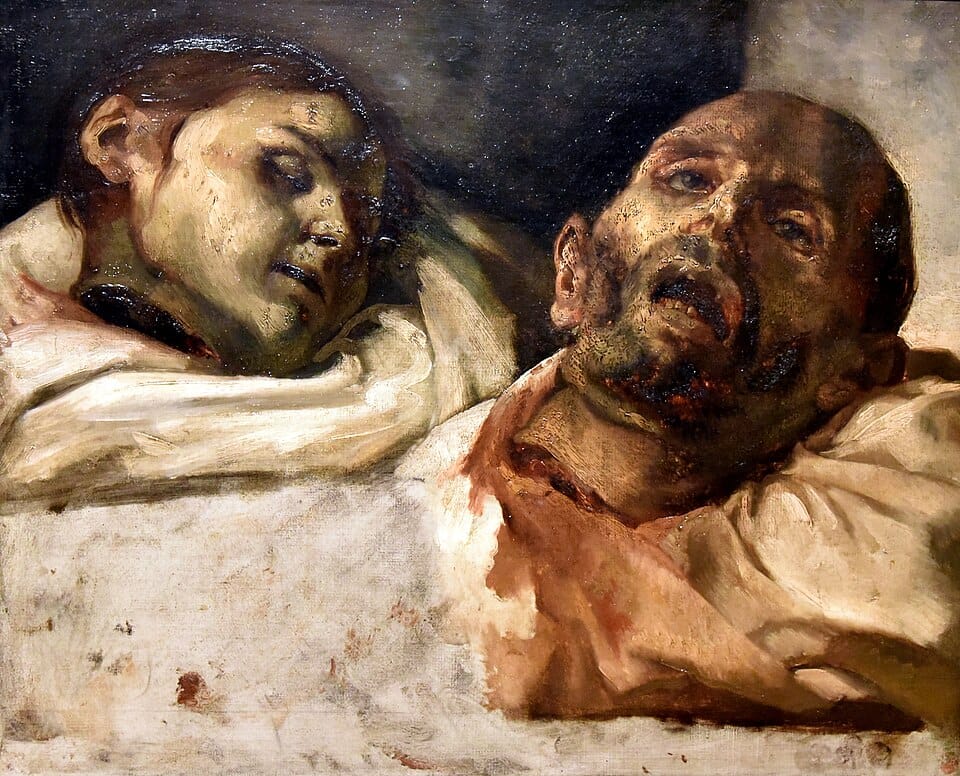
“Fish and Wool“ by Etrit Syla
Morning greeted me late with a pungent odor that I easily distinguished to be a mixture of wet wool and fish. It was coming from the kitchen on the floor below. I perceived the smell reaching me in the form of a linear green cloud, with glowing crimson particles floating like bodyguards at its edges. These particles were revolving anti clockwise around their axes, and every time they finished a revolution, they would glow a deeper red and start again. Their revolutions weren’t synchronized, perhaps because they came in various sizes. I couldn’t tell if they were heralds of the cloud, coming to announce its arrival, or whether they had a purpose of their own. Perhaps it was the aroma itself, that by awaking dormant senses of mine that I was never conscious of having, made me perceive it in a way hitherto impossible.
Upon entering well inside my room, the green cloud spread out to become a gray fog. A somniferous ringing sound of a low frequency reigned throughout. Last night’s sleep was fruitful due to incessant rain. My watch showed noon was not far off. Most times a slumber this long would’ve left me feeling drowsy, or like a cat high from catnip at best. Yet I could feel a clarity bordered by a daze. The rain kept hitting the roof with the beat of a metronome set to a fast tempo.
Speaking of catnip, we kept some in my room. Mother and Brother were feeding stray cats recently, often taking them inside as they were frightened of our friendly dog in the yard. Brother was caring to the point of buying catnip for them.
The particles turned pitch black and stopped revolving. Seducing me by the nose, they led me outside to the corridor and then down to the kitchen on the second floor, whereupon they vanished gently into obscurity.
In the kitchen, Mother was adorned in her cooking garments. She was wearing a white apron decorated with cute little flowers. Her chef’s hat showed she was in a good mood. I knew that from experience. And indeed, upon seeing her face, I noted a look of satisfaction: she was making lunch for her beloved, Brother and me. The orange light hanging over the kitchen table illuminated dimly, and with the gloomy weather outside it felt like being in an old cruise ship’s kitchen. A long, oval shaped plate on the table was covered with a piece of lettuce kept in place by a slice of lemon on each vertex.
The stench of frying fish reached its climax. It pierced forcefully through my congested left nostril, whereas the smell of wet pet marched freely inside its counterpart. As I was looking at Brother who was lying on the couch, and Mother’s proud face, I heard a squeak, like coming from an innocent baby crying out a sorrowful call for help. An image of the horror behind me occupied my vision as if I suddenly had a pair of eyes on the back of my head. It showed me two cats in the frying pan, and somehow, I knew the squeak came from the one that looked adolescent.
Why was Mother cooking cats? She loves animals. And how is Brother allowing it to happen without the slightest opposition? But I must not judge them harshly. They fed these cats and had to take new ones. Mother wanted to do something nice for us. That she was frying these cats in a milky sauce made of sour cream and a pinch of seasoning added to give it the pinkish hue confirmed that to me. After all, Brother doesn’t always wake up before noon. And life must not be taken so seriously; tons of horror happen every day. But
why not be a tad more considerate and sacrifice the oldest ones? They had their time. Let the young live a bit. Sure, they’re a bit tastier, but is that worth it? And to boot, why cook them like that with the fur and skin on and all?
The horror, as if indignant at not being received as harshly as it expected, swung back with an excruciating blow when Mother said:
“Whoops! I guess I must not have cut that one well enough!”
This exclamation struck me like a knife in the gut and the image became a clip that unraveled to show me the squeak as it had happened.
It went as follows: the adolescent cat, with an incomplete cut to the neck, had woken up, but its bed was a frying pan on the stove, with oil frying at an excruciating temperature, and for one moment, felt all the pain of being fried alive next to its older friend. And there, drenched in that scorching sauce of hopelessness, gave out a feeble squeak, the best it could muster, as a call for help. Perhaps it didn’t even wake up fully; perhaps it was only a modicum of awareness that had somehow returned when its incompletely cut neck reconnected to its body for a flash.
I turned around to give a classic look with my front eyes, and then it all started to make sense.
In the frying pan there were no cats. The cats were cods; the fish smell came from fish. One of the fishes, the one that lay frying where I had envisioned the younger cat, didn’t have its head fully cut off. The other fish had no head at all. The sauce must have raised a bubble between the uncleanly cut head, and as it tried to force its way out and pop, the now infamous squeak was produced.
Mother continued acting as if everything was all ordinary. She told me that Brother had our dog inside for a bit and had to bribe him to go back outside by offering him one of the fish heads, and that by sleeping too much I had missed out on the fun. I was taken aback; Brother always wakes up later than me.
The veil of normality took over me, and I had no reason to be seen behaving as if I had witnessed anything peculiar. I was ready to seize the day and continue life as usual. Still, that squeak by that poor kitty that came back from a place of obscurity to this world for just an instant that must’ve been dilated to an eternity when it experienced oil crackling at its furry body, giving it immeasurable pain as it lay unable to move in the frying pan, and the only thing it could do was cry out a pitiful squeak that might as well have been a prayer for death, with that death coming as a useless mercy an eternity of a moment later, haunted every fiber of my being. What if that’s what hell is? One instant of clarity after death, to suffer depending on the manner of death and fate of your body.
So then, hell is a return to life for an instant after death. And if a poor adolescent cat’s suffering is being fried alive? This pestering rumination is a hell on its own! As I was making a vow to trust my olfactory senses better from then on, the clock in the living room struck twelve.
“There Will Come No Rains” by Ian Patterson
A swarm of drones moved with the algorithmic spontaneity of starlings, darkening the night sky in pockets that expanded and collapsed and expanded and collapsed, manufacturing shapes that nature could have never predicted, but seemed full of life, and meaning, and beauty. Each of them controlled remotely, separately, but somehow orchestrated together as if by the celestial hand of clockwork. They filled the Phoenix sky with a low static hum, the buzz-whir of mechanical bees birthed from electric motors, and fans, and speed controllers, and processors.
They were alive, or as alive as the rest of the city.
Behind each of their lens was a voyeur of the absurd, a purveyor of chaos, a lover of death. They were bankers and real-estate agents and doctors and clerks. Alone they understand only one part, one obscure instance, a fleeting moment captured, but together—together, their eyes were the eyes of God. All-seeing, all-knowing. Divine.
And God did so love to watch his people suffer.
The heatwave hit on a Friday. Across black interstate veins, parked metal-and-glass bubbles drank gasoline and belched cooled air into premier leather interiors. A pop song played in every ear. The drivers did not interact beyond nudging their beast forward when the tailgate in front of them nudged forward. Tires softened to the asphalt and, like a new scab, were peeled away. From above, they were one thing. One great hydra worm that crawled in every direction to escape itself. Slowly, inexorably, towards its own end.
Around seven, when the stream of traffic had dried into underground parking garages, the grid collapsed. It did so frequently, and without warning. Too many cars charging, too many AC units pumping chilled air into overlit skyrise apartments that baked in the sun, too many pressure cookers and ovens and refrigerators and hair dryers and electric toothbrushes. In the fading sunlight, the lights of the city blinked once in a sudden vital flash, then died. For those lucky few who could afford them, a chainsaw chorus of generators bloomed to life.
And in that new darkness, a preacher cried on a street corner. He sweated profusely under the weight of cloth and faith and madness.
There is no salvation here. Can’t you feel it? Yes, you. You see me talking. Why do you walk away? Can’t you feel it? This is hell. We’re in hell already, my brothers. God has measured us, and He has found us wanting. There’s no salvation here. There will come no rains for this parched land! There will come no rains!
The mechanical eyes of drones watched it all.
Given no external inputs, a system seeks balance. The resolution of temperature differentials is a time-dependent mechanism, affected by barriers and mediums and insulation. The clock moves forward, and the inside becomes the outside.
Across the city, people woke in their own sweat, kicked off the sheets, tore off sopping clothes. They tried to take cold showers, but found the taps empty. The pumps that fed them, dead. They fanned themselves. They vowed to complain to the city when their phones worked again.
The heat was claustrophobia. Inescapable. A smothering blanket that couldn’t be removed. In towers of glass and steel, people cooked from the inside. Panic clawed at them, constricting their chests. Their breathing was shallow and pulse raced.
Caravans of traffic fled in the middle of the night. And what was left? Dawn broke to a different city. Shirtless and savage, feral from the heat, thousands spilled from their condos and complexes and high rises and suburban homes to wander the streets in the morning light, searching for water and anything cold. Hoping for salvation. From perches across the skyline, sleeping drones spun their bladed wings and descended, eager to observe.
As the sun rose higher, they clung to the shadows and hissed at the harsh light. Bloodshot eyes, matted hair, and hot sweaty flesh. Hordes of them filled the street, aimless, shuffling. They tripped into each other and thrashed, kicked, bit. Their violence was barely contained. Black tar boiling under the surface. Craving freedom, craving destruction.
There will be no rains, a streetcorner preacher screamed into the morning.
Drone eyes saw it all. Recorded it. Streamed it.
Downtown Phoenix. Glass shattered, a shop front smashed. The mob surged, a tangle of limbs and bodies found bottles of water and fell over each other to get one. The weakest of them were trampled. Pushed down and crushed by a barrage of hot feet and panicked faces. Their bodies were left to finish dying and turn purple and bloat in the afternoon sun.
These were the first deaths.
The horde had tasted power and was hungry for more. More glass broken. More bodies left behind like the slime trail of some strange, pink-fleshed, thousand-limbed, sweat-drenched slug.
The Saguaro Library opened the doors of its cooling center and welcomed in a growing crowd. A demand they could never hope to meet, but in the timeless way of those shouldered with an impossible duty, they would try. Fed by a series of generators, they led suburban families to shelter, and prayed the fuel reserves would outlast the power outage. They handed out a meager supply of bottled water. They gave books to the children.
The librarians talked in hushed tones of logistics, of fears, of when they would have to close the doors and what would happen then to the people still outside. Of what those people might do.
The sun blazed. The heat transitioned from a warm blanket to a fire. It burned bare skin, torched dehydrated throats, addled brains. Atmospheric refraction caused imagined oases at the end of every street, always just beyond reach, taunting.
New saints were crowned, too. Doors were thrown open on churches with generators, people welcomed their neighbors into cool basements. Disaster preparedness is a distinctly American hobby. An armageddon fetishism. Supplies were shared, rations distributed; communities were birthed, bonds formed.
The migratory patterns of drones fanned out over the city. They captured every moment, every heartache and triumph, without reaction. They spied in the basement windows of homes and churches, perched across from libraries, followed the marching of innumerable bodies.
As the sun set that first night, a street corner preacher cried out. There will come—cut off in a scream that repeated and repeated in staccato bursts until it turned into a fading whimper. And then nothing. The silence of the dark.
Librarians stared out into that night with shelters beyond stated capacity limits, locked their metal doors, drew chains across the handles, barricaded themselves in with furniture.
They had read enough to know.
Across the city, a deranged horde became hungry. They drank from the fallen bodies timidly at first, parched throats singing for any liquid, and then greedily. The copper redness ran down their chins and soothed their dehydration, burned shreds of virtue from their veins, but did nothing to calm the seething rage. How had they been reduced to this? They were property owners, taxpayers, upstanding citizens. Who was to blame for their decay? They felt only a visceral need for destruction. To tear something apart, to eat, to rend flesh from bone of those untouched by this and chew until the splinters dug into their gums and their blood mixed with the blood they lapped from corpses. To hiss and spit and snarl. To make the world hurt as they hurt.
The hum of generators was all they heard. A constant barrage of two-stroke gasoline freedom from across their fair city. And at once, the disparate parts of the whole understood their mission. Sweaty bodies redirected in the dark, and moved towards the noise. They prowled in packs, ignorant of the others around them. Aware only of their hate, they shuffled down empty streets.
Dawn found them at the headwaters of noise.
At the churches, the tide of their bodies broke against the doors until they flew from their hinges. In basements, they found men and women in ill-fitting white robes, worshipping AC units by dim candlelight. They hummed as one to match the tone of the fans, and bowed synchronously. They danced in slow circles with closed eyelids. They died thrashing, red arterial blood soaking the deacon’s borrowed vestments.
At the homes of the prepared, they encountered fresh fences made of razor wire and improvised explosives. Entire families in camouflage and face paint cracked shots at them from living room windows, from rooftops, from front porches. They died in droves and heaps, but those behind always pushed forward. Kept advancing, inexorably, until they overwhelmed fortifications, and killed the suburbanites in their last stand.
At the libraries, their bodies smashed against barricaded doors, but were pushed backwards. They crushed each other against it, suffocating those closest. They spat and thrashed and snarled in rage. They howled and beat their hands bloody.
Inside, families soothed their children, and read another board book.
On a streetcorner in downtown, a body of a preacher lay still on top of a crumpled cardboard sign, his head smashed in.
And from the sky, mechanical birds saw it all.
On Sunday afternoon, the power returned. Its resurrection met with choked sobs and torrents of thankful tears. Outside of libraries, their promised comfort returned, the horde remembered who they were. They looked around shame-faced, naked, and shrugged at their brothers and sisters. They went home to shower and tend to their sunburns. To vomit blood and brush their teeth.
The traffic returned that evening. It clogged interstates and side roads like plaque in arteries. A repeated, incessant honking came home to the city. Drivers complained of the congestion as industrial equipment cleared the streets of bloated burned bodies, and pushed them into mass graves dug in the abandoned fields between high rise banks and parking garages.
The palpation of drones grew bored and migrated.
Thankfully, businesses were barely disrupted. The work resumed normally Monday morning.

“Tony” by Calvin Moore
From that afternoon I remember most his wife’s reaction. She gave out a whine, much like a howl, that scraped out the ears, could loosen teeth. After that, she was not one for screaming, but instead went on to squawking and spluttering, gibbering like a deranged monkey. She flung herself at her husband, and at me. I was cuffed over the head again and again as I shrunk down and tried to continue walking him through the greasy aisles of the lower factory floor.
The husband was caught too and he scolded her angrily, raising the bloody stump of his hand, at once for protection and another for signalling that yes, he had been injured, and that he needed Denise to calm down for Christ’s sake.
“Denise! Calm down!”
The other workers drifted towards us, mouths agog, they were zombified by the sheer spectacle of it, and had not the brains between them to offer any help whatsoever. Instead they wafted from their rows of sewing machines to crowd the aisle and cluster around us like a dumbfounded orbit in some idiot galaxy. Tony’s stump was a crimson firehose poorly tied off with a filthy rag. He clung to my arm, stumbling forward and dribbling spatters of blood across the factory floor.
A thin voice far off cried for the Health and Safety logbook to be found.
“Call the ambulance! You miserable bastards!” Tony replied. Denise could only cry now.
As the hot darkness of the factory finally gave way to the light of outdoors, I could see how pale the man was, how he was losing blood fast, and that - God - he might not even make it. The big man had grown quiet and had begun to moan. He sat on a wooden pallet rocking back and forward at first, then ceased. His body was telling him to keep still, either to make whatever he had left count, or to begin shutting his system down, through the preservation of some primordial sense of death dignity. His receding white hair was clamped back with sweat and streaks of red. His blue eyes were woeful and reading a thousand yards, while his Colonel Sanders moustache twitched in tiny fits. His round face looked to have witnessed oblivion.
He was a generally unpleasant man, who had lived a surrendered life of constant service to his wife and a job that he despised. As the only mechanic in the factory, he both disliked the endless supplications for his assistance and relished the power of his absence. For all of this, he was not a coward, a backtalker or a wife-beater. Indeed he was more of a reluctant carer, and there was something of a working class heroism about him, absurd as that may sound. Then again, I was young, and had met few people to look up to.
The pillow machine was like a relic of the industrial revolution, an intimidating snake-shaped metal elongation of wheels and teeth. Huge rollers carried a thin cloud of fibres continuously forward towards an interface that would then punch nipped-off wads into pillow cases held in front of it by the machine worker. Despite its archaic look, it was in fact electronic, but the controls and consoles seemed almost draped over the main frame of the structure like an afterthought. It gave the beast an aggrieved look, as if it had crawled out from some cosmic mire only to be crippled by the encumbering trash of the modern age.
Of course it should be obvious that machines like this are constantly at risk of clogging up and shutting down. The worst part was where the clogging mostly took place; in the very mouth of the beast, just above its conveyor belt tongue, back in the sharp ruthless rollers of its throat.
So it was Tony’s job this afternoon, like so many other afternoons, to reach into the throat and try to pull loose all the fibre that had slipped down the side roller, tangling around the axle of the drum and choking the thing up.
Now, when the beast gets choked up, the whole system is triggered to turn itself off. However, there is an emergency breaker switch that must always be turned off in addition to the shut down. Always. Pay attention. Even on a day when you’ve had the pleasure of no disruptions, and just pure, complete, uninterrupted pillow stuffing for eleven beautiful long hours, and you’re about to walk away, pick up your time card and stamp it out, sighing with relief and doubtless ecstasy from the day’s labour, after all of this, despite it all, and nonetheless, you must still turn that breaker switch off.
Do not rely on the cute little green button. That is an “off” button. Clogging can also be an “off” button. In these cases, you have told the machine to stop, or it has chosen to stop. In this dormant state, it can still choose otherwise. It has another option. You must turn that breaker switch off. And then you look back, and you check it. Yes, you were not hallucinating. Perhaps everything will be OK.
I was on the duvet machine nearby. I am the son of a factory manager. I dropped out of high school with nothing, and dad got me this job working in the factory, and he was my boss. This had little significance for me, other than that he could kick my ass all over the house at home if I slacked off at work, and the next day nobody would say anything. Being around these angry brutes like the duvet and pillow machine seemed appropriate. Much like the gluey, toxic stink of webbing being cut, or the blistering pain of your fingers getting caught under the heat sealer, the hostility of the place felt both criminal and appropriate.
I had seen injuries before there. I had watched someone nearly lose an arm. I had watched people turn up on drugs for the night shift and sway precariously towards cogs that spun with a frenzied madness. I’d seen a man sucker punch another in the stomach, slumping him to the floor. I had smacked myself in the nose with a vacuum packing machine numerous times. I hoped Tony didn’t see me, as like I said, I did somewhat admire him, maybe even envied him.
There was little chatter at breaks. Everyone was fed up, or nursing some obscure personal issue, raking over some kind of moral failure or barely inhibiting an explosion of rancorous contempt. Some were wifebeaters, others pedophiles. The women stared at their hands and the cigarettes in them. They lacked teeth and seemed to age rapidly, even if they had no husband. The factory life was wilting them, like weeds in the heat.
All in all, we seemed to be there to enact torture on ourselves and each other. Barely anyone actually left. They worked here as if there were no other place for them, that they might risk being seen by the civilised world and snuffed out in an act of mercy.
Comparatively, Tony was not so bad, you see. As I was packing the duvets, trying not to clock myself in the face with the vacuum sealer, he stormed across the top level of the factory where I was working, moving straight towards the pillow machine. His mouth was twisting around the shape of various oaths and curses. The sun shone in through an opened roller door mockingly. The big man swung his metal toolbox along with him as if it were a toy, he threw it on a nearby worktable with a crash.
The pillow machine waited. Just like I waited in the dark when my father passed my door at night. Like how any one of the women would wait in the car when they got home, just sitting in their driveway, with the engine off. Waiting.
Tony clanged around in his toolbox like he was beating his wide fists into it. Someone had pissed him off. He detested management, and they detested him, but he had little to say to them except complaints in vain, and so they often ignored him and moved him on. This would expose an inner insecurity that would enrage him and in these moments he could barely contain himself.
There is something inevitable about these moments, about my father passing, about the woman in the driveway, about the machine at rest. They run in a faint line through the fog of my mind in serpentine lines as I ferment in my age, as I sicken. These days, I watch the world close over me like a flower hiding its rotten core. I think of how loose our bonds are with each other, how faint our fingertips touch as we weave through time, crossing the gulfs of our bitter contentions, our bottomless hatreds.
Why couldn’t we hold our hands tighter.
He was throwing stuff about everywhere. A spanner was flung across the factory floor, skittering under my legs. I hopped up, yelling in alarm. This made Tony swear in regret and mutter some explanation for his actions, but he was too invested in cursing the machine he was sent to fix. I resorted to just sitting and watching him.
He eventually produced a long, flat-head screwdriver, some needle-nosed pliers, and some larger vice-grip pliers. I got the idea; the long screwdriver could be used to pluck the fibre up, so you could grab it with whatever pair of pliers suited the task. There was little you could do for access, because while much of the beast had points for disassembly, for some reason the feeder from the conveyor - the mouth - did not. Or we did not understand how to do it. Not even Tony understood this thing, even if he would come to understand it better.
All is fine and dandy when the breaker switch is off. I had seen Tony come in, but I had not seen what he had or had not done before throwing about his tools.
This is what I tell myself.
“Son-of-a-bitch!”
He swore with the screwdriver in his lips, as he struggled to pull his massive belly along the conveyor, crawling towards the mouth. His face was bright red, he was both furious and an overweight alcoholic, so he would soon turn purple under this much stress. He grunted like an otter or some animal thrown out of its natural element and left to die.
When Tony finally immersed the front half of the body in its mouth. He exclaimed once more. He had forgotten to take a torch with him. I decided I could do this much and took one over from his toolbox. He murmured a deflated, screwdriver-obscured “thank you” and took the torch with his spare hand. I looked at his hand.
I looked over at the panel of the machine, passively, as if not really taking anything in.
Tony had switched to using the screwdriver, he was clanging it about carelessly inside. The mouth encased him, it sucked around him as if savouring his body, as if it were gaining the sense of the weight of its prey, its taste, how long it would sustain it as an organism.
I waited like a woman who dared not leave her car. I waited like a man at home, clenching his fists, opening them, breathing. I waited like I was my own father, passing me by. How light we hold this line together. How easy for fingers to slip apart.
I watched the mouth. I waited. I watched the mouth, and the mouth waited.
There was a sound. A scream, but not from a human. Something had struck the air, and everything was a smear of impressions, some salient and piercing my awareness, others warbling in an undercurrent, burbling in the mush. I felt my fingertip touch a button, I felt a wetness on my cheek.There was a roar, a mechanical howl. Alive. Then I heard the human. The intimate vulnerability of being human, peeling out of the skin in a single, hollow cry.
And I do swear this, Tony, on my life. I was there to see the fingers of your hand come off underneath that roller, your bones splintering into shards. I could smell the tininess of your blood, and I could feel the rawness of the cut, like a sharp sardine can licked from the inside, the tongue tearing away, just like your fingers. Those hands that do not, and cannot, reach anyone. I don’t know if you understood my admiration,Tony, but it is only another part of the line, broken over the chasm of my hatred.
That was what we’d waited for. The mouth and I had been patient. We had lied in wait, and now it was time to feast. Maybe we would only inflict hurt today, but hurting was only the beginning.
“Sawdust and Gaslight” by Tim Goldstone
Flecks of mud in the rain. Something like a blackbird flies across my path,
recedes pixelating to the end of the visible gloaming, and beyond. “I promise
you. I won’t come home without her. I promise you.” Faces scurrying past too
quickly for me to discern their features – heads bent down, cowled and
hooded. I’d chosen to believe a whisper, a chant, a seawater hiss I’d finally find
our daughter somewhere in this winter-trooping carnival but now even blind
faith, my last chance, was evaporating. A spider’s web, sagging with moisture,
hung between two guy ropes, at its centre a child’s head, shrunken, wrinkled,
dried, a furious bright red, its eyes watching me slip through the exterior
teaser curtain into the musty canvas – the last sideshow tent in the row.
Inside, ghosts of cockroaches scuttle across the sawdust floor. Smoke swirls in
the gaslight. A delicate china doll puppet – moved by thick nautical ropes on
which histories of algae, bladder-wrack, blobs of tar and threads of mussels
still cling desperately to the fraying hemp – daintily takes my money, then
bows, jerking exaggeratedly downwards until her fingers – all the same length,
all joined together, drag along the ground revealing an anchor tattoo on the
back of both hands as beads of sweat appear on her forehead. You could see
her violet-coloured breath – tinged with the cloying smell of warming oil. An
unseen child announces “Ladies and Gentlemen!” through velvety nicotine-
coated vocal chords, then stops. Nothing happens. People run away from this
place. Our daughter ran to it. Yet by the time the shadow-shapes begin their
performance and a hand takes mine, I can no longer tell what is shadow and
what is not. Nevertheless, I take our daughter home, or her shadow, or
whatever it is that’s holding my hand.
Ian Patterson contains multitudes, as do we all. He’s the author of science fiction books Transference and Transcendence. He’s also an engineer, cyclist, foodie, coffee lover, cat dad, human father, and reader of books. Preferably, thick books that deal with strange things and big ideas.
Tim Goldstone has travelled widely and is published worldwide in numerous literary journals and anthologies, including Anti-Heroin Chic, 11 Mag Berlin, California Poppy Times, I Become The Beast, The Cafe Irreal. His prose sequence was read on stage at The Hay Festival, his poetry presented on Digging for Wales, and his material narrated on The CryptoNaturalist Podcast. Also scriptwriting credits for TV, radio, theatre. Lives deep in rural Wales. He writes because it’s a less painful way of seeing what’s inside him than an invasive medical procedure. Twitter @muddygold