SUMMER 2026: Final Girl
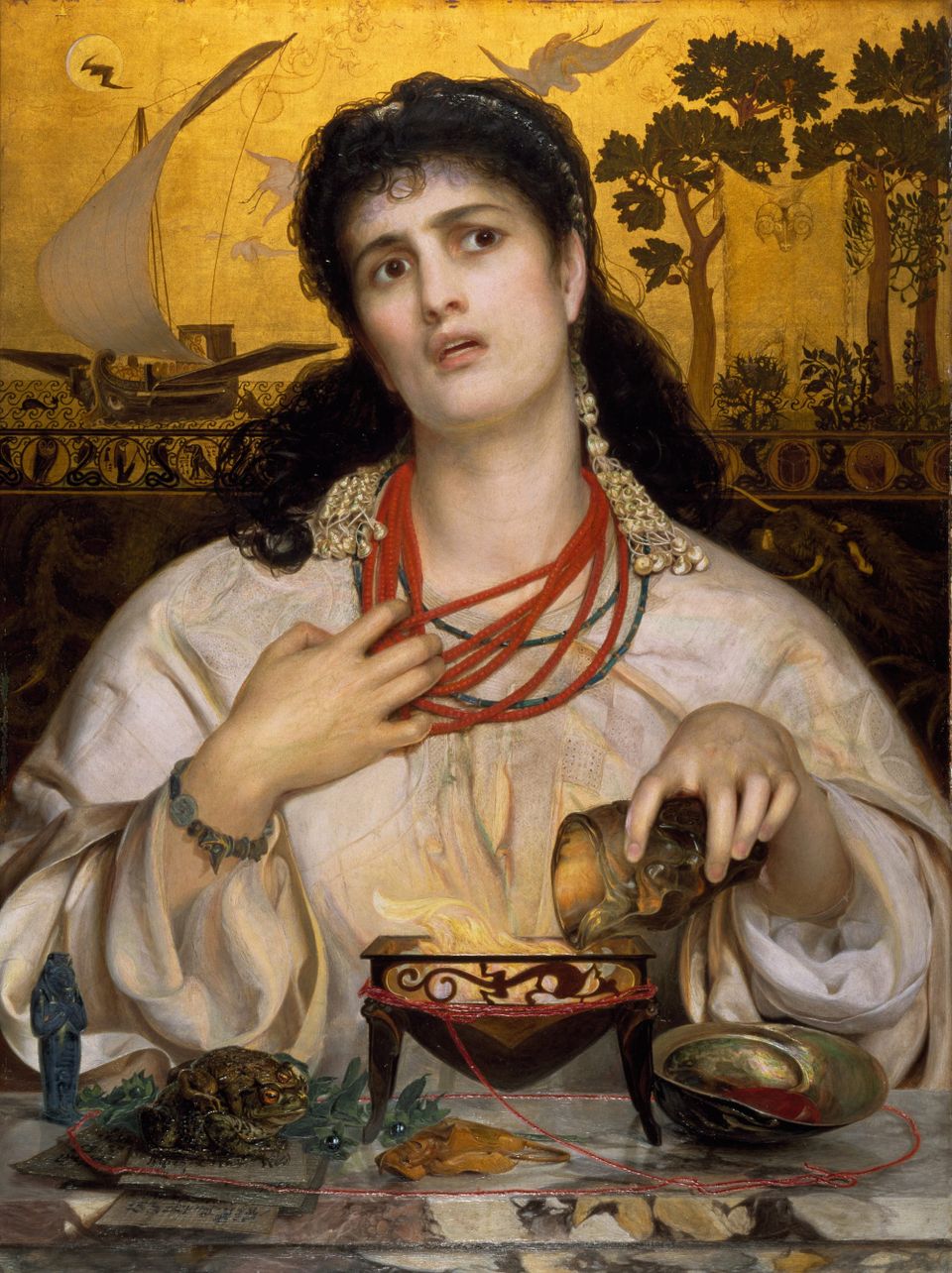
“Final Girl” by Lorrie Ness
Like a corpse’s receding skin,
the pram’s canopy shrivels from its overturned frame.
Chrome supports jut from the brambles & weeds.
Only the skeleton remains
in this cathedral of trees. I kneel.
Even now, smoke’s phantom rises
among the leaves. Chicken bones lay strewn
in a charnel ring. Charcoal etchings
glyph the timber—a murder
of crows & antlered women totem the hornbeam
sprouting from the buggy’s belly. Poison ivy
roots its handle to the ground.
Its frame is rusted, one strut already swallowed
by the tree. A porcelain doll head
surveys the wreckage from a cradle of grass.
Tattered cloth binds a bundle
of twigs into a torso. Her wicker arms are still
reaching for mamma—
a robin’s egg between her legs.
“Darlings” by Emma Dhanda
Lord deliver me, Lord hold me, Lord save me. I beg and plead and scratch at my skin and it rips and settles in the tight spaces under my nails. It is easy to bleed now. Lord watches me and I am comforted by His gaze. His eyes on me: wide, unblinking, dewy. Light cascades from His frosty blue irises and raises gooseflesh on my arms and neck. Rivulets of blood calm the chill with their wet warmth. I bleed all the time now. Lord does not touch me. My skin is cold, clammy. But sometimes it is dry and taut, deep dusty lines crossing over my body at sharp angles.
The other darlings look just the same. Bodies contorted, wasting away in some places and bulging outwards in others. Lord prefers the ones who have been slower to succumb. But I must not talk like that. It is punishment, it is holy. Purging, He says to us over a silent breakfast table. A collective retribution for one of our sins. This is holy. He suffers too; seeing us like this. But in His suffering there is love. He sees what awaits us once we endure. His words put us at ease.
In the quiet of night – for now, the nights are much quieter. I clutch my elbows and fold my arms close to my chest. I whisper prayers to myself with a hoarse throat. I run my tongue over my teeth and it grates like sandpaper, unmoistened by saliva, as dry and dusty as the rest of me. We darlings bear our suffering. And I miss the times when the suffering was not so loud. A year ago there were more of us. Seventeen darlings and Him. The sun shone brighter in those days, and we drank up its rays as we worked, as we swept, as we tidied, as we dreamt of Him. Lord told us many times that the sun’s glow was love, His love, and that we could feel it even when His physical form was not with us. As a child I thought the sun was a hole in the sky and that what lay beyond was Hell; that we were given a glimpse of that feared destination and tempted towards it by how glorious it made our skin feel.
I met Lord through another darling. On a sunny day. We were in a backyard, and there was a pool. Silver light rippled across its surface, leaving shadows floating across my vision if I looked too closely. Lord and the darlings were there, in the days when there were not yet very many darlings. I would be the sixth. Lord said to me that the Sun had shone so brightly that day it must have created me from its rays. He saw divinity in the honey-gold locks I’d tied back in a ponytail. I did not yet know that He was the Sun. That He saw in me the light that makes Him Lord. I would learn, in time, as He courted me.
He appeared in my mother’s drawing room every week to teach me the piano. As I played, He would tap a foot on the dark wooden floors, a soft sound further muffled by the slipper-like shoes He often wore. When I did well, when the music emanating from the belly of the piano spiraled into the air and danced in the mottled light streaming in from the windows, Lord would lean in, His hands hovering just over my temples. His fingertips would come so close to my skin, close enough for me to feel their warmth and their phantom pressure. He would speak in a low voice, a reverent voice. Soon, He called me His darling. And then there was a seventh, and an eighth, and I played piano for them while Lord went about His work.
The second darling taught me about tidying. The third, about cooking. The ninth would be the one to teach me about blood, though unintentionally; her first menstruation began a few nights after joining us. Her irregular breathing, panicked and mousy, stirred me. We spent the night scrubbing her nightclothes, watching the water run pale red. Our efforts were largely fruitless; the first darling showed us how to clean blood from fabric properly the next day. When eventually, Lord returned, He was struck to find His flock of darlings working in such tandem, with such friendliness between them. We giggled as He stepped across the threshold. We held each other and looked up from plaiting each others’ hair. This was the occasion of the first punishment.
The affection of darlings is reserved for Lord and Him alone. We scrubbed fabric all night, the water glowing a fiery red in the candlelight. The older darlings comforted the younger. Somewhere in the middle, I listened to them coo and reassure. I soaked towels in a warm, sudsy tub and handed them silently to the darling beside me. The tide of the water splashing against the bucket soothed my still-ringing ears. I dare not call the thunderous voice of Lord hellish anymore; but at the time, so fresh into His service, the trembling within me I now know to be the righteous might of Lord terrified me.
I yearn for that trembling, now. I yearn for how comforting it was to witness the Sun burning hot. Now it is cold, out here in the desert. The sky is grey and black and yellow. Lord does not leave us anymore. He sends His darlings to fetch rainwater, to butcher a hare in the dunes and carry it back. We darlings are ill-suited to the task. This is why we are no longer seventeen.
Lord noticed the Hunger in their eyes first. The fourth darling returned limping at dusk, her arrival unnoticed until she moved in view of our hearth. Lord bade us to tend to her, and we tried; but she screamed through the night, and thrashed, and bit hard on the arm of the sixteenth darling when she tried to take her temperature. In the end, we had to bind her hands and feet, but even still she growled and gnashed her teeth at us. By morning, her flesh had turned grey and withered, falling slack against her bones as though no muscles existed anymore to fill the space. She did not look at us, her eyes unfocused and wild. They had been amber brown before; now, they were charcoal grey, the iris tinged with a sickly yellow ring. Not unlike the sky.
By noon, or our estimate of noon, we had to rebind her. She was just bones, just barely breathing, and yet every shaky breath she wheezed into shrunken lungs powered her frantic strength to lash out at us. She scratched at several darlings who brought water to her cracked lips. She bit down hard on the spoon used to feed her broth, and the force shattered two of her teeth. We could not even clean her bloody, foaming mouth for fear of getting too close. All day and into that night, she struggled and spat and growled. Lord gathered us and told us what was happening to her. Hunger, he called it. An affliction meant to test her, to punish and to educate. She had sinned under the watchful eye of Lord. We did not ask what sin. It did not matter.
After a week, the fourth darling passed on. We did not notice for a few hours, having secured her in an upstairs room while we went about the chores of our day. We found her flat on her back, a dried concoction of saliva and blood staining her grey skin. Her mouth was open. She may have been dead for longer than just a few hours. Sometimes, the darlings tasked with feeding her were too afraid to bring their hands close to her face. And when we did discover her death, it took several minutes for one of us to find the bravery to hold a hand under her nose and check for breath. Finding none, and I hesitate to say such a thing, brought relief over our circle.
The relief would fade as the Hunger spread through us. The fourth darling had been stronger than the rest, it turned out. By the next week, eight more had succumbed. They raged at us and tore at their brittle skin and gnawed and gnashed until their teeth cracked and cascaded from their mouths. I learned to dig a grave, and I taught the younger darlings how to clean the faces of our dead. Lord held a service for each of them, His words low and rumbling. His mighty roar subsided as us darlings became weaker and more frail.
The newest darlings can no longer sleep through the night. They used to sleep beside Lord. Now, they are ordered to rest at the edge of the room, as they keep wetting their bedclothes. Lord was incensed at this, and now He lets me sleep beside him again, mere inches away. Our bed, a swath of blankets and pillows obscuring most of the floor in the bedroom, comes alive each night as sheets tangle around fretful legs.
The Hunger has taken so many of us. I feel it burgeoning from the pit of my stomach. Our breakfast this morning was somber, each of us darlings merely picking at our plates despite feeling such ravenous desire deep within our bodies. Lord is the only one of us who has not fallen to the Hunger. He tells us why each day during His sermons. His very flesh repels the wickedness of Hunger, He says. Divine will courses through His blood-rich veins. We know He is Lord because of this. Because He remains strong. And we sinners, we darlings basking in the awe of His light, we are hungry.
There will be a day soon when Lord decides the Hunger has progressed too far. He will caress my cheek and wait for me to bite at Him. And then He will press His pistol to my temple and fire twice. There are not enough darlings in robust health left to bury my body. He will instead lay my vessel out in the sand beneath the yellow-grey sky and let the wind erode me. There are just six of us left, us darlings. Lord once told me He knew I was meant to be the sixth darling, that six was a holy number, that it had served Him well in His life. And now, at the end of the world, there are six of us remaining. We grow hungrier by the day. Our stomachs roil as though something with sharp talons is clawing apart our insides. Our skin sinks into the cavities left by disintegrating muscle.
During the evening sermon I look into Lord’s eyes. I pray to him, silently, desperately. For Him to share His divinity with me. For some of that majesty of flesh, vitality of blood. Remake me, Lord. Deliver me. Save me.
This evening, Lord tells us about transcendence. In our small compound in the desert, we take the Body and the Blood: the thorns and water from a cactus plant. The thorns prick my tongue as I swirl them around my mouth. My blood flows freely, sharp and metallic. Swallowing, I am the most full I have been in days.
Lord’s gaze passes over each of us. I stare at Him with more intensity, so that He may linger on me. And then I am standing, shakily, my shin bones screaming from their inability to support the rest of my body. If I looked down at my feet, I would see bulging knuckles and the beginnings of bursting blisters.
Lord is looking at me now. His brow is knit in a labyrinthine pattern. Does He see the darling brought to Him by the divine? His sixth blessing, the one He had been waiting for for so long? Does He see Hunger writhing beneath the surface of my decaying body? My hands stretch out in front of me. I cannot see them, but I feel the other darlings stirring. Some of them must be standing now, too. I focus still on Lord, on His divine light, on that which repels the wickedness within me.
My mouth falls open, the muscles of my jaw too weakened to keep it shut. My tongue snakes across my teeth, spilling over my lips and hanging limply against my chin. Lord frowns. His hand drifts down to His hip, where the pistol sits in the holster. I watch the movement, still slowly advancing. His fingers twitch. How robust they are, fleshy and pink and warm. I can almost feel the pulse of His blood emanating from within them. I wonder what they would feel like, pressed into my body. Would they warm me, heal me? Caress me, comfort me, as before? Or would they burst right through my brittle bones?
His hand is firmly on His pistol now. In the corner of my eye, another darling is approaching, her movements shaky on uncertain feet. Her arms, too, are extended. Grasping. Blood roars in my ears. I did not know I had enough left to create such a sound. In the fading evening light, Lord glows. I see His heart beating against His chest, kept safe in a steel ribcage. I see the veins twisting through His body. I see muscle enveloping His bones like moss. I see fat padding His chin, His belly. I see it all, and I hear it now, too. The song. The divine melody calling Him to preach over us. The holiness housed in His very body.
My throat stings from the thorns and stomach acid that has crawled up my esophagus. The pistol glints in the dying light. Lord does not fire it. He does not have the chance. A darling grips His gun arm tightly, and sinks her teeth into His wrist. He howls. Divine ecstasy. Those frosty blue eyes dart around wildly as another darling claws at His thigh, unleashing a torrent of dark crimson blood.
I am close to Him now. My outstretched arms linger on either side of His head. I could press the pads of my fingertips against His temples, if I wished. The darlings around me explode into a frenzy, tearing at His holy flesh, slaking their thirst with His cascading blood. I lean against the warmth of His cheek, my teeth brushing against His skin. Everything in me desires to eat of His flesh, to consume, to transcend. But my jaw hangs slack, and the hunger roars, and with brittle bones I grasp the sides of His head and squeeze. My fingernails rake against His skull, coming away bloody. I raise them to my mouth, sharp iron and the might of Lord flooding into me. Saliva coats my tongue, dripping from my lips onto the head of another darling whose face is sunken into Lord’s belly.
He stops howling, letting out a low moan instead. Its melody complements the song in my ears magnificently. I want to sing along. Instead, I press my face against my bloodied Lord and explore his jagged skin with my tongue. It curls against loosened flesh, spooning his essence into my gullet. And I pray: Lord, save me. Lord, deliver me. Lord, remake me.
“Make Her Look Happy” by Sushanth Shyamsundar
It started with a pimple.
It pulsed on the bride’s chin in every close-up during the garland exchange, tiny and white-headed. Her mother-in-law called it an “unfortunate tragedy,” in the tone usually reserved for world hunger.
The bride had not noticed it during the wedding. She had noticed the sweat staining her silk blouse, her husband’s ridiculous dye job, the priest’s side-eyed glances that said how can YOU be marrying into THIS family, and a cameraman destined to crash into the cake.
Still, it was only a pimple. She added it to her spreadsheet.
Photo 0147: Remove chin blemish.Photo 0212: Reduce shine on forehead.Photo 0308: Groom’s stomach slightly visible. Please adjust.Photo 0440: Bride looks tired. Brighten eyes.The photographer replied at 11:42 p.m. No problem, ma’am. Minor corrections included.
At 11:47, the bride felt heat on her chin. She was in bed, still wearing the glass bangles everyone said new brides should keep on because they were meant to sound like celebration. She touched her face. The pimple was gone. In the bathroom mirror, her skin was smooth. Too smooth, maybe, but weddings were expensive and everyone had told her not to be dramatic about small blessings.
The next morning, her husband came out of the shower holding his stomach. “Something happened.”
The soft curve he had joked about throughout the reception was gone. Not reduced. Gone. His waist looked edited. The bride checked the spreadsheet. Photo 0308: completed. For three seconds, neither spoke.
Then he laughed. “Send them my college photos also. Let’s see what else they can fix.”
By noon, the family group had discovered the miracle. Her aunt’s dark circles vanished while she bargained with a vegetable vendor. The groom’s cousin lost a double chin during a Zoom call. One uncle’s redness cleared at lunch, though his whisky glass remained trembling beside the plate. Everyone was delighted.
The bride was delighted too, at first. That is important. She organised the requests into categories. Skin. Weight. Background. Expression. Remove distractions. Improve symmetry. Make it natural. No one used the word erase. They said to clean up, soften, and correct.
Her mother called from the kitchen. “In the big family portrait, your father’s sister is standing too close to me.” “The divorced one?” “Don’t say it like that. Just ask if they can shift her.” The bride typed: Photo 0881: Move Aunty Lata to side if possible. The photographer replied with a thumbs-up. At 3:16 p.m., Lata aunty disappeared from a supermarket queue.
Her basket dropped. Tomatoes rolled beneath strangers’ feet. In the photograph, the family line closed smoothly around the space where she had been. In the group chat, someone wrote, Where is Lata? No one answered. Then her mother-in-law sent another note. Photo 0672: Can you make Arjun look more normal? Nails are distracting.
Arjun was the bride’s cousin. He had worn black nail polish and a green silk kurta that made several uncles look absolutely mortified in a way that only Indians can quite perform. The bride typed: Maybe leave this one? Her mother-in-law replied privately. Beta, the album is forever. Don’t start politics now. The bride forwarded the note. At 4:05 p.m., on a city bus, Arjun’s fingernails peeled from his hands. He looked at the ten red ovals where colour had been and made a sound like a question. In the edited photograph, his hands rested neatly at his sides, bare and acceptable.After that, the bride stopped feeling delighted. But the family had not, and requests came even faster.
Remove grandmother’s wheelchair from the background.Make mother smile in candid crying shots.Straighten little Meera’s squint.Soften father’s angry expression.Reduce bride’s arm size.Remove scar on groom’s forehead.Make everyone look fresh.
The wheelchair vanished while the grandmother reached for its brake. The bride’s mother smiled while cutting onions and could not stop even when the knife entered her thumb. Meera’s left eye snapped straight during homework. She vomited from the correction. The groom’s scar disappeared. So did his memory of the bike accident. An hour later, so did the limp of the friend who had pulled him from the road. By evening, the bride was deleting notes before sending them. Then rewriting them.
Not remove, reduce, not erase, tidy, not change, correct.
At 10:38 p.m., the photographer sent the preview album. It was beautiful. Everyone looked clean, bright, symmetrical, rested. No wheelchairs. No scars. No difficult cousins. No divorced aunt. No tiredness. No anger. No evidence that a wedding had happened to human bodies.
The bride scrolled to the candid shots. There she was by the stage exit, holding coffee, looking away from the camera. Not smiling. Not crying. Caught in the dangerous middle where a woman has not yet decided what her face owes the room.
A comment appeared from her mother-in-law. Bride looks uncertain in these. Please make her look happy.
The bride picked up her phone to call the photographer, but the line was busy. On the laptop, the comment changed from pending to resolved. Her mouth began to smile before she did. At that moment, a fly zipped past the photographer’s nose. He sneezed. His hand slipped. And accidentally took her throat with it.
“deer running in the woods” by M. A. Horton
Every now and then there's a break in the trees and you see her through your night vision goggles. Except they aren't really night vision goggles and she's not really a deer.
This is a dreamlike state of memory, or so you keep telling yourself. Deep down you know it is nothing like that, but your rational side is trying to take over.
All you know is that you must keep an eye on her. She mustn't disappear from your view.
But then there's the thicket. She vanishes. You panic. You stand up, forgetting all the urgency and danger that you feel in this place.
You peer through the scrub and deep undergrowth, searching for any sign of movements. The trees of the forest creak and groan around you. They creak and groan too much. Far too much. Some of the largest trees have started to move. Ancient oaks and willows with hollowed-out trunks are breaking out of the ground all around you. They pull themselves free: roots as legs, long twists of dead bark are unfurling as wings.
The trees have golden eyes like eagles. You notice their wild wooden wings are dripping with blood.
No, that can’t be right. Helplessly, you look back towards the thicket.
Your deer is standing there, staring right at you. Her eyes also shine with magnificent gold in your night vision goggles. Except they aren't goggles, you remind yourself. You're just dead, or in hell, or perhaps you’re lying by the roadside somewhere, neither in or out of one world or another. And she’s not a deer. Whatever. Vines as hands reach out to grab you. Beetles the size of dogs charge at the vines, spearing them back, clearing a path.
There is no distinction between victim and persecutor here, you realise. The woods are endless in their chaotic homeostasis.
That's when you know in your whole being that the deer is gone. But you run after her anyway, making a break for safety as the forest floor turns itself over like a wave. You understand you don't have to hurt the deer, not now, and not ever. You might feel like a hunter but that’s a distinction of the old world. Here in this place there are no dichotomies.
As the thicket tries to consume you, you faintly realise the forest is a sea. You take a risk and dive into the soil. It yields at once, just like you imagined, but the water is tepid and wholly lightless. There are no infrared shapes to navigate by, no thermal variation in the nothingness.
Fear surges again as you imagine an eternity lost in the dark. You don't know if you're deep underwater, or stuck in a cave, or about to drown. You flail for a moment then the sea disappears. You're back in the woods, in a little clearing. Eternal woods.
And the deer, she is there. She is just right there, watching you. This isn't heaven or hell, purgatory or Valhalla or a thousand other conceptualisations of the underworld. This is merely a superposition of possibilities, eternity’s wildlife reserve where all of your good and bad and past and futures are evaluated at once. All of those moments, right or wrong ones, will be condensed into a single answer, a single truth: to go back? Or to go on?
She is the one evaluating them. And once she makes her decision, she'll start running again. Not bounding and zigzagging through the darkened woods, but purposefully towards whatever final destination you deserve. She is watching you very carefully as she assesses cumulative impacts you have never imagined.
For what feels like eternity, you wait.
She looks at you levelly, with those deep brown eyes. Eternal fawn, eternal doe, eternal survivor and victim all coexisting in a single body, a single poise. She is none of those things, she is just a deer. Except she’s not.
Slowly, unexpectedly, she walks towards you. Fragile and deliberate. Brambles are flattened into the ground. What seemed fragile and frightened now seems muscular and determined. Things hop and scatter away in her path. She is looking directly at you, those big ears leaning forward. Twitching away flies, but refusing to bolt. The look in her eyes is one of total role reversal and you find yourself wanting to dart backwards now, back through the forest, to be away from her. The urge is overwhelming. Night-vision goggles shudder in your hand and flop into cracked soil and dying bracken. Except they’re not night-vision goggles. What are they?
Your car keys. Sunglasses. Phone. They lay broken on the ground around you as you blink, confused. There’s shattered glass in the forest, or is it a pond? You’re half underwater — no, no, you’re in the forest, the enchanted woods. You’re struggling to breathe. The wood seems filled with silt and weeds. It flickers. Still a wood.
She’s standing directly over you now. Her warm fur, those deep eyes. She nuzzles your cheek and she is warm and dry. Your hands and arms are dripping.
Go back, says the deer. Stop running. You can’t hunt me and he won’t hunt you. She gives your skin one long lick with her tongue, and you feel like a fawn, reborn.
There’s blood all over the road. Medics are fitting a mask. Your car is nose-first in the lake, sinking slowly in a bubble of mud. He’s there — there — his face full of rage. Bonnet crumpled from where he t-boned you from the road. He’s in handcuffs.
For a moment you are back in the woods. She’s running again, darting out to the heather. But it’s not through fear or survival. It’s just what she does. She runs. She’s free.
And she is not a deer.
You close your eyes. The police car door slams, and so does the ambulance doors. The thicket closes protectively around the deer.
“Mount Baldy” by Matthew Perry
Wind thrust against two faces of icy beards.
One red, one brown. Their faces flushed. The weird
mixture of thickset pines and snow and firs
lined the long trail like green and brown pillars.
They stopped for boots to break ice into ice-cells,
and breathe more. Scattered pine needle clumps fell
into stubble on the snow. They tripped
on, scrambled up, and rolled over flipped
fir logs. They slid across strips of ice with grit.
Through a misty squall of snowflakes, they made the summit.
One dreamed of using snowbank ice to cool
whiskey he didn’t bring. They moved like young mules.
Rounding a turn, they saw a bull elk in
the fringe of the trail, antlers eclipsing thin
pine branches. They followed careful, until at
a bend they saw a whole scattered herd, spread flat
in their hundreds: strong, majestic, robust,
like the sound of their hooves thundering gust.
“A Perfectly Legal Outcome” by Charles Merkel
David Hunter, former prosecutor, now in private practice sits with Millie Cumberlake in her living room. It is 9:00 AM. The maroon couch on which he’s perched, manufactured circa 1900, sags badly and causes him to sit nearly sideways to avoid tilting. The house is a small cottage on a poor backstreet in Bloomington, Indiana. Behind the living room, is a tiny kitchen, two small bedrooms and a bathroom. A heavy aroma comprised of the thousands of prior-cooked meals plus a heavier stench from the bath plumbing has command of every square foot of the home.
Millie, a comely woman aged thirty-two has been weeping. Her left eye is nearly swollen shut and her lower lip is purple. She brushes back her rich brown hair and gives David a look of utter despair.
“I’m at my end, David,” she sobs. “Cowder wailed the livin’ shit out of me again. I can’t take no more. I just want to crawl off somewhere and die. I got no reason to live.”
In a most empathetic voice David said, “Millie, these are the types of cases my elderly partner and I have thrived on. He’s always promised, ‘With poor folk, there’s always a solution. Lots of time it’s not obvious, but by God, it’s there. So we gotta find that way, conventional or not. We’re here to fix things, to make lives better. We ain’t likely to get rich doin’ it, but what the hell.’”
“I’m flushed down the toilet of life. I’m gone.”
“Now, Millie, don’t say that. I’m here now to mentor you and to assure you, that this thing is going to end and I mean quickly.”
“I’ve done ever’ thing you’ve told me. And the police. And before that my pop and ma, both doornail-dead now. And nothin’, repeat nothin’ has worked. He’s beaten me for years; his fists, his belts, switches, fishin’ poles, cue sticks, a goddam toaster, you name it.”
“I know, and it’s so important that you have done everything I have advised, it lays the foundation for this, well this, immaculate ending.”
She rolled her eyes. “Always gonna be the end of it, never the hell is.”
“Listen to me Millie, I’ve only been your attorney now for six months, your guy before me was full of promises, this time is different. And what I’m going to propose isn’t for everyone. But you’re country, you can do this thing and it will work. And the nightmare will be over.” said David lighting a Camel.
“What’s being a country girl have anything to do with anything. From what I’ve observed all my life, it seems like country girls got a much huger cross to bear.”
“You’ve been through so much. Your son passed on at five. You’ve had two miscarriages?”
“Three.”
“Your parents are gone, your sister’s in the hospital with inoperable lung cancer. You and your deadbeat-ex-con-of-an-ex have known only dire poverty and bankruptcy mainly because he can’t hold a job. But now, you’ve inherited your parents’ home and it’s nearly paid off. You’re a tough gal, Mil, it’s nearly 1960, you have many good years ahead of you. I know a ton of people who’d love to hire you.”
“Like who? And for what?”
“Millie, heck yes. As a bookkeeper you were great at that at Sears. You need to look into being a waitress at a swanky place like the Foxifre. How ’bout a receptionist, a manager-trainee down at Woolworth’s, a hotel maid, and so many opportunities at the university. Geez, you graduated second in your class at Gosport High.”
“There were only twenty-two of us,” she sniffled, “That’s the year my folks sold the farm and moved to Bloomington, and my dad took a job at RCA.”
“Yes, and now you have a lot of work experience, a great work ethic and then, there’s your appearance.”
“No, David Hunter, I cannot go on. Sure, I thank you for what you say. But I cannot function and I won’t live as a beaten kept woman.” She raised her voice and flung a Coca-Cola can against the wall. “The hell with it all!”
“Listen to me, I’ve come with a real solution. It’s gonna take just a little gumption, but you can do it.” He glanced, wincing at her grotesque bruises. “You have to do it, Millie.”
“If I have him arrested again, he promises to kill me. And I’m sure he will. He hates me. Just wants me for rough sex and a good chunk of the money I used to make. We’re divorced and he rapes me you know. Anywhere he pleases too and it hurts bad. The cops have always said I’d need proof. It’s like if I claim somethin’ but he says never happened, well according to them those cases just don’t stand up. What the hell can I do? He’s a sanctimonious nut too, claims I still belong to him and it’s the Lord’s way that I submit. Or suffer God’s wrath through him.”
“Mildred, we’ve discussed all this and I agree, you two have been down the arrest road time and again. He’s released over and over, he’s elusive and a master at the sorry repentant role. A master salesman. The arrest ship has sailed as they say.” Hunter said, gazing at the chunk of plaster on the floor from the coke can.
“Well what? I’m sure as hell not hirin’ no hit man. Hell, he knows most all the bad people around here, they’d tell him.”
“No Mil, I wouldn’t advise you to break the law. What I am going to propose is quite legal though equally permanent.”
“Permanent, David? Not with that man. He could go away forever and the day he’d come back, he’d kill me. I’m beat, it’s over. I want you to be my executor and you keep half the proceeds.” she said, with a nod.
“Millie, that’s generous of you. But you’re gonna live far, far longer than I. And you don’t owe me a thing. Sometime, if you feel like it, cook up a chicken and invite me over, but that’s all I’ll take.”
Tears flowed down both cheeks. “You’re a sweet, good man. And I’m sure God is pleased with you. And I’m sorry your wife was killed in that car accident a few years back.”
“Millie, speaking of God, do you believe that he helps those that help themselves?”
She thought for a moment, “Yes, if he’s awake enough.”
“Well, suppose he’s awake right now? Does he help those--?”
“He sure ain’t helpin’ the lazy ones.”
“Well, that’s right and that’s what it’s come to. And you are going to buy your freedom, your sanity and your happiness.” He paused a moment. “Just by helping yourself. And it’s all legal and even covered in the bible.”
She looked puzzled but then became obviously self-conscious as she caught him staring at her bruises.
“I love your face, Millie. Even swollen it’s beautiful and it fits you.”
She glared at him, her visage only radiating pain.
David reached into his sport jacket’s side pocket. He pulled out a thirty-eight-caliber pistol and set it on the scuffed coffee table before her.
“Oh, you’re not serious,” she gasped.
“This goes on your lap. Barrel pointed out, with this throw pillow over it. It’s loaded, six shots. Now, pay attention.”
David strode to the doorway and screwed in an eyelet in the frame then worked in another eyelet, this one with a three-inch curved hook attached to it, which he screwed into the door. He allowed just enough space for the door to hang slightly open so that anyone could see the cheap devise and then could either poke it up with say a knife, or just rip it out easily. “Legally, this constitutes a lock. A shit one for sure, but a lock none-the-less. When anyone is told NOT to enter and they breach this, they are breaking into your home. Your job will simply be to sit there calmly then instruct Cowder in any vile, or insulting language you want not to enter and to get the hell off the property. What do you think will happen?”
“Well, he’ll rip it open and head for me with vile intent.”
“Of course,” said David pacing slowly towards her, “And when he gets right here, not any sooner, not any later, you flip off the pillow and you shoot all six rounds into his upper chest, not his head though, ’cause you’ll likely miss.”
“Wha- what?”
“It’s self-defense Millie. As the law will see it, he broke into your house, he started for you. Plus, we have his abusive record, and pictures of your face as of now, and the testimony of many of your friends and family. It will be seen as justifiable, perhaps additionally thought of as desperation, as a pure panic move. If we had to, we could even throw temporary insanity into it. But it will never come to that. The DA, who hates the son-of-a-bitch to start with, will never bring charges.”
“Oh David, I can’t—”
“Millie, you grew up on a corn and bean farm. I know you know how to shoot. Your dad took you hunting from the time you were eight. I’ve heard you won some kind of a pistol contest when you were fourteen, beat all the boys. Now, you have to. And you will be completely free and without a sin on your soul.”
“David,” she moaned. “Murder—"
“Not even close, Mildred. Self-defense. Everyone in our country has the right to it. It is simply this, when you feel your life is in deathly peril, or even if you feel you are in danger of great bodily harm, then you have the right to use deadly force. I could win that case one hundred out of one hundred times in all forty-nine, well next month, fifty states. But there won’t be a case. The prosecutors, whom I know very well, would never bring one.”
She held the pistol. “Six shot, thirty-eight, revolver. My God though Hunter, what if it misfires, jams whatever?”
“It won’t, Mildred. I checked it this morning, it fired perfectly, then I cleaned and reloaded it. But in the one in one-hundred thousand chance that it did, here’s a much smaller twenty-two. No bigger than your hand. And we’ll stick this one underneath your other throw pillow, just to your right, so you can grab it if you need to. Easy as a walk in the park. Easier, than coloring Easter Eggs.”
They argued and plotted for hours.
Finally, in a low resolute voice, “I have to, David. I know it.”
“That’s right Mildred. And then call me, and I’ll be here. Call the police. Don’t touch him. Let him fall where he falls and leave him. You can do this.”
“If I know him, I’m likely sure he’ll be comin’ over later this afternoon or tomorrow, as he didn’t get sex yesterday, just tended to my pummelin’ when I refused him money. Then I promised to give him some in a day or two.”
“Let’s stay focused Mildred. Now again, as soon as I leave latch the door. Remember to tell him that he cannot come in. Say it strongly. When he does, let him get to right here.” David stood about ten feet away. “Then pull this from beneath the pillow on your lap and shoot. Use both hands if you want. All six rounds in the chest, the sternum, center mass as they say.”
She looked at David, bleary-eyed but, at this point, somewhat determined. “Fasten the hasp. He breaks in. Center mass. Let him fall.” she muttered.
David nodded. “That way, Mildred, the District Attorney is happy, the cops are happy, your neighbors are happy and most of all you’re happy. It all fits.”
After David left Millie paced the house incessantly. Her nerves badly shaken, she tossed back two shots of Wild Turkey. After awhile, she called her best friend back in Gosport.
“Darlene, I want you to know, whatever might happen to me, that I truly love you, girl. We go back to grammar school and you’ve always been there. I just called, to let you know that.” Millie said.
“Come on now, Millie. Nothin’s gonna happen to you, I mean why would you say that? Is it that animal, Cowder again?”
“There’s things I can’t get into now. Let’s just say I got a real uncertain feeling. Oh, Darlene, pray for me, ask God to give me strength. I’ll call you tomorrow. Please pray for me.” Millie said as she hung up and burst into tears.
* * * * *
At 4:45 PM, an obese, rugged-appearing man saunters up to Millie’s door, he carries a bottle of beer. He is wearing jeans and a black tee shirt, too small for him, with several rips near the belly region. He belches loudly then, “Millie, my little sexy, I’m forgivin’ you for yesterday. I’m here for a little sugar and also this time I’m expectin’ that cash we discussed yesterday. What the—” Cowder Hoss pulls on the latched door.
“It’s locked. Get the hell out of here and don’t ever come back you pig’s asshole.”
“Say, what?”
“You heard me, you disgusting shit. You slob, dumb son-of-a-bitch! Go!”
His look of surprise turns to anger. “Slut!” he blurts, then smashes the bottle on the porch. “You talk to me that way, you fuckin’ bitch. And this ain’t no lock you retarded whore.” He pulls hard on the knob and the door-frame eyelet pulls out of the wood.
“Get out! Get out now you fat bastard!” she screams.
Calmly Cowder pulls his belt from its loops and doubles it. “What did you call me, you skank?”
“Get out now! Don’t never come back!”
Cowder rests his belt over his right shoulder ready to swing. Confidently he strides towards the couch. Millie tosses aside the throw pillow, she tries to stand but can’t. As she points the pistol which she grasps with both hands, her arms shake badly. She fires and the shot goes through the front wall, cuts through leaves and lodges in Mrs. Field’s roof across the street.
Cowder leaps towards her. “You wretched witch—”
She screams, “Oh God, it aint gonna work!”
The coffee table slams into her shins, Cowder, in the midst of his pounce, is now less than two feet from her. Screaming, she squeezes and squeezes the trigger. The sounds are ear-shattering, plaster rains from the ceiling. He is on her. His powerful hands on her throat he raises savagely to look into her eyes. But something is horribly amiss with him. His jaw has dropped, drool starts from his mouth and it rolls brilliant red onto her face and neck. His eyes seem to roll back and he collapses on her.
She continues screaming. The neighbor next door, Vicky Metcalfe, has just begun raking freshly cut grass. She rushes in. Blood covers Millie as Vicky rolls Cowder off her. His chest is also drenched in blood; Vicky cannot see the four bullet holes, but senses Cowder is finished.
Hysterical, Millie wails. “He was gonna kill me! He was gonna kill me—oh God.” She wretches but nothing comes up.
“Oh Sugar, oh hon, it’s all right.” say Mrs. Metcalfe.
Millie now gasps for air. “Vicky, please call the police!” Then in a nearly indecipherable moan, “Call David Hunter too, it’s the number in pencil on the wall above the phone.”
Minutes later when Hunter enters the house, Millie stumbles to him and hugs his plumpish frame with all her might. “I did it. I had to.”
“Of course, it’s over now Mills,” whispers Hunter, his best white button-down shirt slathered in blood. “It’s okay. Let’s get you to a hospital. They’ll give you a sedative.” He turns to the two cops.
“We got an ambulance on the way,” the taller one says. “For him.”
“Well, he’s dead. Let’s do her first.”
* * * * *
There are no charges. Two weeks later David Hunter sits at Millie’s kitchen table sipping white wine after a candle lit dinner.
“You look so beautiful tonight, Mildred,” he says as their eyes meet.
She looks down at the scuffed linoleum blushing, then smiles, “Thank you. But one thing you have to learn about me, David, is my name is actually Millicent not Mildred.
“I’ll correct it on your file tomorrow morning,” he says, and they both laugh.
She appears tired, still frail. But she says happily, “Oh Hunter, it was way harder than I’d imagined. But it turned out just exactly like you said, “The DA is happy, the cops are happy, the neighbors are happy and I’m so happy.”
Hunter grins, places his hand on hers and says softly, “Yes Millicent, the law is a beautiful thing.”
“Speak if Thou Wilt” by Ian Sacks
She was enraptured by his singing, ensconced in the sound of his voice. Transported by sweet twangs of guitar strumming and sonorous melodies. His hands glided down the neck of the instrument, tugged the strings. Val laid her head down on his elbow, snuggling closer, curling her legs up toward her abdomen on the bench. When Ivan sang like this, the rest of the world fell away.
“What did you think?” He moved the guitar away from his chest. There was a blackness in his eyes so deep it felt like diving into a pool from which she could not, and would not choose to, emerge.
“It was lovel—” she started, but the word hung in her throat. “It was g—”
Ivan smiled patiently.
Just then an altogether different twang rang out, accompanied by a rush of wind, like an object shrieking down a funnel. The air seemed to crack with its movement. She felt something rush by her own head before landing with a thunk in the dirt.
She craned around to see the shaft of an arrow, plastic fletching taut and colorful, rising out of the ground, like an overgrown root reaching out from the bushes behind her.
She turned over to Ivan, who was now darting down the path toward the longer mountain trails. His guitar had clattered to the dirt. His long dark coattails waved behind him. It now seemed strange that he’d wear something so warm on a day like this, in temperate spring, but it was his style, an affectation he liked.
She turned to see a figure emerging from the greenery in front of the bench. In the distance, a few parkgoers scattered, fearing whatever they’d just seen.
“Sorry about that,” called a girl, emerging. She couldn’t have been much older—no, perhaps even a bit younger, than Val. Apart from the bow she was carrying, pointed down with another arrow pulled back and loaded, she would have looked like any beleaguered college or graduate student. Slightly mousy hair, pulled taut, with glasses, wearing a gray sweatsuit, top and bottom, with a build that did not immediately scream “athletic.”
“I wasn’t going to hit you,” she huffed. “Which way did he go?”
It was strange; she had trouble understanding the stranger at first. The words felt like static, before they clicked into meaning. Reflexively, perhaps fearfully, she pointed down the trail where Ivan had run. Behind them, the park gave way to trailheads up a mountain that was less than a half day’s climb, though the trails were now closed for the season due to railing renovations. It was why the park had been relatively empty that day.
The girl stared at her and slackened, easing off the bow. “You can’t speak, can you?”
What? That was ridiculous, Val thought. Of course she could speak. She could understand perfectly, after all. She opened her mouth to prove it.
She waited.
Not even the faintest whisper formed.
She put her hands in front of her mouth, choking back an unheard scream.
“You’re wondering how long it’s been,” said the girl. “Listen, I’m Sarah. Can you still understand?”
She nodded.
“That’s good. It happens different for everyone. That part was worse for me.” She looked down at the guitar, lying crooked in the dirt. “Maybe music was the difference... Let me guess, you couldn’t hear anything he was saying? Just the tone?”
Just the—she thought. My god, is it true?
“You’re lucky I got here when I did. We’ve actually had our eye on you for some time. You can’t remember how you met him either, I’m guessing.”
She strained running back through her memories. She couldn’t—No, hadn’t she always known him? She could picture how they met. Or was that later? He said he’d seen her at the community theater, recognized her in a coffee shop. The theater! He said he’d help her run lines…!
“Walk with me,” the mousy girl gestured up the trail. “There isn’t much time. Like it or not, you’re in this. You’ll need to be close when we get him.”
Sarah waved with the bow in front of her, gesturing up the trail. Slowly, Val rose.
They walked steadily on, cutting through brush, over crunching roots and fallen leaves. They tramped through a perfume of wet, earthy smells. Val wasn’t sure what lay ahead.
“It’s how they get you,” Sarah explained. “We call them language vampires. That’s what they are, or something like it. We’re not exactly sure. Try not to be so surprised. I was following my own out this way. He almost got me—derailed my dissertation for one, about a year ago. They act helpful at first. We’ve been learning about them ever since, networking, trying to stop them. It’s a species, you know. And yes, there are other victims. It’s a sisterhood.”
Something flew out of the trees toward them, a bat or a bird she couldn’t tell. Val crouched reflexively downward. She was no longer sure if she should be following this Sarah, whoever she was. But she couldn’t deny the phenomenon—her inability to speak, to remember. Was she saying it had something to do with Ivan?
“We realized he might have been working with another. They share info from time to time. Then we started hearing there was someone who had stopped auditioning for the community theater around here, and that you’d been seen with a strange man, and well…” Sarah stopped, holding a hand out in front of her. A branch snapped. She waited a moment, then, apparently satisfied of their safety, continued. “Social isolation, a moment of low confidence, removal from a language-dependent setting, you fit their bill. Get enough distance and you can recover, in time, but we’ve seen enough now to know that some damage can be permanent.”
Val could feel her eyes widen.
“Don’t worry,” Sarah said. “If you can still understand me, you should still be safe for reversal. But you’ll need to be close when we get them to make sure.”
She looked down at Sarah’s glinting bow.
“Oh. Right, a gun might be more efficient, but you can’t go around firing one. The bow gets us by in more places. Besides, it’s not like you can hurt them. Not really.”
She blinked.
“Don’t get me wrong.” Sarah turned to face her, expression stony. “You can kill them. Well, we think. You just have to starve them out.”
The two arrived at a clearing, where a second woman, with straight dark hair and wearing a tight green T-shirt, let her shoulders slacken with relief. Behind her sat a white pickup truck with what looked like wires and a winch attached to the back.
“Took you long enough.” She cast a meaningful eye over to Val. “Do they know you’re on the trail?”
“I think so,” Sarah answered.
“Good.”
The second woman moved around to the back of the truck and started fiddling with the winch. Then she tossed harnesses over to Sarah and Val, grunting.
Val understood. She did as indicated and slipped her legs through the climbing harness, waiting.
“This is going to seem weird,” said the one apparently called Vanessa, hooking the end of the cable through each harness so that the two were now attached to the back of the truck. “But don’t worry. They like to regroup when they’re caught. We think they might be able to pass words to one another.”
“Erik, that is…my former one, has been hiding out in a small cave on this mountain for a while.”
“They can survive,” Vanessa continued, grunting as she tightened the cable, Val feeling the small tug, “lots of conditions. He needs to recover. Sarah did him pretty good.”
Vanessa handed them both walkie-talkies. Val took the thick black box in her hand.
“This is going to sound crazy,” Vanessa explained, “but I need you to think of a word—a deep word, something so personal you’re sure you can say it no matter what. Can you do that?”
Val wasn’t sure what the word would be.
Sarah, however, nodded.
“When at least one of you radios me and speaks clearly, I’m going to pull you back with those cables and that cave mouth is going to blow. We got it rigged up the other day and we’re going to pray they haven’t noticed because it’s either stop them right here, right now, today, or we don’t get a second chance.”
Val looked down at the box in her hand.
“And I need it to be a word,” Vanessa stressed. “Anything you can manage in the moment; just hang on to a bit of language. You might struggle. Give me something deliberate. I can’t go with a shout or a grunt because if that walkie-talkie is bumped on and it’s not time to blow it, either they’re going to get out or you’re getting trapped inside. You’re not going to get reception out here to send an emoji or anything like that. They made sure of it.”
“We have to make sure they’re in there and that we’re by the entrance,” Sarah explained. “First we have to bait them in.”
They trudged along, cables dragging. Sarah took the lead, looking back and forth occasionally, ears perked to each snapping branch.
“Vanessa’s one of the ones who never recovered,” Sarah said after a moment. It had the tone of admission.
Val felt something rising in her throat. “Wh-what?”
Sarah smiled. “So you are recovering. Good. She was pretty chatty back there, huh? She used to speak Mandarin. It was her second language—she grew up using it with her parents. When we’re done with this, she says she’s going to community classes.”
Val was sorry to hear that, she decided. It would be awful to lose a piece of yourself.
“D-done?”
Sarah laughed a low, deflated laugh. “Well, who knows. When we get these two, or hers—she’s still out there somewhere. Or we’ll be done when they’re all starved to death, I don’t know.”
A cave, a hollow in a wall of jagged gray stone, yawned before them. Val wanted to scan along its exterior for signs of wiring, but considered they might be being watched, and thought better.
They stepped into the cave. Sarah switched on a spelunking flashlight attached to the front of her harness. It revealed sleeping bags, backpacks, and large nylon bags whose silky exteriors caught the light.
Sarah took a step forward. She looked back toward the entrance. She exhaled, breathed deep, seeming to steel herself. She looked up, then shouted in Val’s direction.
“GLAD WE’RE ALONE NOW! THEY WON’T FIND US!”
The suddenness and speed of Sarah’s projection thrilled Val. She felt a kind of giddiness surge through her. Her vocal cords struggled to life.
“I’M DONE BEING QUIET NOW. DO YOU HEAR?”
She was shouting at the circle of sunlight formed by the mouth of the cave. She turned around toward Sarah, who tossed her back a hearty smile.
The two of them started laughing, and it echoed off the walls of the cave.
Two figures leapt down from the mouth of the cave, silhouettes blocking the sun.
“Sarah!” A pale, lanky man with short hair stepped forward. Sarah raised the bow, beginning to sidle to one side. She shot a glance at Val. Move.
Val also began to inch toward the wall as Ivan and the other man, apparently Sarah’s former encounter, sauntered forward.
“Don’t think you’re getting out of here,” Erik said. “Especially when you came all this way to see me.”
Val watched Sarah reach down and twist on her walkie-talkie. A pull of their cables now would shoot them past the two men while the mouth of the cave, if everything went to plan, collapsed.
Sarah opened her mouth. “I—rch.” Something came out halted.
Ivan had raised a hand, grinning. He tilted his head over to Erik, eyebrow cocked.
“This is what you were dealing with?”
Erik looked away. His face stayed ghostly pale, but he seemed almost…flustered?
“You couldn’t even shut her up?” Ivan continued. “Please. No more communication with each other.”
Sarah was trying to mouth something to Val. Suddenly her jaw went slack.
“You miscalculated,” Ivan said, positioning himself more centrally in front of the mouth of the cave. “I suppose you thought we were all the same age. I’m much older than this one.”
Erik looked down at the ground sheepishly.
“Why do you think he came to me when he was hunted? We elders, we look out. And you…” he turned his gaze toward Val, hand still raised. She could feel something pulling itself from her toward it, as if his hand were a vacuum, a nexus for something invisible and lighter than air. “I was hoping to savor our time together. This will all be over shortly. I don’t expect to hear another peep.”
Sarah had raised her walkie-talkie to her mouth, apparently not caring about being seen. Erik cocked an eyebrow.
“Kk.” Sarah could only manage a guttural click. “Gg.” Then even those stopped, like a radio signal cut out. Her eyes widened in panic. Val’s mind raced, but the words wouldn’t form. Vanessa wouldn’t pull the trigger.
And then even the thoughts wouldn’t form. She felt vibrations, saw color, felt some soft heavy hard flexible urgency words cluttered nothing deafening roar deep silence no nothing just buzzing deep—
Deep words. The deepest part of herself.
She lifted the walkie-talkie. “Val!”
The cable tugged. The wind was sucked out of Val as she and Sarah were yanked toward the entrance to the cave, metal cords screaming along the ground. The walkie-talkie tore itself from her grasp. Jagged rocks and roots and twigs scraped at her skin as she was pulled, gasping for air. She thought she saw Sarah crash into Ivan’s knee as she was pulled along the ground, sending him tumbling. She watched Erik’s widening eyes as a sequence of shattering pops let loose around the mouth of the cave, followed by billows of yellow-hot heat, stones collapsing. It felt like the rumbling lasted a long time.
The two stopped, battered, some yards away from the truck. Vanessa triumphantly held a remote in her hand. She was smiling. She helped Val up as Sarah climbed to her feet, adjusting her hair and glasses.
“Are you vocal?” Vanessa asked Sarah.
Sarah coughed, then exhaled. She seemed to think for a moment, before answering, “Very.”
“M-me too,” Val said. The sound of her own voice surprised and delighted her. Its rasp, its resonance.
“My word didn’t work,” Sarah said. “You saved us.”
“We still have a lot to work out before next time,” Vanessa said with the tone of someone examining engine parts. “What did you choose?”
Sarah looked up. “His name. I thought, since it had been driving me.”
Vanessa turned to Val. “But you...”
“Just like you heard,” Val responded. “My name.”
She couldn’t remember the last time she had really said it. Now it didn’t want to leave her tongue.
“Your own name,” Sarah mused. “We’ll have to remember that. Right, it’s primal. Weird, though. You don’t really forget it, but it hasn’t helped anyone we’ve known before.”
“Maybe that’s because you didn’t choose yours.” Val beamed.
Vanessa smiled.
The walkie-talkie, the one Sarah still held in her hand, crackled to life. They could hear the sounds of crumbling stones, coughing.
“Y-you bitches! Lambs! You think you’ve gotten away from us?!” Erik’s deep voice came through caustic, haggard.
“Listen. You’ll come back. You’ll come back!” Ivan shouted. “You can’t leave us!”
“Will that hold them?” Val asked.
Sarah shrugged. “We think so. They’ve never exhibited any supernatural strength that we’ve seen. If a human couldn’t dig their way out…”
“So what happens then?”
“They starve, probably,” Vanessa said. “Shrivel up. We heard a story from Grandma about one she locked in an attic for a month. Oh, you’ll meet her.”
“Luckily we have a way to keep tabs,” Sarah said, glancing at the walkie-talkie.
“About that,” Vanessa began…
Sarah nodded. “I was thinking the same thing. I know a good lake where we can toss this on the way back.”
“Sounds perfect. Val, need a lift?”
“Absolutely!” Val responded. “Then what’s next?”
“I’m thinking dinner,” Vanessa responded.
“Dinner…” Val repeated, satisfied. The sky was just starting to darken overhead. Evening blue was starting to peak through the barren treetops pleasantly.
The three piled into the truck. The walkie-talkie continued to whine plaintively, for a time. Until it was drowned out by music playing through the stereo, followed by the water of Lake Sawspeak rushing in through its speaker holes and seams.
AUTHOR BIOS
Emma Dhanda is a researcher and psychologist based in Boston. They enjoy writing horror based in unreality, often with a folksy bent. Her work has been published in her alma mater, Wesleyan University's, literary magazines "The Ankh" and "The Lavender," as well as "Rundelania" and an upcoming publication in "Moonday Magazine." You can find more of their writing on Substack @logotherium.
Maya Horton is a writer and illustrator based in Cambridgeshire, UK whose work has recently appeared in Strange Horizons, 4LPH4NUM3R1C, and others.
Charles E. Merkel II, grew up in Louisville and Indianapolis. A graduate of the Indiana University Journalism School--with a co-major in History--he is a Vietnam Veteran and the author of a war novel, The Girl in the Picture. He is closing in on twenty short stories published. His working career has included marketing, communications, business journalism, advertising and manufacturing-rep sales.
Lorrie Ness is a writer in Northern Virginia. She has been nominated for Pushcart and Best of the Net Prizes. Her works appear in numerous journals including: Palette Poetry, Trampset, PoetryONL, The Rappahannock Review, The Inflectionist Review and Sky Island Journal. She is the author of two collections: Heritage & Other Pseudonyms and Anatomy of a Wound, which were published by Flowstone Press. Two horror novels and a witch-themed poetry collection are currently on submission with her agent.
Matthew Perry is a poet from Prescott, Arizona. He studied at Embry-Riddle University, and Benedictine University. His poetry has previously been published ate Dirt Freackles, and his IG is: @MatthewPerrypoems
Ian Sacks is a writer and translator living in Tokyo, Japan. His short fiction has previously appeared or is forthcoming in Horror Tree, Macabre Magazine, Pithead Chapel and Jersey Devil Press. His manga translations include work for Seven Seas and J-Novel Club. He received his MFA in fiction from Oregon State University.
Sushanth Shyamsundar is a queer, asexual Indian writer and spoken-word performer based in Chennai. His work explores horror, grief, identity, family, faith, humour, and the violence hidden inside ordinary expectations. He is the founder of Rakshasan Media.