The Poetry of Margaret Donovan Bauer
Tsunami Apocalypse
The Extrovert Goes Gently
Daddy said he could see
in his dreams.
Waking brought back
the darkness.
So he drifted off
to some dreamscape where
he had no trouble speaking either,
did not have to sit on the sidelines
watching, but was
right in the middle of things,
entertaining an audience
recalling some escapade.
Being his natural raconteur self.
Or driving himself,
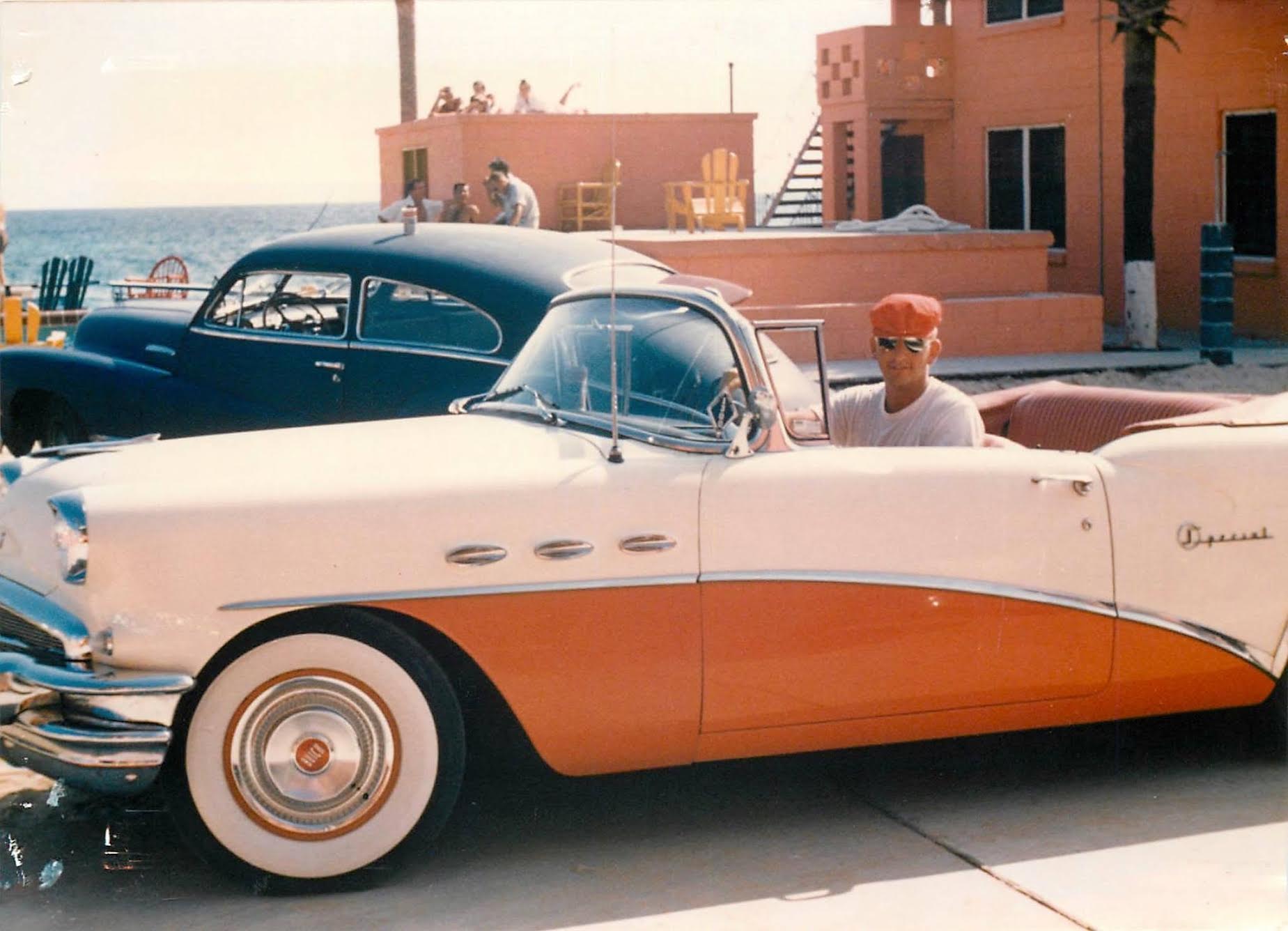
in a red convertible, no doubt,
Wherever he wanted to go.
Poet’s Statement
I grew up in south Louisiana. My childhood bedroom was once the upstairs back porch, which meant it was wide and shallow and its longest wall was all windows, from which I could see the Bayou Teche and the whole back half of our yard. Now I write looking out over the Pamlico River in eastern North Carolina.
I write to figure out why something is inspiring or troubling, from the literary scholarship of the first thirty years of my career to the creative nonfiction (in its various forms, as well as some poetry) of the last dozen. When a novel was particularly provocative — both inspiring and — I wrote to make my peace with it. To understand why the characters behave as they do. Sometimes to find a way toward excavating a happy ending in the bittersweet. Now, I do that kind of excavation through writing in response to life events and sometimes to figure out what a dream is trying to tell me.
My creative writing began about a year after the death of my father in 2013. I’d finished my last monograph on Southern literature, and, for the first time in my career, I didn’t have a project for my next critical book. It was my grief that brought me back to the keyboard. “You need to write that story down,” a writer told me after I regaled her with the horror of finding a snake in the birdfeeder the day after my father’s death. I did.
I continued to process my grief through writing essays, though sometimes a poem would emerge. Indeed, I have a whole series of haiku about the loss of my father, which I figured out eventually was my effort to compress, control, and define the pain.
“Extrovert Goes Gently” is one of the poems I wrote as I struggled with what I considered my father’s untimely death. He had suffered serious health issues, and he was seventy-nine, but he had handled his diagnoses through the years with his usual optimism. And then, it seemed to me, he just gave up, not even waiting a few days for my sister and me to get home to see him for Father’s Day. What I’ve come to understand is that while he might have been fine with old age, invalidism was just not for him. His sight and hearing were impaired, and his big voice was cut off. He simply was not himself. This is the man who never took a bad photo, even if he were making a funny face at a child, because he was always himself in these photos, as he was in life. The photograph that may have inspired “Extrovert Goes Gently” was taken years before I was born, and yet, there he is, the man I knew, next to his impractical (his father’s word) convertible. The man who would later buy an impractical convertible for his young wife and a very impractical luxury car for one of his daughters (yours truly). Just because life should be fun, and he had the most fun making his loved ones happy.
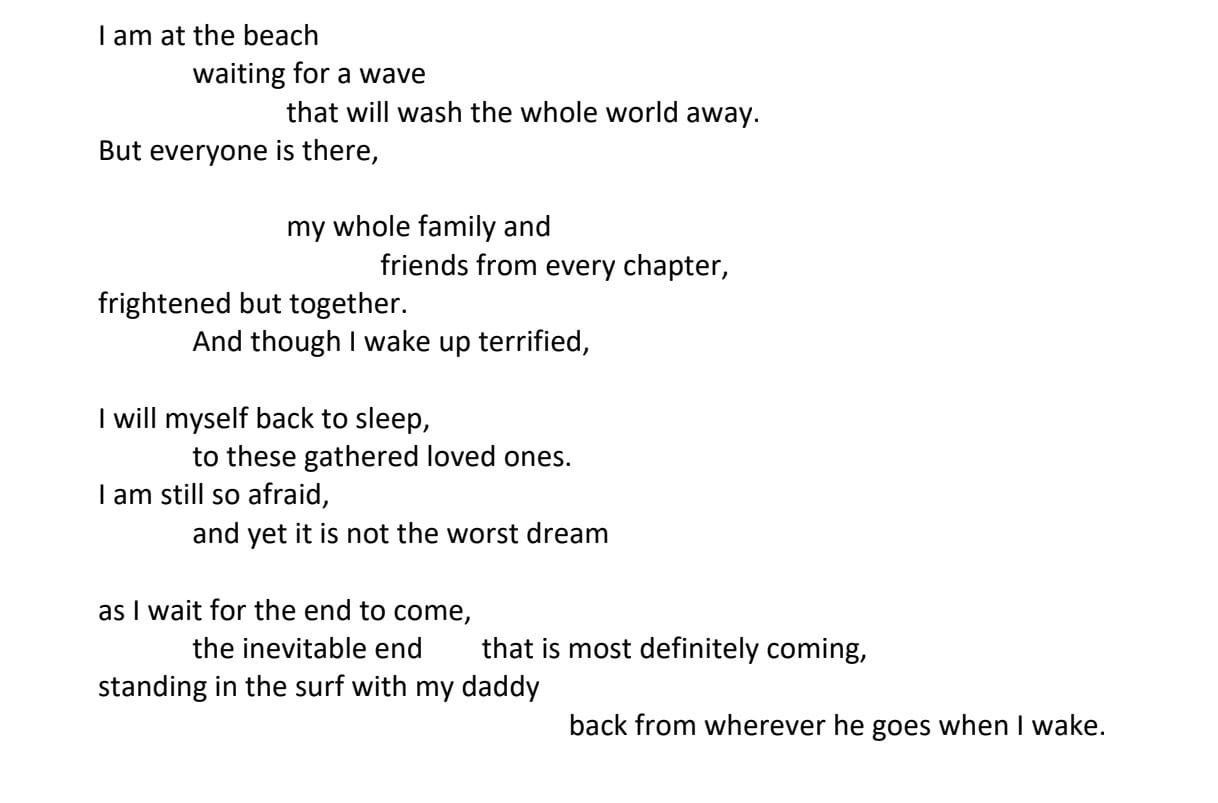
I also write to bring my loved ones back from where they’ve gone, mainly my father, who figures prominently in these two poems, but also my mother, who is now suffering from dementia. I reach back to the past for loved ones as I knew them, before they became cynical, embittered, and oh so judgmental against “the least of these,” whom we’d been taught it was our responsibility to care for, then got sucked into the MAGA-verse that threatens or perhaps has already destroyed the world we grew up in. “Tsunami Apocalypse” gathers us all together on a beach. No surprise, as the Florida panhandle beach was where my family and our friends vacationed together during my childhood.
My mother once told me that when I had a particularly vivid, perhaps disturbing dream, I should tell it, aloud; in doing so, she said, I would recognize what seemingly minor incidents inspired the nonsensical details. But more important, the words I used would reveal its meaning. That advice, as I say, has served my writing about the now dreamlike past as well.